
Oral Health Tips
Composite vs Amalgam Filling: Why Patients Choose Composite
Published 10 min read
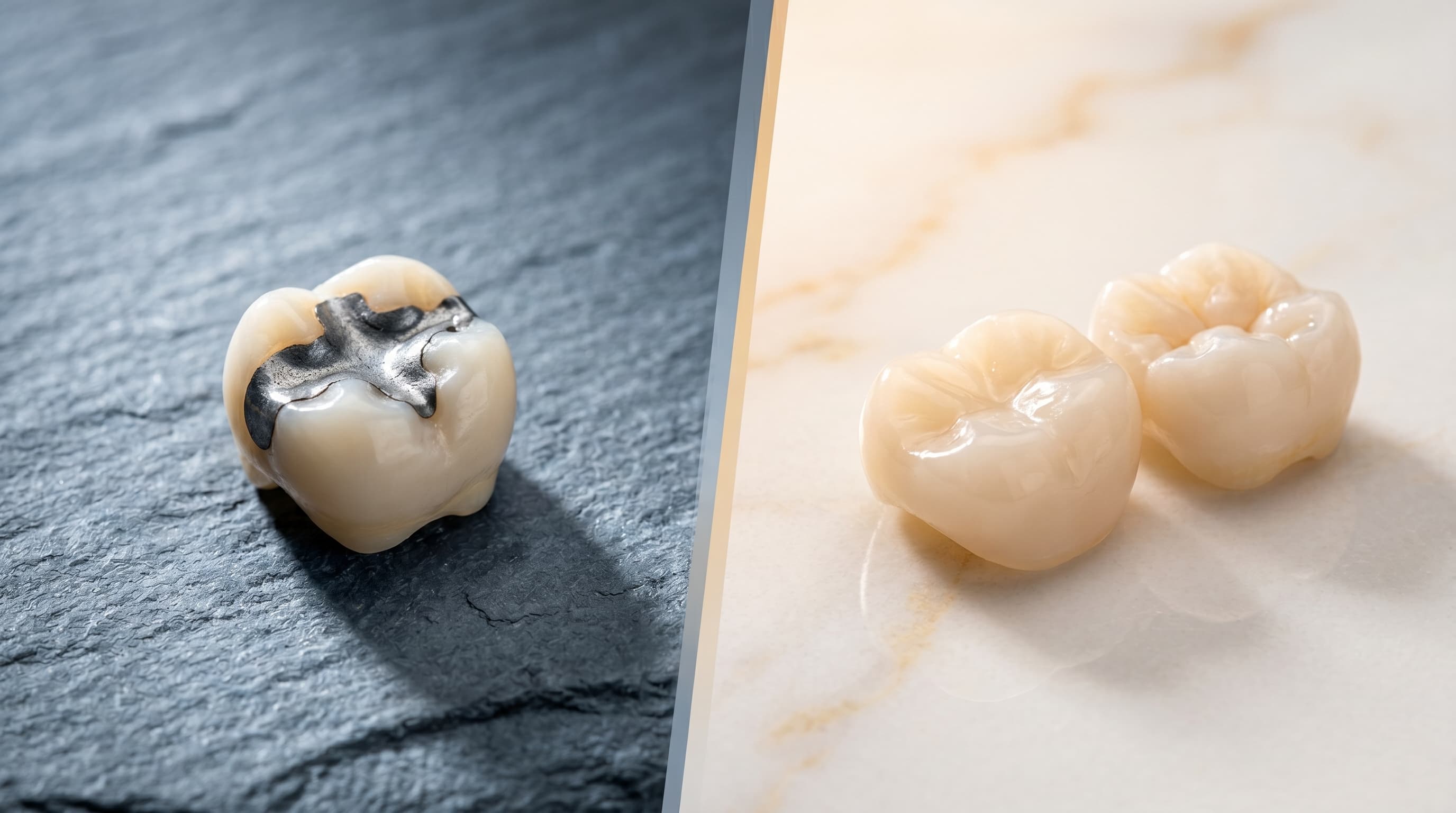
The composite vs amalgam filling debate has shifted dramatically over the past two decades. Amalgam (the silver-colored filling material) served dentistry well for over 150 years, but the majority of patients and dentists today prefer tooth-colored composite resin. The ADA reports that composite now accounts for over 70% of all direct restorations placed in the United States. That shift wasn't driven by a single factor. It was driven by better aesthetics, improved bonding technology, and patient preference.
At Willow Family Dentistry in Wylie, TX, Dr. Esther Jeong uses tooth-colored composite fillings exclusively. This article explains why, compares both materials honestly, and helps you understand what to expect if you need a filling or are considering replacing an old amalgam restoration.
Tooth-colored composite is what we use for every new filling. See dental fillings in Wylie.
What's the Difference Between Composite and Amalgam Fillings?
Amalgam is a metal alloy made from silver, mercury, tin, and copper. It's been used in dentistry since the 1800s and earned its reputation as a durable, affordable material for filling cavities. It's dark silver in color, hardens quickly, and performs well under heavy chewing forces. You can spot an amalgam filling from across the room.
Composite is a tooth-colored resin made from a mixture of glass or quartz particles in a plastic matrix. It's been available since the 1960s, but early versions weren't strong enough for back teeth. Modern composite formulations, especially nanohybrid and nanofill resins, have closed that gap significantly. Today's composites are used confidently in both front and back teeth.
The visual difference is obvious: amalgam is metallic and dark, composite is matched to the exact shade of your natural tooth. But the clinical differences go deeper than appearance. Amalgam fillings are placed mechanically. The dentist removes decay, shapes the cavity to hold the filling in place through undercuts, and packs the material in. Composite fillings are placed with adhesive bonding. The material bonds directly to the tooth structure, which means less healthy tooth needs to be removed to create the restoration.
That bonding distinction matters more than most patients realize. It's one of the primary reasons the profession has shifted toward composite, and it's a key part of why Dr. Jeong chose to use it exclusively at her Wylie practice.
Is Amalgam Safe? What the Research Actually Says
The safety question comes up in nearly every conversation about amalgam, and it deserves a straightforward answer. Amalgam contains mercury, roughly 50% by weight. Mercury in its elemental form is toxic. That fact alone understandably concerns patients. So what does the science say?
The ADA and the FDA both maintain that dental amalgam is safe for adults and children aged 6 and older. The mercury in amalgam is bound within the alloy, and the amount released during normal function (chewing, grinding) is well below levels associated with health effects. Decades of studies involving millions of patients have not demonstrated a causal link between amalgam fillings and systemic health problems in the general population.
That said, the FDA updated its recommendations in 2020 to advise certain populations to avoid amalgam when possible. These include pregnant women, women planning to become pregnant, nursing mothers, children under 6, people with kidney disease, and people with known mercury sensitivity or allergy. For these groups, the FDA suggests using alternative materials like composite when practical.
Dr. Jeong's position is practical. Amalgam has a strong safety record for the general population. But composite has advanced to the point where amalgam's advantages (cost, durability in large restorations) no longer outweigh composite's benefits for most clinical situations. When a material is equally effective and patients overwhelmingly prefer it, the choice becomes straightforward.
Related: Wondering if your old fillings need attention? → When to Replace Old Filling: 5 Warning Signs
How Do Composite Fillings Compare on Durability?
Composite (resin) fillings now hold up nearly as well as amalgam for most patients, closing a gap that used to favor amalgam clearly. Durability is the question patients researching composite vs amalgam filling care about most, so here's what the current data actually shows for each material.
Amalgam fillings last 10-15 years on average, with some lasting 20 years or more in low-stress areas. They're especially durable in large restorations on back teeth where chewing forces are highest. The material is forgiving: it handles moisture during placement better than composite and is less technique-sensitive for the dentist.
Composite fillings historically lasted 7-10 years. That shorter lifespan was a legitimate concern in the 1990s and early 2000s. But modern nanohybrid composites have significantly improved. Current research published in the Journal of Dental Research shows modern composites lasting 10-15 years in many clinical settings, narrowing the gap with amalgam considerably. Small-to-medium fillings on any tooth perform comparably. Very large restorations on molars are where amalgam's bulk strength still has a slight theoretical advantage, though even that gap is shrinking.
The takeaway: for most fillings placed today, composite performs comparably to amalgam on durability while offering significant advantages in aesthetics and tooth preservation. The durability gap that once justified amalgam's dominance has largely closed.
Why Do Most Patients Choose Composite Today?
The shift toward composite reflects four converging advantages that matter to patients, and it's not just about how the resin filling looks. Appearance, tooth conservation, safety perception, and same-day convenience all point the same direction for most cases today.
- Aesthetics: shade-matched and virtually invisible once polished
- Better bonding, less tooth removal: bonds directly, no undercuts needed
- No mercury: eliminates the concern entirely for patients who prefer it
- No thermal expansion issues: less micro-movement stress on the tooth over time
Aesthetics
This is the most obvious factor. A composite filling is shade-matched to your natural tooth. Once placed and polished, it's virtually invisible. An amalgam filling is a dark metallic patch that shows every time you laugh, yawn, or open your mouth wide. For fillings on front teeth or premolars that show when you smile, the aesthetic difference isn't subtle. It's dramatic.
Better Bonding, Less Tooth Removal
Composite bonds directly to the tooth structure using adhesive technology. Amalgam doesn't bond. It relies on the mechanical shape of the cavity to stay in place, which means the dentist has to remove additional healthy tooth structure to create undercuts that lock the filling in. With composite, Dr. Jeong removes only the decayed material and bonds the restoration to what's left. Less removal means a stronger remaining tooth. And a stronger tooth is less likely to fracture in the future.
No Mercury
Even though amalgam's mercury content is considered safe by the ADA and FDA for most patients, many people simply prefer not to have mercury in their mouths. That's a valid preference. Composite eliminates the concern entirely.
No Thermal Expansion Issues
Metal expands when hot and contracts when cold. Over years of drinking hot coffee and eating ice cream, amalgam fillings undergo micro-movements within the tooth that can eventually create tiny cracks in the surrounding enamel. Composite doesn't expand and contract to the same degree, which reduces stress on the tooth over time. For patients who already have sensitive teeth, this matters.
Need a Filling? We Use Tooth-Colored Composite
Dr. Jeong places composite fillings that blend with your natural tooth. No metal, no dark spots, no mercury concerns.
Why Does Willow Family Dentistry Use Composite Exclusively?
Dr. Jeong made the decision to use composite fillings exclusively based on clinical outcomes, patient preference, and the advancement of modern materials. It wasn't a marketing decision. It was a practical one.
The bonding advantage is the clinical centerpiece. When a filling bonds adhesively to the tooth, the restoration and the remaining tooth structure work together as a single unit. With amalgam, the filling sits inside the tooth like a plug in a socket. The tooth does all the structural work. That distinction shows up over time: bonded composite restorations distribute chewing forces more evenly and reduce the risk of cusp fractures, one of the most common reasons teeth with large amalgam fillings eventually need crowns.
The CDC reports that nearly 1 in 4 adults in the US has untreated tooth decay. When those patients come to Willow Family Dentistry for treatment, Dr. Jeong wants to give them a restoration that preserves maximum tooth structure, looks natural, and has a strong long-term track record. Modern composite checks all three boxes.
There are rare situations where composite may not be the ideal material, specifically very large restorations in areas of extreme bite force where a full-coverage crown or an indirect restoration would be more appropriate than any direct filling material. In those cases, Dr. Jeong recommends the stronger option rather than pushing the limits of what a filling can handle.
Quality Fillings That Match Your Smile
Every filling at Willow Family Dentistry is placed with modern composite resin, bonded directly to your tooth for strength and an invisible result.
Should You Replace Your Old Amalgam Fillings?
Not automatically. A sound amalgam filling that isn't cracked, isn't leaking, and has no decay underneath it is still doing its job. The ADA and Dr. Jeong both agree that removing a functional filling just because it's amalgam introduces unnecessary risk, since replacement always costs a small amount of additional tooth structure.
That said, there are valid reasons to replace an old amalgam filling. The filling is cracked or fractured and no longer sealing the tooth. You can see or feel a gap between the filling and the tooth edge. Dr. Jeong finds decay developing underneath on an X-ray. The tooth is sensitive in ways that suggest the filling's seal has failed. Or the surrounding enamel has cracked due to years of expansion and contraction from the metal.
Elective replacement for cosmetic reasons is also valid if you understand the trade-offs. If a visible amalgam filling on a premolar bothers you every time you smile, and the filling is nearing the end of its expected lifespan anyway, replacing it with composite kills two birds: better aesthetics and a fresh restoration with a new 10-15 year clock. Dr. Jeong will give you her honest assessment of whether the filling needs replacement clinically or whether you're making an elective choice. Both are fine. The important thing is knowing which one you're doing.
The replacement process itself is straightforward. Dr. Jeong removes the old amalgam, cleans any decay from the cavity, and places a bonded composite restoration in its place. The appointment takes about 30-60 minutes per tooth, and you leave with a filling that blends in with your natural smile. For patients who feel anxious about dental work, sedation options are available for added comfort.
Related: Five signs it's time to replace an aging filling. → When to Replace Old Filling: 5 Warning Signs
The composite vs amalgam filling question has a clear answer for most patients in 2026: composite wins on aesthetics, tooth preservation, and patient preference while matching amalgam's durability in the vast majority of clinical situations. Amalgam isn't a bad material. It's just no longer the best option when a superior alternative exists.
If you have a cavity that needs filling, or if you're thinking about replacing old amalgam restorations, schedule a visit with Dr. Jeong at Willow Family Dentistry. She'll evaluate the tooth, explain your options, and place a restoration that looks like it was never there.
Results may vary. Please consult with Dr. Jeong for personalized treatment recommendations.
Fillings That Blend In Completely
Schedule your visit with Dr. Jeong for a tooth-colored composite filling that preserves more of your natural tooth and looks invisible.
Questions about your existing fillings?
Common questions
Are composite fillings as strong as amalgam?
For small-to-medium fillings, modern composites perform comparably to amalgam on durability. Very large restorations on back molars may still favor stronger options like crowns. For most cavities treated today, composite is more than strong enough.
Is it safe to have amalgam fillings in your mouth?
The ADA and FDA consider amalgam safe for adults and children aged 6 and older. The mercury is bound within the alloy and released at levels well below those associated with health effects. The FDA advises pregnant women, nursing mothers, children under 6, and people with kidney disease to consider alternatives.
How long do composite fillings last?
Modern composite fillings last 7-15 years depending on size, location, and patient habits. Small fillings in low-stress areas tend to last longest. Large composites on back teeth may need replacement sooner. Regular dental checkups catch wear early.
Should I replace my silver fillings with white ones?
Not unless there's a clinical reason: cracking, leaking, decay underneath, or enamel fractures around the filling. Elective replacement for aesthetics is valid but involves removing some additional tooth structure. Dr. Jeong will tell you whether replacement is clinically needed or purely cosmetic.
Do composite fillings cost more than amalgam?
Composite fillings are slightly more expensive than amalgam, typically $50-$150 more per filling depending on size and location. Most dental insurance plans cover composite fillings on all teeth. The cost difference is minimal relative to the aesthetic and structural benefits.
Can composite fillings be used on back teeth?
Yes. Modern nanohybrid composites are strong enough for molars and premolars. Dr. Jeong places composite fillings on all teeth at Willow Family Dentistry. For very large restorations where a filling of any material would be insufficient, she may recommend a crown instead.
Why does Willow Family Dentistry only use composite fillings?
Dr. Jeong uses composite exclusively because it bonds directly to tooth structure (preserving more of the natural tooth), matches the tooth color, eliminates mercury concerns, and modern formulations provide durability comparable to amalgam for virtually all clinical situations.
Is a resin filling the same as a composite filling?
Yes, "resin filling" and "composite filling" refer to the same tooth-colored restoration material. Composite is short for composite resin, a mixture of plastic and glass or quartz particles. Dentists and patients use both terms interchangeably for the same white, shade-matched filling.
Did this answer your question?
Written for general reading, not as advice about your own teeth. Nothing here replaces an examination: if something hurts, or has changed, book a visit and let a dentist look at it.
Read next
 9 min readBurning Mouth Syndrome: Causes, Triggers, and ReliefBurning mouth syndrome causes: vitamin deficiency, hormones, dry mouth, medications, nerve damage.Read the article
 10 min readBlack Spot on Tooth With No Pain: Cavity or Just a Stain?How to tell whether a black spot on your tooth is a cavity, a stain, or tartar, and why no pain does not mean there is no problem to fix.Read the article
 10 min readHard Bump on the Roof of Your Mouth? When It's HarmlessThat bony lump on the roof of your mouth is usually a torus palatinus, and it is almost always harmless.Read the article
Your first visit
One ticket covers it.
360 Dental · Admit one