
Oral Health Tips
Dental Crown Procedure: Step-by-Step What to Expect
Published 9 min read
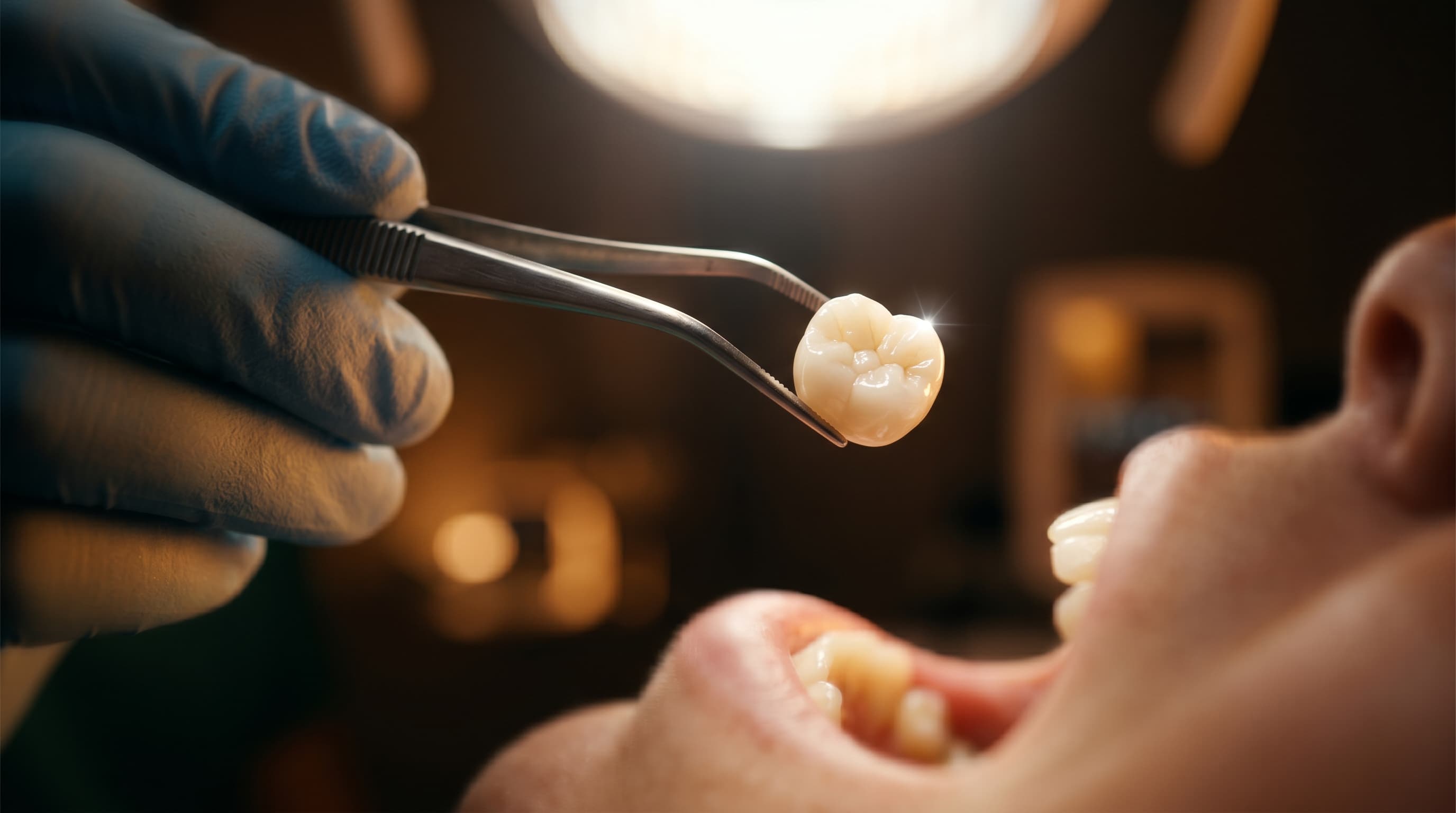
Your dentist just told you that you need a crown, and your next thought is probably, "What actually happens in that chair?" Fair question. The dental crown procedure is one of the most common restorations in dentistry, but almost no one walks in knowing exactly what to expect across the two appointments it takes.
Most patients are nervous about the wrong things. The prep noise. The impression material. The numbing itself. The reality is that the prep is shorter than you think, the numbing is thorough, and the discomfort is usually mild and short-lived. What matters more is picking a practice that takes the time to do each step properly.
This guide walks you through the crown procedure minute by minute, from the first numbing to the final bite check. At Willow Family Dentistry in Wylie, TX, Dr. Esther Jeong explains every step before it happens, so you always know what's coming.
Schedule Your Crown Consultation
Dr. Jeong walks you through the full procedure, timeline, and cost before anything begins. No surprises, no pressure.
What Happens During a Dental Crown Procedure?
The traditional dental crown procedure takes two appointments spread over roughly 2 to 3 weeks. Visit one handles the tooth preparation, impression or digital scan, and temporary crown placement. The dental lab then builds your permanent crown over 1 to 2 weeks. Visit two removes the temporary, checks the fit of the permanent crown, and cements it in place.
That's the standard workflow. Same-day crowns using CEREC technology can compress both visits into a single 2-hour appointment, but not every tooth is a good candidate and not every practice offers it. Traditional two-visit crowns still give dentists more control over complex cases, shade matching for front teeth, and zirconia or E-max materials that require lab milling.
Procedure Timeline
Traditional Crown Procedure: 2 Visits Over 2-3 Weeks
Visit 1: Prep and Impression
60-90 minutes · Numbing, tooth prep, impression, temporary crown
Lab Wait
1-2 weeks · Crown is designed, milled or cast, glazed, and quality-checked
Visit 2: Permanent Placement
30-45 minutes · Temporary removed, fit checked, bite adjusted, crown cemented
Both visits together add up to less than 2.5 hours of chair time. Most patients drive home right after each appointment. You'll feel some numbness for an hour or two after the first visit, and occasionally mild sensitivity for a day or two, which is normal and usually resolves on its own.
What to Expect at Your First Crown Appointment?
Your first crown appointment takes 60 to 90 minutes and covers five steps: examination and X-ray review, numbing with local anesthetic, tooth preparation to make room for the crown, an impression or digital scan, and placement of a temporary crown. You leave with a functioning temporary that lets you eat and talk normally.
Step-by-Step: Visit One
Examination and imaging. Dr. Jeong reviews your X-rays and examines the tooth to confirm a crown is the right call. If there's extensive decay, a post and core or buildup may be added to the plan. At our Wylie practice, our iCAT 3D imaging helps with complex cases near the sinus or post-endodontic teeth.
Numbing. A small amount of topical gel goes on the gum first, followed by local anesthetic. The ADA's MouthHealthy guidance on crowns confirms that local anesthetic keeps the preparation area fully numb throughout the procedure. You'll feel pressure and vibration but no sharpness.
Tooth preparation. The dentist removes a thin outer layer of enamel so the crown has room to fit over the tooth. For a typical molar, that's about 1.5 to 2 millimeters of enamel reduction. If the tooth has a previous filling or fracture, additional decay is removed and replaced with a buildup material.
Impression or digital scan. Traditional impressions use a silicone putty held in your mouth for 2 to 3 minutes. Digital scans use a small wand that captures the tooth shape in about 60 seconds. Our practice uses digital scanning when case complexity allows, since it's faster and more comfortable for patients.
Temporary crown. A pre-made acrylic temporary is shaped, cemented with mild adhesive, and bite-checked. It protects the prepared tooth, keeps surrounding teeth from shifting, and lets you eat most normal foods. Sticky candy and popcorn kernels are the two things to avoid.
Discuss Sedation Options Before Your Appointment
If dental anxiety is a concern, Dr. Jeong offers both nitrous oxide and IV sedation. The consult is free and takes 15 minutes.
How Does the Dental Lab Make Your Crown?
During the 1-to-2-week wait between visits, your impression or digital scan goes to a specialized dental lab where a technician designs, fabricates, and finishes your permanent crown. The process involves four main stages: digital design, milling or casting, glazing and firing, and final quality check before it's shipped back to your dentist.
What Happens at the Lab
Crown Fabrication in 4 Stages
1. Digital Design
Technician builds 3D model of the crown from your scan or impression
2. Milling or Casting
Zirconia and E-max are milled from blocks; gold and PFM are cast
3. Glazing and Firing
Shade matching, texture, and final firing at high temperature
4. Quality Check
Lab inspects fit, color, and surface finish before shipping
The lab you use matters more than most patients realize. A skilled ceramist can make a zirconia crown look completely natural next to real enamel. A poor one can make an expensive porcelain crown look obviously different. We work with a small number of trusted labs specifically for this reason.
For cost ranges across every crown material, see our main guide on dental crown cost Texas patients pay in 2026. The material you pick directly affects both the lab fee and the final chair-side placement fee.
For the material comparison that drives most cost decisions, check our cluster guide on zirconia vs porcelain crowns, and for how long each material typically lasts, see how long dental crowns last.
What Happens at Your Second Crown Appointment?
Your second crown appointment runs 30 to 45 minutes and covers four steps: removing the temporary, checking the permanent crown's fit and color, adjusting the bite, and cementing the crown permanently. Numbing is sometimes used, sometimes not, depending on how sensitive the prepared tooth feels.
Temporary removal is quick. The dentist gently lifts the acrylic cap off, cleans the underlying tooth, and rinses the area. The permanent crown then gets a dry fit, which means trying it on before cementation to check contact with neighboring teeth, margin fit at the gumline, and color match against the tooth next to it.
The bite check matters most. Dr. Jeong has you bite down on colored marking paper, which reveals any high spots where the crown contacts before the rest of your teeth. Those spots get polished down until your bite feels even and natural. Skipping this step is one of the main reasons crowns fail early, per Mayo Clinic guidance on bite-related restoration issues.
Once the fit and bite are right, the crown is cemented permanently. The cement cures in about 5 minutes, any excess is cleaned from the gumline, and you leave with a fully functional permanent crown. Most patients eat a normal meal within 2 hours.
Related: Want to skip the 2-visit wait and the temporary crown entirely? See if you're a candidate for same-day placement. → Same-Day CEREC Crowns in Wylie, TX
Is the Dental Crown Procedure Painful?
The dental crown procedure itself is not painful when local anesthetic is used properly. Most patients feel pressure and vibration during preparation, but no sharp sensation. Some mild soreness or temperature sensitivity is common for 1 to 3 days after the first visit, which typically resolves without medication or with over-the-counter ibuprofen.
If you have dental anxiety, the concern is usually less about actual discomfort and more about the experience. That's where sedation comes in. CDC dental health data confirms that roughly 36% of American adults avoid or delay dental care because of anxiety, which is one reason sedation dentistry has become standard for procedures like crowns in most modern practices.
Comfort Options
Three Levels of Comfort During Your Crown Procedure
At our Wylie practice, we offer all three options: local anesthetic only, nitrous oxide added to local, and IV sedation for patients with severe dental anxiety. Most crown patients do fine with local alone or local plus nitrous. IV sedation is there for patients who've had traumatic dental experiences or who cannot tolerate longer procedures.
After the procedure, mild soreness is managed with ibuprofen. Avoid very hot or very cold foods for 24 hours since the tooth may be temperature-sensitive. Sticky foods and hard candies should wait until the permanent crown is placed. If discomfort lasts longer than 3 days or gets worse, that warrants a call to the practice.
Local anesthetic itself is well-tolerated by the vast majority of patients. A Cleveland Clinic overview of dental anesthesia notes that serious reactions are rare, and numbness typically resolves within 1 to 4 hours after the appointment. Pregnant patients and those taking certain heart medications should always flag that on their intake form, since the anesthetic type may need adjustment.
Book With a Gentle, Judgment-Free Team
Our Wylie practice specializes in anxious patients. We explain every step, offer full sedation options, and never rush a procedure.
Why Willow Family Dentistry for Your Crown Procedure in Wylie, TX
Families in Wylie choose our practice because every step of the crown procedure gets the time it needs. Our dental crowns in Wylie, TX are part of a broader restorative approach where Dr. Jeong handles each case personally, from prep through final cementation.
There's no production quota to hit. A typical first visit gets 60 to 90 minutes of chair time, not the compressed 40-minute slots corporate chains often use. That extra time shows up in the final fit, the bite accuracy, and how the crown holds up 10 years later. ADA Health Policy Institute research confirms that unhurried clinical time correlates strongly with restoration longevity.
Sedation is built into the offering, not an afterthought. For patients with severe dental anxiety, our sedation dentistry options include both nitrous oxide and IV sedation, which most offices in the Wylie area don't provide. Our multilingual team speaks English, Korean, Spanish, and Vietnamese, so every step of the procedure gets explained in the language you're most comfortable with.
The iCAT 3D imaging system helps with complex cases, like post-endodontic teeth or restorations near the sinus cavity. Patients from Murphy, Sachse, Lucas, Allen, and Plano drive to our office on W FM 544 specifically for that combination of clinical precision and unhurried care. Preventive follow-up visits are included, since the crown you just invested in deserves to last.
Ready for Your Crown Procedure?
Schedule a consultation with Dr. Jeong. We'll review your X-rays, walk through the full timeline, and give you a clear cost before anything starts.
Have questions? We're happy to help.
Common questions
How long does the dental crown procedure take in total?
The full dental crown procedure spans 2 to 3 weeks and about 2.5 hours of chair time. First visit runs 60 to 90 minutes for prep, impression, and temporary placement. The lab takes 1 to 2 weeks to fabricate the permanent crown. Second visit runs 30 to 45 minutes for cementation.
Does the dental crown procedure hurt?
The dental crown procedure itself is not painful thanks to local anesthetic. You may feel pressure and vibration during preparation but no sharp sensation. Mild soreness or temperature sensitivity for 1 to 3 days afterward is common and typically managed with over-the-counter ibuprofen.
Can I eat right after the first crown appointment?
Yes, but wait until the numbing wears off completely (about 1 to 4 hours). Stick to soft foods for the first 24 hours, and avoid sticky candy or popcorn for the 1 to 2 weeks you have the temporary crown, since these can dislodge it.
What if my temporary crown falls off between visits?
Call the practice right away. A dislodged temporary should be re-cemented within 24 hours to prevent the prepared tooth from shifting. If you can't be seen immediately, drug store dental cement can hold it temporarily. Do not chew on that side until it's properly recemented.
Is the dental crown procedure the same for a back molar vs a front tooth?
The steps are identical, but shade matching and material choice differ. Front teeth require precise color matching with E-max or layered porcelain for natural appearance. Back molars typically get zirconia for strength. The appointment length stays roughly the same across both locations.
Can the whole crown procedure be done in one visit instead of two?
Yes, with same-day CEREC technology. A digital scan, in-office milling, and cementation all happen in a single 2-hour appointment. Not every tooth is a good candidate, especially complex cases or teeth needing zirconia. Ask your dentist whether your specific tooth qualifies for same-day placement.
Did this answer your question?
Written for general reading, not as advice about your own teeth. Nothing here replaces an examination: if something hurts, or has changed, book a visit and let a dentist look at it.
Read next
 9 min readBurning Mouth Syndrome: Causes, Triggers, and ReliefBurning mouth syndrome causes: vitamin deficiency, hormones, dry mouth, medications, nerve damage.Read the article
 10 min readBlack Spot on Tooth With No Pain: Cavity or Just a Stain?How to tell whether a black spot on your tooth is a cavity, a stain, or tartar, and why no pain does not mean there is no problem to fix.Read the article
 10 min readHard Bump on the Roof of Your Mouth? When It's HarmlessThat bony lump on the roof of your mouth is usually a torus palatinus, and it is almost always harmless.Read the article
Your first visit
One ticket covers it.
360 Dental · Admit one