
Pediatric Dentistry
Dental Sealants for Kids: Why Timing Matters in Van Nuys
Published 13 min read

Dental sealants for kids are one of the few preventive treatments where a few minutes in the chair can change the next decade of a child's dental history. They are quick, they remove nothing from the tooth, and most children barely register that anything happened. The part parents miss is the timing.
Sealants work best in a fairly narrow window: soon after a permanent molar comes through, before anything has had a chance to start in the grooves. Miss that window and the same tooth may need a filling instead. That is why the general dentistry team checks for newly erupted molars at every child's recall visit.
Here is what sealants actually do, which teeth get them and when, and how to line the appointment up with the school year.
What Are Dental Sealants for Kids, and How Do They Work?
A dental sealant is a thin protective coating painted onto the chewing surface of a back tooth. It flows into the deep grooves where a toothbrush bristle cannot reach, hardens in place, and leaves a smooth surface that is far easier to keep clean.
The mechanism is physical rather than chemical. Molars are not flat on top. They have a landscape of pits and narrow fissures, some of them narrower than a single bristle, and that is precisely where decay in children tends to begin.
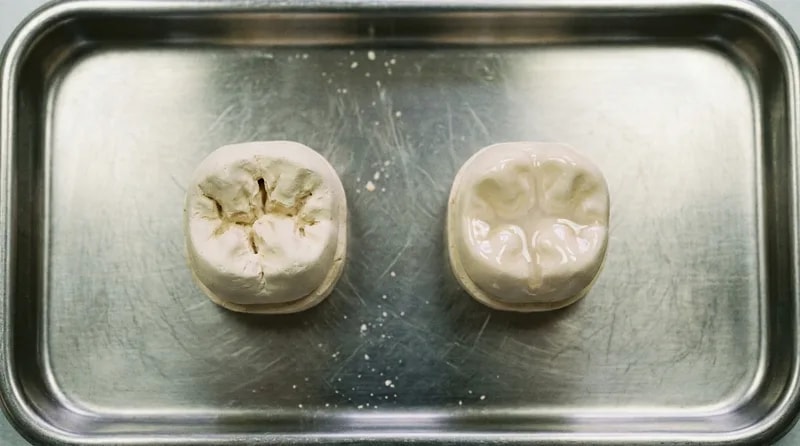
- An unsealed molar.
The chewing surface has deep grooves narrower than a single toothbrush bristle. Food and bacteria settle into them and stay there, which is why decay in children so often starts on a tooth that looks clean from above.
- A sealed molar.
The grooves are filled level with a thin coating, leaving a smooth surface a brush can actually clean. Nothing is removed from the tooth. The protection is added on top of the enamel.
Nothing about the tooth is altered to place one. No enamel is removed, no dental handpiece is involved, and the coating sits on top of the surface it protects.
Why Does Timing Matter So Much With Sealants?
Because a sealant prevents decay rather than treating it. Once bacteria have established in a groove, sealing over the top is no longer the right treatment, and that tooth needs a filling instead. The window opens when a molar erupts and starts closing from that day.
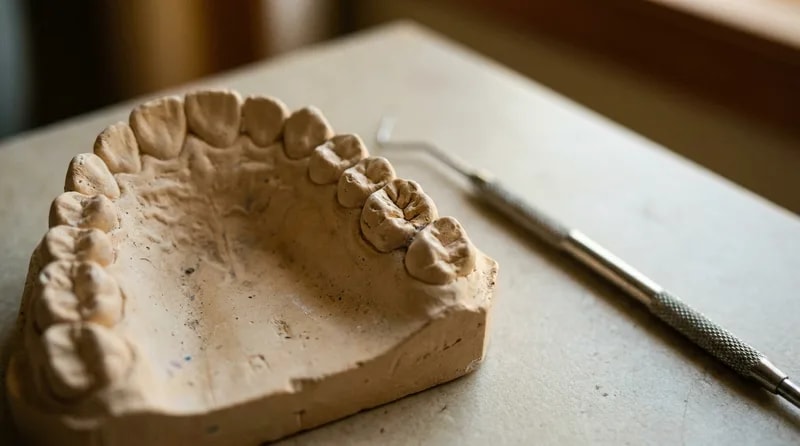
Newly erupted molars are also the most vulnerable teeth in a child's mouth. Their enamel is still maturing, they sit at the very back where brushing is worst, and a six-year-old's brushing technique is not yet up to the job.
Parents rarely notice the eruption itself. There is no fuss the way there is with a front tooth, no gap, nothing visible in a smile. The tooth simply arrives at the back and starts collecting whatever lands on it.
One molar, four possible moments.
The same tooth, and how the answer changes with timing.
- Just erupted, grooves clean.
Ideal. Seal it now and the surface is protected before anything settles in.
- A year in, grooves staining.
Still usually sealable, but your dentist checks carefully that nothing has started underneath first.
- Early demineralization.
A judgement call. Some early surface changes can be sealed over, others need watching or treating.
- Decay established.
Sealing is off the table for that surface. It needs a filling, and the window has closed.
- 5x
Tooth decay is the most common chronic disease in children, five times more common than asthma (ADA).
- 20%
of children ages 5 to 11 have at least one untreated decayed tooth (CDC).
- 80%
reduction in cavity risk in school-age children from dental sealants (CDC).
Which Teeth Get Sealed, and at What Age?
The main targets are the permanent molars: the first set arriving around age 6 and the second around age 12. Baby molars are sometimes sealed too, when a child has particularly deep grooves or a history of decay that suggests they need the extra protection.
Front teeth are not usually sealed. Their surfaces are smooth and accessible, so a brush does the job there without help.
The window that matters, by age.
Sealants work best applied soon after a molar comes through.
- Around age 6.
First permanent molars arrive at the back, often without a parent noticing.
- Around age 12.
Second permanent molars come through and get their own window.
- Baby molars.
Sealed too when a child has deep grooves or a history of decay.
- Too late.
Once decay has started in a groove, it needs treating rather than sealing.
Molars do not erupt on a fixed calendar, which is why a check at every recall visit matters more than a date.
Eruption timing varies from child to child, so the age figures are a guide rather than a schedule. Guidance from the American Academy of Pediatric Dentistry is a useful reference, and a dentist checking at each visit will catch the window regardless of where your child falls in the range.
How Well Do Sealants Actually Prevent Cavities?
Well enough that the CDC puts the reduction in cavity risk for school-age children at nearly 80%. That figure applies to the treated surfaces, which is the important qualifier: a sealant protects the chewing surface it covers and nothing else.
Set that against the scale of the problem. Tooth decay is the most common chronic disease in children, five times more common than asthma according to the ADA, and 20% of children aged 5 to 11 already have at least one untreated decayed tooth per CDC data.
What makes dental sealants for kids unusual as a preventive measure is how little they ask of the child. No daily compliance, no remembering, no technique to master. The protection is simply there.
- Common assumption.
"Sealants mean I can stop worrying about brushing." Protection gets treated as a substitute for daily habits.
- What is actually true.
Sealants cover the chewing surface only. The sides of teeth, the gum line, and the spaces between still depend entirely on brushing and flossing.
It also helps to see where sealants sit next to the other two things a dentist reaches for on a child's back teeth.
| Compare | Dental sealant | Fluoride varnish | Filling |
|---|---|---|---|
| Purpose. | Physically blocks the grooves. | Strengthens enamel across all surfaces. | Repairs a tooth after decay. |
| When it is used. | Before decay starts. | Routinely at preventive visits. | After decay is present. |
| Tooth structure removed. | None. | None. | Yes, the decayed portion. |
| Local anesthetic. | Not typically needed. | Not needed. | Usually used. |
| Time per tooth. | A few minutes. | A minute or two for the whole mouth. | Longer, and a bigger appointment. |
| They work together. | Covers the grooves fluoride reaches least well. | Protects the smooth surfaces between teeth. | What the other two are meant to avoid. |
The last row is the one worth remembering. Sealants and fluoride cover different surfaces, so they are used together rather than chosen between.
ADA guidance on dental sealants covers the evidence in more detail if you want to read further before your appointment.
What Happens During a Sealant Appointment?
The whole thing takes a few minutes per tooth and no local anesthetic is typically needed. The tooth is cleaned and dried, a conditioning gel is applied and rinsed, the coating is painted into the grooves, and a light hardens it in seconds.
Most children are surprised by how little there is to it. Nothing is removed, nothing vibrates, and they eat and drink normally on the way out.
What your child will actually experience.
- 1. A clean and a dry.
The tooth is cleaned and dried so the coating can bond properly. This is the longest part, and it is nothing new to a child who has had a cleaning.
- 2. A conditioning gel.
A gel is placed for a few seconds to give the enamel surface a slight texture, then rinsed away.
- 3. The coating goes on.
The liquid sealant is painted into the grooves with a small brush. It flows in, level with the surface.
- 4. A curing light.
A blue light hardens the material in seconds. Children usually find this the interesting part.
- 5. A bite check.
Your child bites down so any high spot can be smoothed. Then they eat and drink normally, straight away.
If your child is anxious about dental visits generally, sealants are a reasonable place to build confidence. Research published in BMC Oral Health in 2024 found that 36% of Americans have dental anxiety and 12% have extreme dental fear, and much of that starts in childhood with a difficult first experience.
Bringing in more than one child?
Ask about back-to-back appointments so one trip to Van Nuys Blvd covers the whole family. Children and adults are seen at the same address.
Are Dental Sealants Safe for Children?
Yes. Sealants are widely recommended by the ADA, the CDC, and the American Academy of Pediatric Dentistry, and they have been in routine use for decades. Nothing is removed from the tooth, and no anesthetic is typically needed to place one.
The question parents ask most often is about BPA. Some sealant materials can release trace amounts of BPA-related compounds very briefly after placement. Professional bodies including the ADA have reviewed this and consider the exposure far too small to pose a health concern, and it can be reduced further by rinsing and wiping the surface after curing.
Worth keeping perspective on the alternative. An untreated cavity in a child leads to a filling at minimum, and the balance of evidence supports sealing over waiting.
How Long Do Sealants Last, and What Upkeep Do They Need?
Sealants generally last several years, but they wear at different rates depending on how hard a child chews and grinds. They are checked at every recall visit, and a worn or partly lost sealant can usually be topped up or replaced in the same appointment.
This is the part that gets forgotten. A sealant placed at six and never looked at again is not doing the job it was placed for. The check is as important as the placement.
Four questions worth asking at the chair.
- "Which molars are through?"
You are asking about eruption, not about decay. It sets the timing for everything else.
- "Which are already sealed?"
Parents rarely know, and records answer it in seconds.
- "Are any wearing thin?"
A top-up now is simpler than a filling in two years.
- "What should we do at home?"
Sealants change nothing about brushing the sides and gum line.
Upkeep is straightforward:
- Keep the recall visits. Sealant checks happen at the same appointment as the cleaning, so it costs no extra time.
- Mention hard chewing habits. Ice, hard candy, and pen chewing all wear coatings faster than food does.
- Do not stop brushing the back teeth. A sealed chewing surface still has unsealed sides and a gum line.
- Ask about grinding. If your child grinds at night, that is worth raising for reasons beyond the sealants.
Related: Sports season and playground accidents are the other common reason a child's back tooth needs attention. What to do in a dental emergency →
When Should Van Nuys Parents Book, and Does Insurance Cover It?
Late summer and early fall is the practical window, because it catches molars that came through over the break and gets the visit done before school and sports schedules fill up. Many dental plans cover sealants for children, often up to a specified age, so it is worth confirming your own.
Coverage rules vary more than parents expect. Some plans limit sealants to permanent molars only, some cap the age at 14 or 16, and some cover a set number per year. A quick call to the office beats reading a benefits booklet.
Three ways families in Van Nuys handle the cost:
- Through a PPO plan. 360 Dental accepts all PPO dental plans. Call (818) 787-6400 to confirm what your specific plan includes for children.
- Through the 360-VIP membership club. Built for patients without insurance, with cleanings, exams, and needed x-rays included and 20% off other treatment. Details are on the 360-VIP membership page.
- Through financing. CareCredit, Sunbit, and Cherry are available when a visit turns into a larger treatment plan.
Back-to-school dental checklist.
Check each item you have completed.
I booked a cleaning and exam before the school year gets busy.
I asked whether any new molars have come through since the last visit.
I asked which teeth are sealed already and which are still open.
I checked whether my plan covers sealants and up to what age.
I scheduled siblings back to back so it is one trip, not three.
I know who to call if a tooth gets chipped during sports season.
I replaced toothbrushes and packed a spare in the school bag.
Your score: count your checks out of 7
Families come to 360 Dental from Van Nuys, Sherman Oaks, Valley Glen, Panorama City, North Hollywood, Encino, and Reseda, and the 8:30 AM slots are the ones parents ask for first during term time.
What Should You Do Next?
The single most useful thing to do about dental sealants for kids is to ask, at your child's next cleaning, which back teeth are sealed and which are newly through. That one question is what turns sealants from a good idea into a treatment that actually happens on time.
Booking a school-year visit at 360 Dental.
- Where.
6301 Van Nuys Blvd. Van Nuys, CA 91401. At Van Nuys Blvd and Victory Blvd, minutes off the 405 and 101.
- Hours.
Monday to Thursday: 8:30 AM to 5:30 PM. Friday: 8:30 AM to 4:00 PM. An 8:30 AM slot costs one school morning, not a whole day.
- Good to know.
Phone: (818) 787-6400. English, Spanish, and Armenian spoken. All PPO plans accepted, plus the 360-VIP club.
Book a preventive visit before the school year fills up, and ask for the sealant check by name. Call (818) 787-6400 or request an appointment online.
Results may vary. Please consult with your dentist at 360 Dental for personalized treatment recommendations.
Catch the window while it is open
Book a children's cleaning and exam at 360 Dental in Van Nuys, including a check for newly erupted molars. All PPO plans accepted.
Questions about sealants, coverage for children, or the 360-VIP membership club? The front desk will answer them in one call.
Common questions
At what age should kids get dental sealants?
Soon after each permanent molar erupts, which is usually around age 6 for the first molars and age 12 for the second molars. Baby molars are sometimes sealed too when a child has deep grooves or a history of decay.
Do dental sealants for kids cause any discomfort?
The appointment involves no local anesthetic and nothing is removed from the tooth. Your child feels a cleaning, a brief gel, a small brush, and a curing light. Most children are surprised at how little there is to it.
How long do dental sealants last?
Generally several years, though they wear at different rates depending on chewing and grinding habits. They are checked at every recall visit, and a worn sealant can usually be topped up or replaced in the same appointment.
Are dental sealants safe, and what about BPA?
Sealants are recommended by the ADA, the CDC, and the American Academy of Pediatric Dentistry and have been in routine use for decades. Some materials release trace BPA-related compounds briefly; professional bodies consider the exposure too small to pose a concern.
Can adults get dental sealants too?
Yes, when an adult molar has deep grooves and no decay yet. Sealants are used far more often in children because newly erupted molars are the most vulnerable teeth and a child's brushing technique is still developing.
Do sealants mean my child can brush less?
No. A sealant covers the chewing surface only. The sides of teeth, the gum line, and the spaces between teeth still depend entirely on brushing and flossing, and fluoride protects the surfaces sealants do not reach.
Does insurance cover dental sealants for kids?
Many plans do, often up to a specified age and sometimes only for permanent molars. Rules vary, so call your dental office to confirm. 360 Dental accepts all PPO plans and offers the 360-VIP club for uninsured families.
What if my child already has a cavity in that tooth?
Then sealing is no longer the right treatment for that surface, and the tooth needs a filling instead. Other unsealed molars can still be treated, which is why a full check at the visit matters more than treating one tooth.
Did this answer your question?
Written for general reading, not as advice about your own teeth. Nothing here replaces an examination: if something hurts, or has changed, book a visit and let a dentist look at it.

Your first visit
One ticket covers it.
360 Dental · Admit one