
Oral Health Tips
Do I Really Need a Deep Cleaning? How to Tell | Wylie TX
Published 9 min read
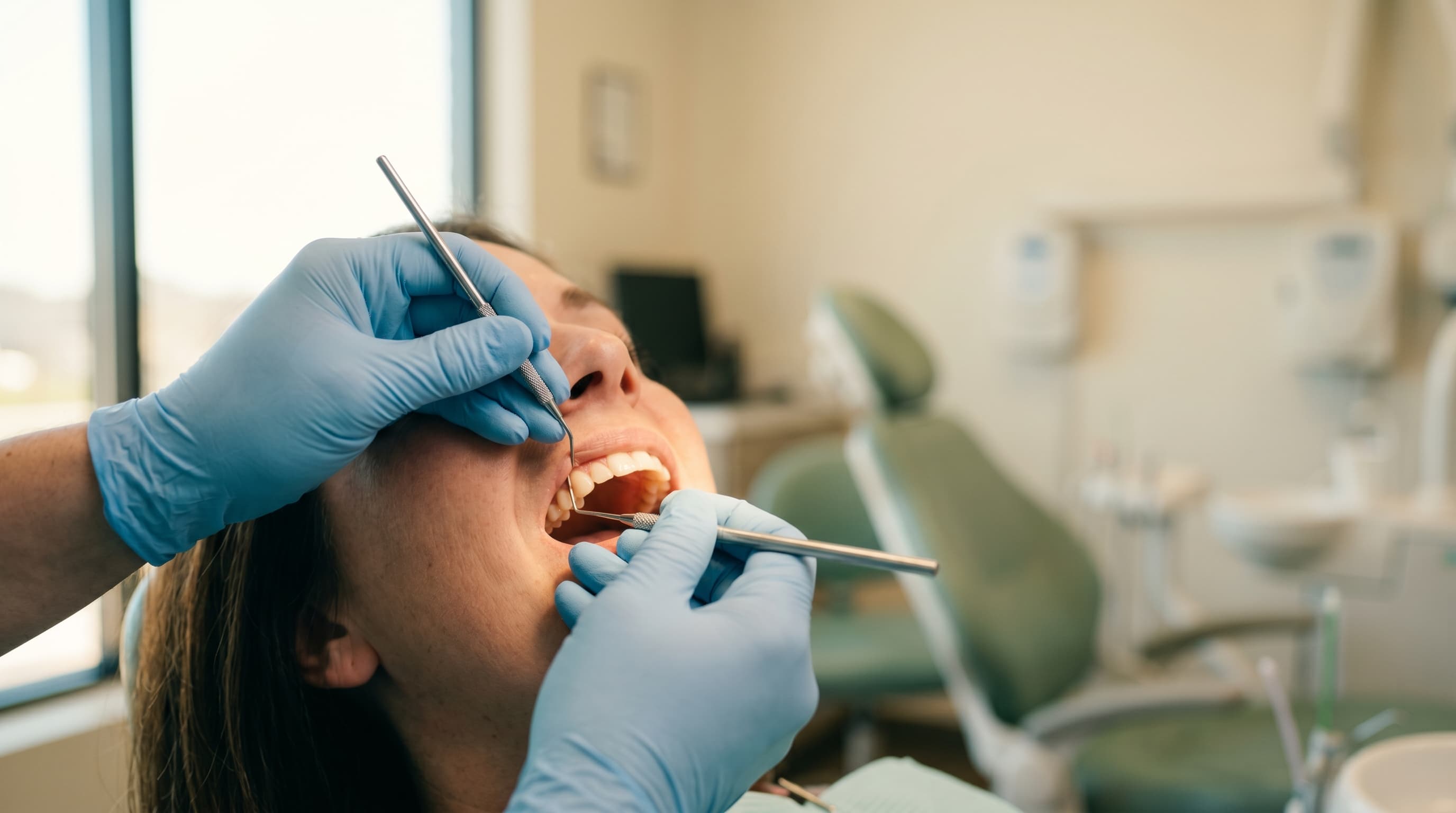
If you're asking "do I really need a deep cleaning," you're not alone. It's one of the most common questions patients bring to their next appointment or type into a search bar after their dentist recommends scaling and root planing. The skepticism is understandable. You came in for a routine checkup and left with a treatment plan for something you've never heard of. It sounds expensive. It sounds invasive. And if nothing in your mouth was bothering you, it's natural to wonder whether you actually need it or whether you're being upsold.
Here's the direct answer: if your dentist measured pocket depths of 4 millimeters or greater with bleeding on probing, a deep cleaning isn't optional maintenance. It's treatment for an active bacterial infection that a regular cleaning can't reach. The CDC reports that 42% of adults over 30 have some form of periodontal disease, and most of them don't feel anything wrong. This guide explains exactly how to read the numbers your dentist gave you so you can decide for yourself whether the recommendation is warranted.
What Do Your Pocket Depth Numbers Actually Mean?
When your dentist or hygienist probes around each tooth with a thin instrument and calls out numbers to an assistant, those numbers are millimeter measurements of the space between your tooth and gum tissue. That space is called a sulcus when it's healthy and a periodontal pocket when it's diseased. The number tells you how deep the pocket is, and the depth tells you what's happening underneath.
1-3mm with no bleeding: healthy. This is normal. The gum tissue fits tightly around the tooth, and a toothbrush and floss can reach the bottom of the sulcus. A standard prophylactic cleaning maintains these sites. No deep cleaning needed.
4mm with bleeding: early periodontal disease. The pocket has deepened enough that your toothbrush can no longer reach the bottom. Bacteria have colonized below the gumline in a space you can't clean at home. This is the threshold where a deep cleaning becomes clinically appropriate. Some conservative dentists may recommend monitoring 4mm pockets if there's minimal bone loss on X-ray, but most will treat them, especially with active bleeding.
5-6mm: moderate periodontal disease. At this depth, the bacterial colonies are well-established and actively destroying the connective tissue and bone that hold the tooth in place. Scaling and root planing is clearly indicated. Waiting allows the pockets to deepen further, making future treatment more extensive.
7mm and above: advanced periodontal disease. Deep pockets with significant bone loss. Scaling and root planing is the first step, but additional interventions (periodontal surgery, bone grafting) may be needed if the pockets don't respond adequately to the initial treatment.
The American Academy of Periodontology classifies periodontal disease by pocket depth, bone loss visible on X-rays, and clinical attachment loss. Your pocket numbers aren't subjective opinions. They're measurements.
Related: Understand how gum disease progresses stage by stage. → Stages of Gum Disease: Gingivitis vs Periodontitis
Why Can't a Regular Cleaning Fix the Problem?
This is the question behind the skepticism, and it has a straightforward answer rooted in anatomy. A standard prophylactic cleaning removes plaque and tartar from above the gumline and 1-3mm below it. That's all a hygienist is supposed to do during a prophylaxis because that's all a healthy sulcus requires.
When pockets deepen to 4mm and beyond, the bacterial colonies living at the bottom are physically out of reach for both your toothbrush at home and the instruments used during a standard cleaning. The bacteria down there aren't the same surface plaque you brush away every morning. They're organized communities (biofilms) that attach to the root surface in calcified deposits. They produce toxins that trigger your immune system to dissolve bone in an attempt to fight the infection, which paradoxically makes the pockets deeper and the disease worse.
According to the ADA, continuing with prophylactic cleanings when periodontal disease is present is not appropriate treatment. It's the clinical equivalent of cleaning the visible surface while ignoring the infection underneath. It looks and feels like something is being done, but the disease continues to progress at the bottom of the pockets where the cleaning instruments never reached.
That's not your hygienist's failing. It's a limitation of what a prophylaxis is designed to do. The two procedures, prophylaxis and scaling and root planing, exist because they treat different conditions. One is preventive. The other is therapeutic. Using the wrong one for your situation doesn't help.
How Do You Know If the Recommendation Is Legitimate?
The concern about being upsold is valid. Not every dental office operates the same way, and patients are right to want verification that a treatment recommendation is based on clinical findings rather than a revenue target. Here's how to evaluate whether your deep cleaning recommendation is solid.
Ask for your numbers. Every dental office that probes your gums records the measurements. Ask for a copy or ask the hygienist to walk you through them site by site. If multiple sites around multiple teeth measure 4mm or deeper with bleeding, the recommendation is clinically supported. If your numbers are mostly 2-3mm with one or two isolated 4mm readings and no bleeding, a conservative dentist might recommend monitoring rather than immediate treatment.
Look at the X-rays. Bone loss visible on X-rays is objective evidence that the disease has progressed beyond gingivitis. The X-ray shows where bone used to be and where it's been destroyed. If you can see the difference, the deep cleaning is treating a documented problem, not a hypothetical one.
Ask what happens if you wait. A dentist making a legitimate recommendation will explain the progression: untreated pockets deepen, bone loss continues, teeth eventually loosen. A dentist who can't or won't explain the consequences may be less transparent about the reasoning.
Consider a second opinion. If you're genuinely unsure, bring your X-rays and periodontal charting to another dentist and ask them to evaluate independently. At Willow Family Dentistry, Dr. Esther Jeong welcomes second opinion patients and reviews records before forming her own conclusions.
Not Sure About Your Diagnosis?
Dr. Jeong evaluates your pocket depths and X-rays independently. If you need a deep cleaning, she'll show you why. If you don't, she'll tell you that too.
What Happens If You Skip the Deep Cleaning?
This is the most important section in this article, because "do I really need a deep cleaning" often means "what happens if I don't get one?" The answer is specific and predictable.
The pockets get deeper. Bacteria at 4-5mm become bacteria at 6-7mm within months to years. Each millimeter of depth represents more bone loss and less support for the tooth. The progression isn't linear, it can accelerate suddenly during periods of stress, illness, or immune compromise, but it's always in one direction without treatment.
The teeth become mobile. As bone loss progresses past 50% of the root length, teeth start to feel loose. You might notice shifting, gaps opening between teeth that used to be tight, or a tooth that moves when you bite down. By this stage, the treatment needed is significantly more complex and expensive than the scaling and root planing that would have arrested the disease earlier.
Tooth loss becomes likely. The American Academy of Periodontology identifies periodontal disease as the leading cause of tooth loss in adults. Not cavities. Not trauma. Gum disease. And every tooth lost to periodontitis is a tooth that needs replacing with an implant, bridge, or denture costing $1,500-$30,000 depending on the type.
The systemic connection. Research cited by the Mayo Clinic has linked untreated periodontal disease to increased risk of cardiovascular disease, diabetes complications, adverse pregnancy outcomes, and respiratory infections. The bacteria and inflammatory markers from diseased gum tissue enter the bloodstream and affect the rest of the body. A deep cleaning treats more than your mouth.
Related: What does the procedure actually involve? → Scaling and Root Planing: What to Expect
How Does Dr. Jeong Determine If You Need One?
At Willow Family Dentistry, the decision follows a specific diagnostic process with no shortcuts and no assumptions.
Dr. Jeong or her hygienist measures pocket depths at six sites around every tooth (six measurements per tooth, not one). That's typically 168 measurements for a full mouth. Each measurement is recorded and compared to previous visits if available. Bleeding on probing is noted at every site because bleeding indicates active inflammation, not just depth.
X-rays show bone levels. Dr. Jeong compares the bone height around each tooth to where it should be. Bone loss confirms that the pocket depth isn't just swelling (which might respond to improved home care alone) but actual structural destruction requiring therapeutic intervention.
She then explains the findings to you directly. She shows you the numbers. She shows you the X-rays. She points to the sites where the disease is active and explains why a standard cleaning won't reach them. If the pockets are borderline (scattered 4mm readings with minimal bleeding and no bone loss), she may recommend a targeted approach: treating only the affected quadrants rather than a full-mouth deep cleaning, or scheduling a re-evaluation in 8-12 weeks after improved home care to see if the pockets respond without intervention.
Her approach is treat what needs treating, watch what can be watched, and never recommend a procedure the clinical data doesn't support.
Honest Diagnosis. Clear Numbers. No Guesswork.
Dr. Jeong shows you your pocket measurements and X-rays before recommending any treatment. You'll see the data and understand the reasoning.
What Does It Cost and Does Insurance Cover It?
Deep cleanings cost $150-$350 per quadrant in the Wylie, TX area, with a full-mouth treatment running $600-$1,400. Most dental insurance plans cover scaling and root planing at 60-80% under periodontal benefits, which is better coverage than crowns or bridges typically receive. The periodontal benefit is usually separate from your routine prophylaxis allowance, so getting a deep cleaning doesn't use up your "two cleanings per year."
Dr. Jeong's team verifies your benefits and can submit pre-authorization before treatment so you know your exact out-of-pocket cost in advance. FSA and HSA accounts both qualify for deep cleaning expenses, providing additional savings through pre-tax dollars.
Related: Full pricing breakdown with insurance details. → Deep Cleaning Dental Cost 2026: Scaling and Root Planing Pricing
Do you really need a deep cleaning? If your pocket depths are 4mm or greater with bleeding and your X-rays show bone loss, the answer is yes, and delaying makes the problem harder and more expensive to fix. If your numbers are borderline and you're unsure about the recommendation, a second opinion from a dentist who'll show you the data and explain the reasoning is the right move.
At Willow Family Dentistry, Dr. Jeong doesn't recommend deep cleanings based on gut feelings or production goals. She recommends them based on measurements, X-rays, and clinical evidence. If you need one, she'll show you why. If you don't, she'll tell you that directly. Schedule an evaluation and see for yourself.
Get a Straight Answer About Your Gum Health
Dr. Jeong measures your pockets, reviews your X-rays, and gives you an honest recommendation. No pressure, no upselling, just clinical evidence.
Want to discuss your diagnosis?
Common questions
How do I know if I really need a deep cleaning?
Ask for your pocket depth measurements. If multiple sites measure 4mm or deeper with bleeding on probing and X-rays show bone loss, the recommendation is clinically supported. Numbers of 1-3mm with no bleeding indicate healthy gums needing only standard cleanings.
Can I just get a regular cleaning instead?
Not if you have active periodontal disease. Standard cleanings reach 1-3mm below the gumline. Bacteria at 4-7mm depth are out of reach. Continuing regular cleanings with deep pockets allows the disease to progress unchecked.
Is a deep cleaning an upsell?
When supported by pocket measurements of 4mm+ with bleeding and X-ray bone loss, no. These are objective clinical findings. If unsure, request your numbers and X-rays and seek a second opinion from another dentist.
What happens if I skip the deep cleaning?
Pockets deepen, bone loss continues, teeth loosen and may be lost. Treatment needed later becomes more complex and expensive. A deep cleaning at the right time prevents tooth loss and replacement costs of $1,500-$30,000.
Does a deep cleaning hurt?
Local anesthesia numbs each quadrant during treatment so you shouldn't feel sharp sensations. Some tenderness for 2-3 days afterward is normal. Many patients report less discomfort than expected.
Can I get a second opinion on a deep cleaning recommendation?
Yes. Request copies of your X-rays and periodontal charting and bring them to another dentist. Dr. Jeong evaluates second opinion patients regularly and reviews records independently before forming her own conclusions.
How much does a deep cleaning cost with insurance?
Most plans cover scaling and root planing at 60-80% under periodontal benefits. On a $250-per-quadrant cleaning, insurance at 80% leaves you with $50 per quadrant. Full-mouth out-of-pocket typically runs $120-$560.
Did this answer your question?
Written for general reading, not as advice about your own teeth. Nothing here replaces an examination: if something hurts, or has changed, book a visit and let a dentist look at it.
Read next
 9 min readBurning Mouth Syndrome: Causes, Triggers, and ReliefBurning mouth syndrome causes: vitamin deficiency, hormones, dry mouth, medications, nerve damage.Read the article
 10 min readBlack Spot on Tooth With No Pain: Cavity or Just a Stain?How to tell whether a black spot on your tooth is a cavity, a stain, or tartar, and why no pain does not mean there is no problem to fix.Read the article
 10 min readHard Bump on the Roof of Your Mouth? When It's HarmlessThat bony lump on the roof of your mouth is usually a torus palatinus, and it is almost always harmless.Read the article
Your first visit
One ticket covers it.
360 Dental · Admit one