
Emergency Dentistry
Emergency Dentist Near Me: When to Call vs When to Wait
Published 12 min read

Typing emergency dentist near me into a search bar is rarely a calm moment. Something is throbbing, or swollen, or in two pieces, and you want someone to tell you whether this is a today problem or a Monday problem.
Here is a straight answer to that question, plus the part most articles skip: how to tell a hospital problem from a dental one, and how to judge between the practices that appear in your results. Willow Family Dentistry provides emergency dental care in Wylie, TX and answers this call several times a week.
Dr. Esther Jeong's rule is simple. If it is getting worse rather than staying the same, stop waiting and call.
When should you call an emergency dentist near me instead of waiting?
Call when the problem is escalating, when it stops you sleeping or eating, or when there is swelling. Those three signals matter more than how intense the discomfort feels. A tooth that has ached mildly for six weeks is less urgent than one that has changed noticeably since yesterday.
Trajectory is the useful test, and it is the one people rarely apply. Dentistry has very few problems that improve on their own. What actually happens is that symptoms fade while the underlying cause continues, because an inflamed nerve that dies stops sending signals. Relief can mean resolution, or it can mean the problem moved somewhere quieter.
The escalation test, in three questions
Is it worse today than yesterday?
Escalation over hours or days means today, not next week.
Is there swelling anywhere?
Swelling is infection with somewhere to go. It does not wait politely.
Is it stopping you from functioning?
Missed sleep, skipped meals, and lost work days are clinical information, not inconvenience.
One yes is enough. You do not need all three.
One yes is enough. You do not need all three, and you do not need to justify the call.
Timing carries real weight in one case above all others. The ADA notes a knocked-out permanent tooth can often be saved when it is reimplanted within about 30 minutes, which is a narrower window than almost anything else in medicine.
The window in which a knocked-out permanent tooth can often be saved, according to the ADA. Narrower than almost anything else in medicine.
Describe it to us before you decide
Our Wylie team will tell you honestly whether you need to be seen today, later this week, or at your next routine visit. No charge for the conversation.
Which symptoms mean you should go to a hospital instead of a dentist?
Go to a hospital for trouble breathing or swallowing, swelling that is spreading toward the eye or down the neck, a high fever with facial swelling, or a suspected jaw fracture. Everything else involving a tooth is faster, cheaper, and better handled at a dental office.
HOSPITAL
Trouble breathing or swallowing
Swelling spreading toward the eye or down the neck
High fever with facial swelling
A suspected jaw fracture
DENTAL OFFICE
Everything else involving a tooth. Faster, cheaper, and better handled here than in an emergency room.
This distinction gets expensive when people get it wrong in the other direction. The ADA Health Policy Institute counts roughly 2 million emergency room visits a year in the United States for dental problems. Most of those visits end with medication and a referral, because hospitals are not equipped to treat teeth. You pay for the visit, then you pay a dentist anyway.
Emergency room visits a year in the US for dental problems (ADA Health Policy Institute). Most end with medication and a referral, so you pay twice.
When it is genuinely ambiguous, call the dental office first. It takes two minutes and our team will tell you plainly if the hospital is the right destination.
How long can each type of dental problem safely wait?
Timelines vary more than most people expect. A knocked-out tooth is measured in minutes, an abscess in hours, a lost crown in days, and a small chip in weeks. Matching the problem to the right window is what stops you from either panicking or postponing.
Rough waiting windows
A permanent tooth knocked out of its socket. The ADA notes reimplantation is often possible within about 30 minutes.
Facial swelling, or a tooth that has become loose after an impact. JADA reports an untreated abscess can spread beyond the tooth within 48 hours.
Throbbing that disturbs sleep, bleeding that will not settle, a fractured tooth with a sharp edge.
A lost filling or a dental crown that came off cleanly with no discomfort.
Mild sensitivity, a small chip with a smooth edge, cosmetic concerns.
The bottom two categories still need an appointment. They just do not need today's appointment, and knowing the difference saves you an unnecessary rearranged afternoon.
Related: Sensitivity in one specific tooth usually has a specific cause worth identifying early. Why one tooth is sensitive →
Why do dental problems flare at night and on weekends?
Two reasons, and neither is bad luck. Lying down increases blood flow to the head, which raises pressure inside an already inflamed tooth. And distraction drops away in the evening, so a signal your brain filtered out all day becomes impossible to ignore at 11 p.m.
REASON ONE
Lying down increases blood flow to the head, which raises pressure inside an already inflamed tooth.
REASON TWO
Distraction drops away in the evening, so a signal your brain filtered out all day becomes impossible to ignore at 11 p.m.
There is a practical consequence. Symptoms that peak overnight often ease slightly by mid-morning, which is exactly when people decide to cancel the call they were ready to make at 3 a.m. The tooth has not improved. You have simply stood up.
Willow Family Dentistry keeps weekday time open for these calls, and Friday runs by appointment. If something starts on a Saturday, call first thing Monday rather than waiting for it to peak again.
Grinding makes the pattern worse for a large group of people. Clenching during sleep loads an already inflamed tooth for hours at a stretch, which is why some patients wake with a distinct ache that fades by lunchtime and returns the next morning. That cycle is a signal, not a coincidence.
Keep a short note of when symptoms peak and what makes them worse. Two lines on your phone tells us more at the appointment than a general description does, and it often points straight at the cause.
What does waiting actually cost you, clinically and financially?
Delay moves a problem up a treatment ladder, and each rung costs several times the one before it. A small cavity becomes a filling, then a crown, then root canal treatment, then an extraction with an implant to replace what was lost. The clinical work grows at every step.
Roughly 1 in 4 adults in the United States has untreated tooth decay, according to CDC figures, and very little of that started as something serious. Gum disease follows the same quiet pattern, with CDC data from 2024 showing 42% of adults aged 30 and older have some form of periodontal disease.
1 in 4
US adults have untreated tooth decay (CDC)
42%
of adults 30 and older have some form of periodontal disease (CDC, 2024)
The escalation ladder
Early decay: monitored, or a small tooth-colored filling.
Established decay: a larger filling, still one visit.
Structural loss: a crown, often two visits and several times the cost.
Nerve involvement: root canal treatment plus a crown.
Tooth not restorable: extraction, then a bridge or dental implant to replace it.
Every step down that list was preventable at the step above it. That is the real argument for calling early, and it is a better argument than fear.
Children sit slightly differently on this ladder. The ADA reports tooth decay is the most common chronic disease in children, roughly five times more common than asthma, and CDC data shows sealants can reduce cavities in school-age children by nearly 80%.
5×
more common than asthma: tooth decay in children (ADA)
80%
fewer cavities in school-age children with sealants (CDC)
Treating it today is almost always the smaller job
Willow Family Dentistry holds same-day time open every weekday, diagnoses with 3D imaging, and gives you a written estimate before treatment begins.
How do you choose between the practices in an emergency dentist near me search?
Judge on four things: whether a human answers the phone, whether they will see you today as a new patient, whether they quote a written estimate before treatment, and whether the dentist you speak to is the one who will treat you. Search ranking tells you none of that.
JUDGE ON 01
A human answers the phone
JUDGE ON 02
They will see you today as a new patient
JUDGE ON 03
A written estimate comes before treatment
JUDGE ON 04
The dentist you speak to is the one who treats you
The ADA's patient guidance on handling dental emergencies is worth reading before you choose, because it frames what urgent care should actually involve.
Five questions worth asking on the call
Can you see me today, as a new patient? A hesitant answer is itself an answer.
Will I see a dentist, or an assistant first? Both happen; you should know which.
Do you provide a written estimate before treatment? This should never be a difficult request.
Do you file my insurance directly? The alternative is paying in full and waiting for reimbursement.
Who handles the follow-up? Continuity matters more in dentistry than in most fields.
A private practice has a structural advantage here. Dr. Jeong sets her own schedule, so there is no corporate policy deciding whether today has room for you.
What if you do not currently have a regular dentist?
You can still be seen today. Not having a dental home is common, and no practice worth choosing will treat it as a problem. Willow Family Dentistry sees unregistered patients for urgent care regularly, handles the paperwork afterward, and files your insurance the same way it would for anyone.
People who visit a dentist regularly are 60% less likely to lose teeth, according to research in the Journal of Dental Research. If it has been years, that statistic is a reason to start rather than a reason to feel judged. Dr. Jeong's practice is explicitly judgment-free, and our team speaks English, Korean, Spanish, and Vietnamese.
WE EXPLAIN TREATMENT IN
Start with the urgent problem. Everything else can be sequenced later, at whatever pace suits you.
Dental anxiety is often the real reason behind a long gap, and it is more common than people assume. Research published in BMC Oral Health in 2024 found 36% of Americans have dental anxiety and 12% have extreme dental fear. Both nitrous oxide and IV sedation are available here, so an urgent visit does not have to wait on courage. The ADA puts the safety record for IV sedation in dental settings above 99.9%.
36%
of Americans have dental anxiety (BMC Oral Health, 2024)
12%
have extreme dental fear
99.9%
safety record for IV sedation in dental settings (ADA)
Related: Not sure how a first appointment is structured? The booking guide walks through each step. Read the booking guide →
Does an emergency visit mean you have to change dentists?
No. An urgent visit can be exactly that, and nothing more. We treat the problem, send the notes and images to your regular dentist on request, and you continue where you were. Nobody at Willow Family Dentistry will ask you to transfer your care as a condition of being seen.
That said, many people do end up staying, usually because the emergency visit answered a question they had been carrying for a while. Regular exams catch roughly 80% of oral health issues before they become serious, according to the ADA, and preventive care is the least eventful part of dentistry by design.
If gum treatment or periodontal care comes up during your visit, you will hear the options and the reasoning, not a sales pitch. What happens next is your decision.
One problem, treated properly
Come in for the urgent issue and leave with a clear picture of what needs attention and what genuinely does not.
Conclusion: the deciding factor is direction, not intensity
Searching for an emergency dentist near me at 2 a.m. usually settles into one question by morning: is this getting better or getting worse? If the honest answer is worse, or if there is swelling anywhere, the decision is already made.
Call Willow Family Dentistry at (972) 881-0715 and describe what changed. Our team will tell you whether it is today, this week, or something that can safely wait, and we would rather have that conversation than have you guess.
Results may vary. Please consult with Dr. Jeong for personalized treatment recommendations.
Emergency dental appointments in Wylie, TX
Willow Family Dentistry keeps weekday time open for urgent problems, treats new patients the same day, and provides a written estimate before treatment starts.
Common questions
How do I find a good emergency dentist near me quickly?
Call rather than compare websites. Ask whether they can see you today as a new patient, whether they provide a written estimate first, and whether they file insurance directly. Those three answers separate practices faster than any review score.
Is a severe toothache enough to see an emergency dentist near me?
Yes, particularly if it disturbs your sleep or has worsened over the past day. Throbbing that wakes you usually indicates nerve involvement, which rarely settles without treatment. Call the same day rather than waiting for it to ease.
Should I take antibiotics and wait for the swelling to go down?
No. Antibiotics can slow an infection but do not remove its source, so symptoms commonly return once the course ends. JADA reports an untreated abscess can spread beyond the tooth within 48 hours, so the tooth itself needs treatment.
What if my toothache disappears on its own?
Book an appointment anyway. Symptoms sometimes fade because an inflamed nerve has died, not because the problem resolved, and infection can then progress silently. A short exam confirms which of the two happened.
Can I be seen without being an existing patient?
Yes. Willow Family Dentistry treats new patients for urgent problems and completes registration afterward. Bring your insurance card and a list of medications if you have them, but neither is required to be seen.
Do emergency dental visits cost more than regular appointments?
The emergency exam itself is a standard covered procedure on most plans, often at 80 to 100 percent. Treatment cost depends on what the problem needs. You receive a written estimate before anything begins.
What should I avoid doing while waiting for my appointment?
Avoid placing aspirin against the gum, applying heat to a swollen face, and using household adhesives on a loose crown. Each one commonly makes treatment more involved than it needed to be.
Will I have to switch dentists after an emergency visit?
No. We can treat the urgent problem and forward notes and images to your regular dentist on request. Many patients do choose to stay, but that is never a condition of being seen.
Did this answer your question?
Written for general reading, not as advice about your own teeth. Nothing here replaces an examination: if something hurts, or has changed, book a visit and let a dentist look at it.
The treatment itselfEmergency Dentistry at 360 DentalRead next
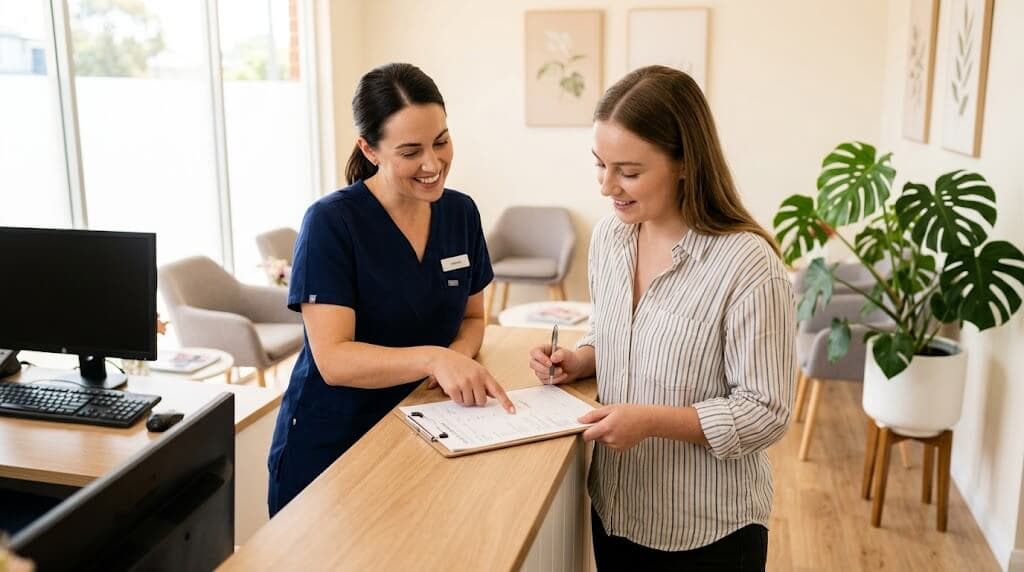 11 min readNew Patient Emergency Dentist Wylie TX: How It WorksNew patient emergency dentist Wylie TX: what to bring, how insurance gets verified, what happens to your records, and why paperwork comes after care.Read the article
 9 min readSinus Tooth Pain vs Toothache: How to Tell the DifferenceSinus tooth pain vs dental toothache: key differences, why upper molars hurt with sinus infections, and when to see a dentist.Read the article
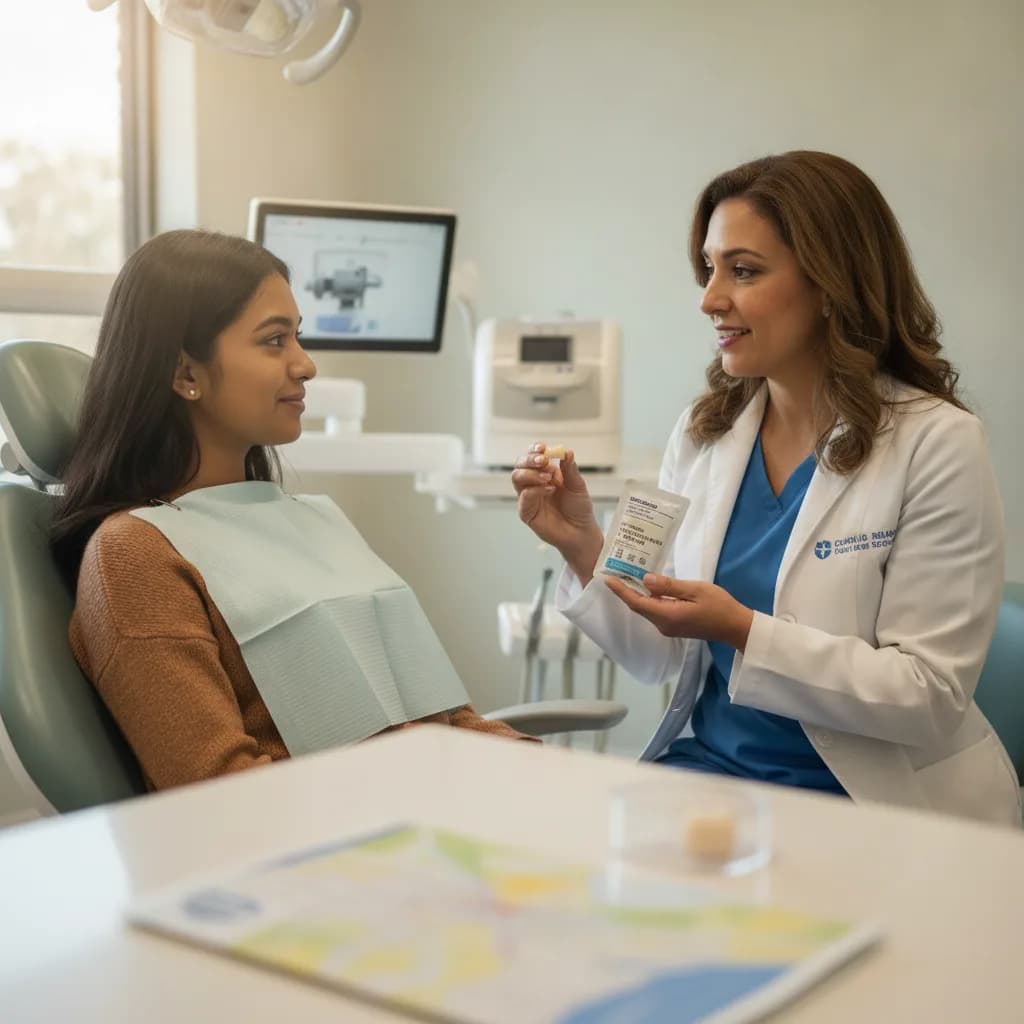 9 min readLost Filling Wylie TX: Emergency Same-Day Crown and Filling RepairLost filling in Wylie TX?Read the article
Your first visit
One ticket covers it.
360 Dental · Admit one