
Orthodontics
Invisalign Treatment in Wylie, TX: Full Patient Guide
Published 10 min read

Most people researching Invisalign treatment in Wylie already know what clear aligners are. What they don't know is what the year actually looks like: how many appointments, how often the trays change, what the attachments do, and what happens if a tray stops fitting halfway through.
That's the gap this guide fills. Not a sales page for clear aligner therapy, but a walkthrough of the whole treatment from the first scan to the final retainer, written for adults and teens being treated at a general dental practice rather than a mail-order company.
One thing worth saying early. Aligners are a real orthodontic treatment with real supervision requirements, and the results depend far more on wear time than on which brand is printed on the box.
What Does Invisalign Treatment in Wylie Actually Involve?
It involves a series of custom clear trays, each worn about two weeks, that move teeth in small planned increments. Most cases run 6 to 18 months with checkups every 6 to 10 weeks. Clear aligners can address roughly 90% of mild-to-moderate alignment issues, per the American Journal of Orthodontics.
The trays themselves do the work, but only while they are in your mouth. That's the part people underestimate. The standard target is 20 to 22 hours a day, which means the aligners come out for meals and for brushing and go back in immediately afterward. Two hours of slippage a day, every day, adds months to a case.
The sequence at a general practice looks like this:
- Consultation and records. Photos, a digital scan, and a discussion of what you want changed.
- Treatment plan and preview. A digital simulation showing the projected tooth movement, stage by stage.
- Delivery appointment. Attachments are placed, the first trays are fitted, and you learn how to insert and remove them.
- Progress checks. Every 6 to 10 weeks, with a few sets of trays handed over each time.
- Refinement. A second short round of trays for anything that did not track as planned.
- Retention. A retainer, worn indefinitely, to hold the result.
Wondering whether you are a candidate?
A consultation at Willow Family Dentistry in Wylie includes a digital scan and a straightforward answer about whether aligners will work for your case, or whether something else would serve you better.
Who Is a Good Candidate for Clear Aligners?
Adults and teens with mild to moderate crowding, spacing, or bite issues, who have healthy gums and no untreated decay. Severe rotations, significant bite discrepancies, and cases needing extractions often do better with fixed braces. The honest answer sometimes is that aligners are the wrong tool.
Gum health is the gate nobody expects. Moving teeth through inflamed tissue is a bad idea, and roughly 42% of adults aged 30 and older have some form of periodontal disease, according to the CDC. So a periodontal check and any needed preventive and hygiene work comes before the scan, not after.
Untreated decay matters just as much. The CDC reports that nearly one in four US adults has untreated tooth decay, and a cavity under a tooth about to be moved needs restoring first.
Compliance is the second filter, and it applies to teens more than adults. A teen who will genuinely wear trays 22 hours a day does beautifully. A teen who will not is better served by fixed braces that cannot be removed. Most practices will tell you this plainly if you ask.
- Good fit: mild crowding, gaps, relapse after childhood braces, mild deep bite
- Sometimes works: moderate crowding, some rotations, mild crossbite, with attachments
- Usually not: severe skeletal bite problems, cases requiring extraction of permanent teeth
How Long Does Clear Aligner Treatment Take?
Six to eighteen months for most cases, compared with 18 to 36 months for traditional braces, according to the American Association of Orthodontists. Simple spacing cases can finish in under six months. The variable that shifts the timeline most is not your teeth. It's wear time.
The math is unforgiving in a way that surprises people. Each tray is calibrated for roughly two weeks of near-continuous wear. Take the trays out for a long dinner and a coffee and a snack, and a two-week tray becomes a seventeen-day tray. Multiply across 30 trays and a nine-month case becomes a twelve-month case.
There is a second reason to finish on schedule. The ADA notes that regular dental visits catch around 80% of oral health issues before they turn serious, and aligner progress checks double as those visits.
Living locally helps here. Progress checks are short, often under fifteen minutes, and being ten minutes from the office on W FM 544 rather than forty minutes down the tollway is the difference between keeping the schedule and stretching it.
What Are Attachments and Why Does My Dentist Use Them?
Attachments are small tooth-colored bumps bonded to specific teeth that give the aligner something to grip. Without them, a smooth tray simply slides over a smooth tooth. They are what let aligners rotate a canine or lift a tooth vertically rather than just tipping it.
They go on at the delivery appointment, take a few minutes per tooth, and come off at the end with polishing. No numbing is needed. Most people stop noticing them within a week, though they do make the trays slightly more visible up close than the marketing photos suggest.
Not every tooth gets one. Your plan will specify which teeth need attachments and at which stage, and some are added partway through treatment rather than at the start. If a tray is not seating fully on an attachment tooth, that is exactly the sort of thing a progress check is meant to catch early.
Related: Attachments and refinement trays are the two parts of aligner treatment patients ask about most, and both are worth understanding before you start. See the clear aligners consultation guide →
What Happens if My Teeth Do Not Track as Planned?
You get refinement trays. This is normal, not a failure. Teeth are moved through living bone and they don't all follow the digital simulation exactly, so a new scan and a short second series of aligners is built into how the treatment works. Most cases need at least one refinement round.
The trigger is usually visible at a progress check: a small gap between tray and tooth, called poor seating, or a tooth that has not rotated as far as the plan predicted. Catching it at week eight is a minor adjustment. Catching it at month ten is a longer fix.
Refinements are typically included in the original treatment fee, but confirm that before you start. It's a fair question and any practice should answer it directly. Ask specifically how many refinement rounds are covered and what happens if you need more.
Chewies help, too. Those small foam cylinders you bite on for a few minutes after inserting a tray are not a gimmick, they genuinely improve seating on the teeth that need it most.
Already mid-treatment somewhere else?
Dr. Esther Jeong sees patients in Wylie who started aligner treatment elsewhere and want local supervision, including cases that need a fresh scan and refinement planning.
How Much Does Invisalign Cost in Wylie, TX?
Cost depends on case complexity, how many trays your plan needs, whether refinements are included, and what your insurance covers. There is no single number, and any practice quoting one before scanning your teeth is guessing. A consultation produces an actual figure.
Three things move the price. Case length is the biggest, because more trays means more lab cost. Whether the fee bundles refinements and retainers is second, and it varies widely between offices. Third is insurance: many dental plans include a lifetime orthodontic benefit that applies to aligners just as it does to braces.
Before your consultation, it is worth checking what your plan actually covers. Willow Family Dentistry works with Aetna, BlueCross BlueShield, Cigna, Delta Dental, Guardian, Humana, MetLife, and United Healthcare, among others, and the Wylie dental insurance coverage guide explains how orthodontic benefits usually work.
For the balance, financing through CareCredit or Cherry spreads the cost across the treatment period. The payment plans guide covers the options in detail.
How Do You Care for Aligners and Teeth During Treatment?
Rinse trays whenever you take them out, brush after every meal before reinserting, and clean the aligners daily with a soft brush and cool water. Hot water warps the plastic. Sugary drinks consumed with trays in are the fastest way to get a cavity during treatment.
The hygiene stakes are higher than with braces, oddly enough. A tray holds whatever is on your teeth against the enamel for hours. Coffee, soda, or juice sipped through a tray bathes the teeth in acid with nowhere to drain. Water is the only thing that should go in with the trays in place.
- Take trays out for anything other than water, including coffee and sports drinks
- Brush and floss before reinserting, every time, which is why a travel kit matters
- Clean trays daily with a soft brush and cool water, never hot water or toothpaste with abrasives
- Keep the previous tray until the next one is seating well, as a backup if one is lost
- Store trays in the case, not a napkin, which is how most lost aligners are lost
Straight teeth are also easier to clean, and the ADA notes in its guidance on home oral care that better alignment can reduce cavity and gum disease risk by up to 30%. That's a durable benefit that outlasts the cosmetic one.
What Happens After the Last Aligner?
You move to retainers, and you keep wearing them. Teeth have a memory and will drift back toward their original positions without retention, which is the single most common reason adults need aligner treatment a second time. Retention is not the end of treatment, it is the maintenance phase.
The long game is worth naming. Research in the Journal of Dental Research found that people who see a dentist regularly are roughly 60% less likely to lose teeth, and retention visits keep you in that group.
Most patients wear a retainer full time for a short initial period, then move to nights only, indefinitely. Nightly wear is a small habit that protects a year of work. Retainers do wear out and need replacing every few years, so budget for that.
Many people finish aligner treatment and immediately want whitening, which is a reasonable sequence: straighten first, then whiten, because trays and attachments complicate the process. A professional whitening consultation after retention begins is the usual timing.
General background on orthodontic treatment options is available from the ADA's patient resource, MouthHealthy, if you want a second reference point before deciding.
The thing that determines your result is not the brand of aligner or the office you pick. It's whether the trays are in your mouth 22 hours a day for the next year. Everything else is logistics.
If you're weighing Invisalign treatment in Wylie against braces or a mail-order kit, the deciding question is supervision. A local practice sees the tracking problem at week eight instead of month ten, and that single difference is usually what separates a case that finishes on schedule from one that doesn't.
Results may vary. Please consult with Dr. Jeong for personalized treatment recommendations.
Book a clear aligner consultation in Wylie
Willow Family Dentistry is a private practice on W FM 544 in Wylie, TX. Your consultation includes a digital scan, a look at the projected result, and a clear answer on cost and timeline before you commit to anything.
Want to see everything the practice offers, or ask a question before booking?
Common questions
How much does Invisalign treatment in Wylie cost?
Cost varies with case complexity, tray count, whether refinements and retainers are bundled, and your insurance benefit. A consultation with a digital scan produces an actual figure. Many dental plans include a lifetime orthodontic benefit that applies to clear aligners.
Is Invisalign treatment in Wylie available for teenagers?
Yes, provided the teen will genuinely wear trays 20 to 22 hours a day. Compliance is the deciding factor rather than age. Teens unlikely to keep trays in are usually better served by fixed braces that cannot be removed.
Do clear aligners cause discomfort?
Most people report pressure and tenderness for a day or two after switching to a new tray, easing quickly afterward. That sensation is the teeth moving. Switching trays in the evening lets you sleep through the most noticeable part.
How often do I need to visit the office during treatment?
Every 6 to 10 weeks for a short progress check, usually under fifteen minutes. You typically collect several sets of trays at each visit. Being close to the office makes keeping this schedule considerably easier.
Can I drink coffee with my aligners in?
No. Only water should go in with trays in place. Coffee stains the plastic and hot liquids can warp it, and any sugary or acidic drink gets held against your enamel with nowhere to drain.
What happens if I lose an aligner?
Go back to your previous tray immediately and call the office. Keeping the last set is standard advice for this reason. Depending on the stage, you may move forward to the next tray early or have a replacement ordered.
How long do I have to wear a retainer afterward?
Indefinitely, usually full time briefly and then nights only. Teeth drift back toward their original positions without retention, and relapse after earlier orthodontic work is a common reason adults seek aligner treatment again.
Are clear aligners as effective as braces?
For mild to moderate cases, yes. Severe skeletal bite problems and cases needing permanent tooth extraction are usually handled better by fixed braces. A scan and exam determine which category your case falls into.
Did this answer your question?
Written for general reading, not as advice about your own teeth. Nothing here replaces an examination: if something hurts, or has changed, book a visit and let a dentist look at it.
Read next
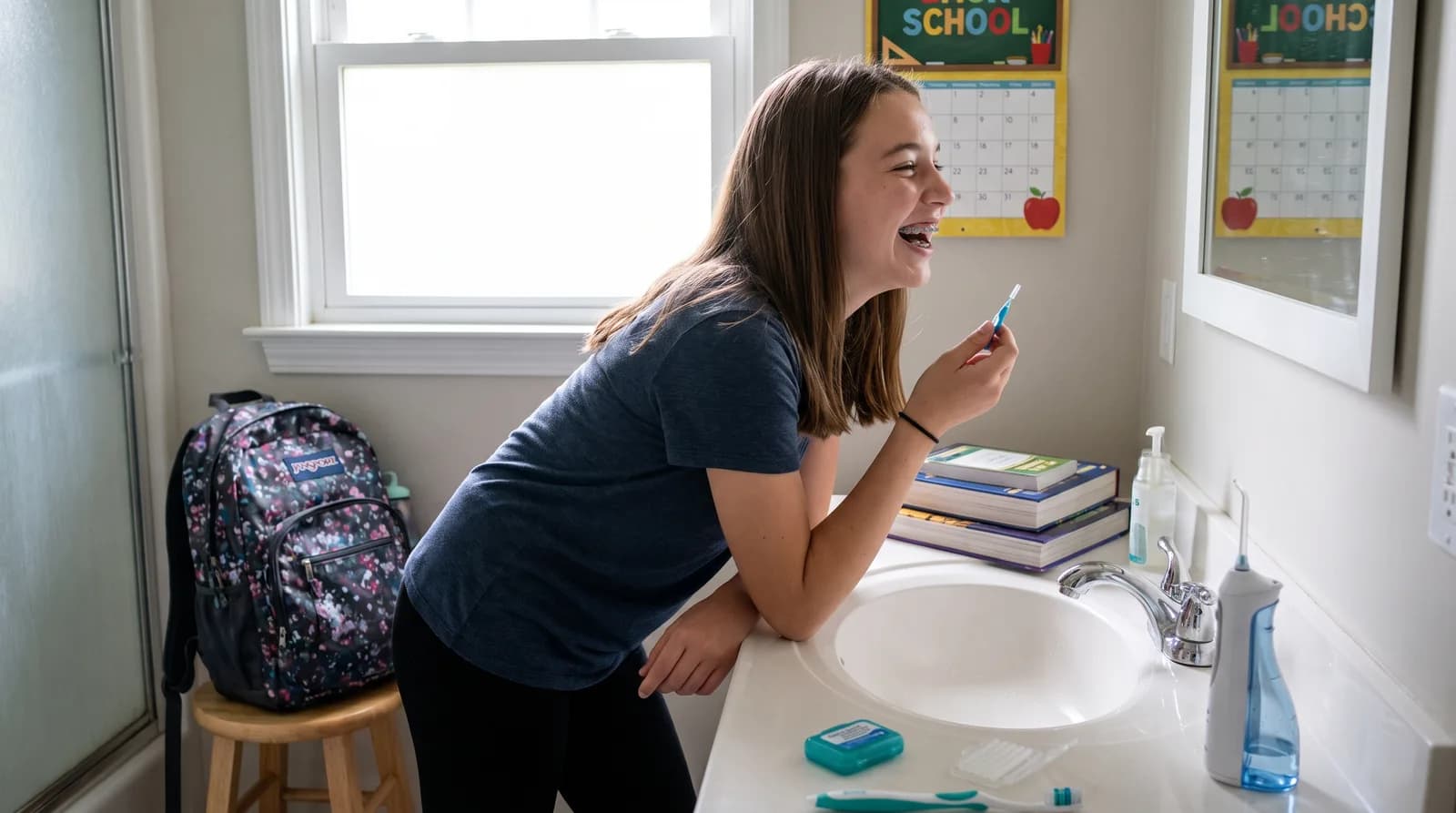 10 min readBraces Care Tips for Teens Heading Back to School NowBraces care tips for teens: what to pack in a locker kit, cafeteria foods to skip, sports and instruments, a poking wire in class, and picture day.Read the article
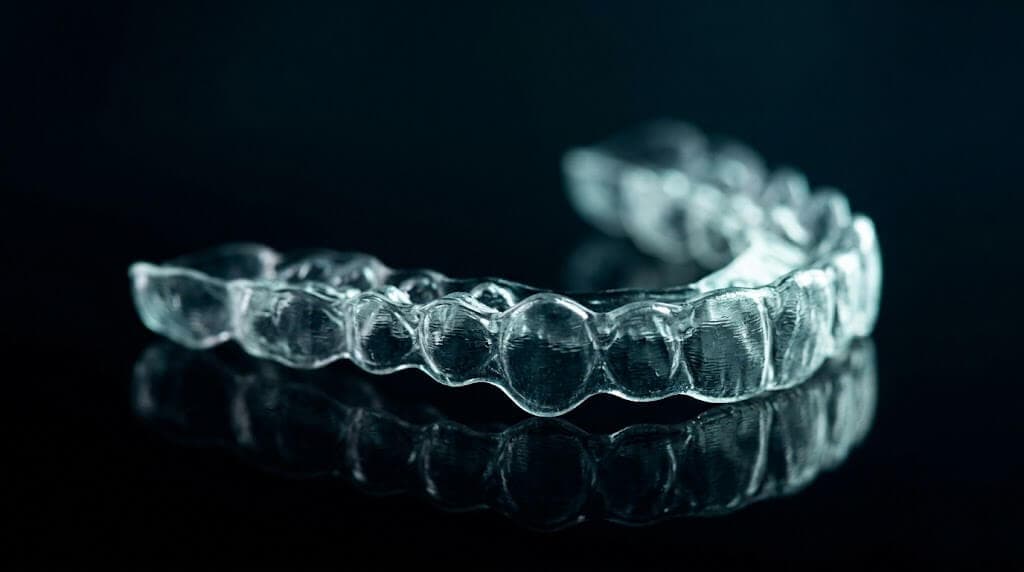 12 min readClear Aligners Consultation Near Me: What to ExpectBooking a clear aligners consultation near me?Read the article
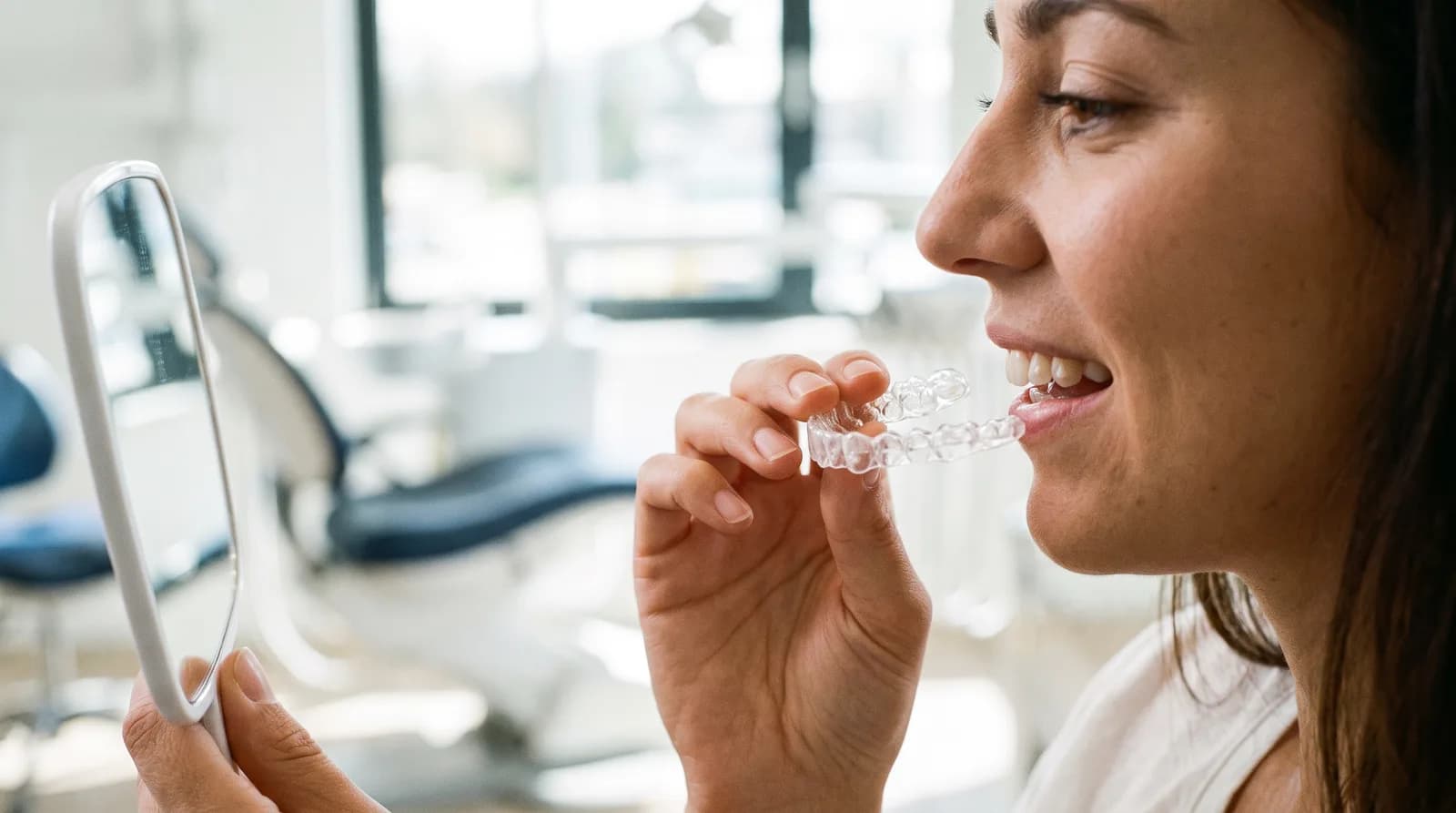 11 min readInvisalign Attachments and Refinements: What to ExpectInvisalign attachments and refinements explained: what they are, why they are needed, what they feel like, and how they fit into your treatment.Read the article
Your first visit
One ticket covers it.
360 Dental · Admit one