
Restorative Dentistry
Senior Dental Care in Van Nuys: What Changes With Age
Published 7 min read

Senior dental care looks different from a routine cleaning in your 30s. Medications change. Bone density shifts. Decades of wear catch up with you. Nearly 42% of adults over 30 already show some form of gum disease, according to the CDC. That risk keeps climbing with every decade after.
The good news is that most age-related dental problems are manageable. They just need the right kind of attention. At 360 Dental, our general dentistry team in Van Nuys sees patients well into their 80s and 90s, from first-time denture wearers to longtime implant patients.
This guide covers what changes with age, how often seniors should see a dentist, and what to do if dentures, dry mouth, or a tight budget are part of the picture.
What Makes Senior Dental Care Different From General Checkups?
Senior dental care differs because aging affects the mouth in specific, predictable ways. Gums recede. Saliva production drops. Many prescription medications cause dry mouth as a side effect. Bone density also declines, which matters for anyone considering implants or dentures. None of this is inevitable, but it calls for closer attention.

Root surfaces exposed by receding gums are softer than enamel. They decay faster once exposed. Reduced saliva means less natural rinsing, so plaque builds up quicker between visits. Many seniors take five or more daily medications. Dry mouth is a listed side effect of blood pressure drugs, antihistamines, and antidepressants alike, often without patients realizing the connection.
Tell your dentist about every medication you take, even ones that seem unrelated. That single detail often explains new sensitivity or cavities that otherwise seem to appear out of nowhere. A quick medication review takes two minutes and can save months of guessing later.
How Often Should Seniors Get Dental Cleanings and Checkups?
Most seniors should keep the standard twice-a-year cleaning schedule. That is the same one recommended for adults generally. Patients managing gum disease, dry mouth, or dentures often benefit from visits every three to four months instead, since problems progress faster once gum tissue and supporting bone are already compromised.
A few situations call for more frequent visits. Each one changes how quickly small issues can turn into bigger ones:
- Diagnosed gum disease or a history of bone loss
- Dry mouth caused by daily medication
- Full or partial dentures that need periodic adjustment
- Diabetes, which slows healing and raises infection risk
If it has been longer than a year since your last exam, that gap is exactly when small problems turn into bigger, costlier ones. A short visit now usually costs far less than treatment later. For a closer look at how often different patients actually need to come in, see our guide on how often you should get a dental cleaning.
Which Denture Option Is Right for You: Full, Partial, or Implant-Retained?
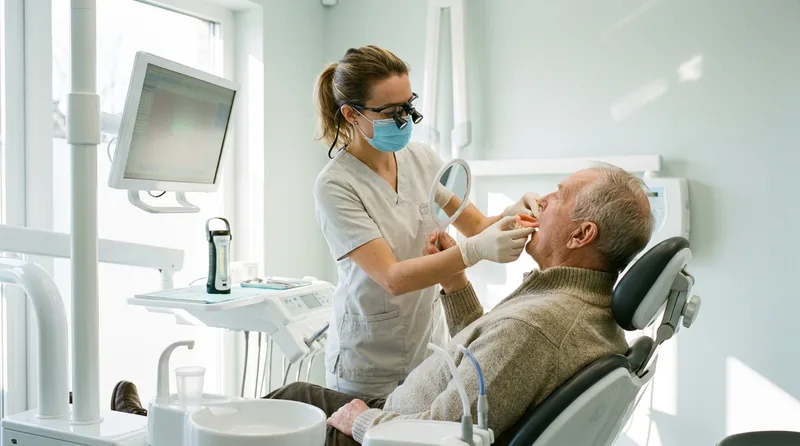
The right denture depends on how many natural teeth remain and how much jawbone is left to support them. Full dentures replace an entire arch. Partials fill gaps around remaining teeth. Implant-retained dentures snap onto a small number of implants for a noticeably more secure fit than either alternative.
| Denture Type | Best For | Stability |
|---|---|---|
| Full Denture | No remaining natural teeth in an arch | Moderate, held by suction and adhesive |
| Partial Denture | Some healthy teeth still remain | Moderate, clasps onto natural teeth |
| Implant-Retained | Adequate jawbone, want a secure fit | High, anchored to 2 or more implants |
According to the American Dental Association, well-fitted dentures should feel stable enough to eat and speak without slipping. Ill-fitting dentures, on the other hand, can cause sore spots and make chewing genuinely uncomfortable. Our denture team fits and adjusts every style in-house, so switching options later does not mean starting over from scratch.
Why Are Older Adults More Prone to Gum Disease and Dry Mouth?
Gum disease and dry mouth become more common with age mainly because of medication side effects and slower tissue healing, not because aging alone causes them. Dry mouth is a listed side effect of many common prescriptions. It removes a natural defense against the bacteria that cause gum disease in the first place.
Saliva neutralizes acid and washes away food particles throughout the day, according to the National Institute of Dental and Craniofacial Research. When saliva flow drops, plaque builds faster. Gum tissue becomes more vulnerable to infection and recession, sometimes within just a few months of starting a new medication.
A few simple habits help manage dry mouth day to day:
- Sip water often throughout the day
- Chew sugar-free gum between meals
- Ask your dentist about a fluoride rinse made specifically for dry mouth, since regular mouthwash can sometimes make the dryness worse
- Use a small humidifier at night to wake up with less dryness and fewer morning cavities near the gumline
Can Seniors Get Dental Implants Even with Bone Loss or Other Health Conditions?
Yes, most seniors can get dental implants, even with some bone loss or common conditions like controlled diabetes or osteoporosis. Success rates run 95 to 98% over ten years, according to research in the Journal of Oral and Maxillofacial Surgery. Bone grafting can rebuild density where it is needed most.
An estimated 120 million Americans are missing at least one tooth, per the American College of Prosthodontists. Implants can restore up to 90% of natural chewing power once fully healed. For patients missing several teeth across an arch, full mouth reconstruction combines implants, crowns, and bridges into one coordinated treatment plan instead of several separate procedures.
Every case gets an individual evaluation with 3D CT scanning before treatment starts. Bone density and health history shape the plan from day one, not a generic protocol.
Considering Dental Implants?
A 3D CT scan shows exactly how much bone you have to work with, no guesswork required.
What Oral Health Challenges Do Seniors Face Most Often?
Seniors most often deal with dry mouth, gum recession, root decay, and a higher risk of oral cancer. All of these are manageable with more frequent monitoring rather than resignation. None of these problems are simply something you have to accept as part of getting older, even though many patients assume otherwise.
- Dry mouth: usually a medication side effect, managed with water, rinses, and sugar-free gum
- Gum recession: exposes root surfaces, treated with deep cleaning or laser gum therapy
- Root decay: softer than enamel, caught early with more frequent checkups
- Oral cancer risk: rises with age, screened at every routine exam
A yearly oral cancer screening takes just a few minutes. It catches changes long before they become serious, which is exactly the point of routine senior dental care. Most seniors do not need every item on this list treated at once, and a good exam sorts out what actually needs attention now.
How Can Seniors Without Insurance Afford Dental Care?
Seniors without dental insurance can still get affordable care through in-house membership plans, PPO acceptance, and modern financing options like CareCredit or Sunbit. A membership plan alone often costs less per year than paying full price for two cleanings and an exam out of pocket.
The 360-VIP membership club runs $35 a month plus a one-time $99 activation fee. It covers two cleanings, exams, needed X-rays, two emergency exams, and 20% off other treatment each year. A separate perio plan is available at $49 a month for patients managing ongoing gum disease and needing extra cleanings. If you are weighing a membership against keeping traditional insurance, our comparison of a dental membership plan versus insurance walks through which one saves more in common scenarios.
Bring a list of your medications and any past dental records to your first visit. It speeds up your exam and helps us build a realistic plan around your budget from the start.
Senior dental care is not about doing more. It is about paying closer attention to a mouth that changes with age, medication, and time. That shift alone catches most problems while they are still small and inexpensive to treat.
If it has been a while since your last visit, or if a denture no longer fits the way it used to, that is worth a conversation now rather than later.
Results may vary. Please consult with your dentist at 360 Dental for personalized treatment recommendations.
Ready for Personalized Senior Dental Care?
Our Van Nuys team handles everything from cleanings to full mouth reconstruction under one roof.
Prefer to talk it through first?
Common questions
What is included in senior dental care?
Senior dental care covers routine cleanings, denture fittings and repairs, gum disease treatment, and screening for age-related conditions like dry mouth and oral cancer. Most seniors need the same twice-yearly visits as younger adults, sometimes more often if gum disease or dentures are involved.
How often should seniors get a dental cleaning?
Most seniors should get a cleaning every six months, the same schedule recommended for adults generally. Patients with gum disease, dry mouth, or dentures may benefit from visits every three to four months to catch problems early.
Are dental implants safe for older adults?
Yes, dental implants are generally safe for seniors when there is enough jawbone density to support them. Success rates run 95 to 98% over ten years, and conditions like diabetes or osteoporosis do not automatically rule a patient out.
What causes dry mouth in seniors?
Dry mouth in seniors is most often a side effect of medications for blood pressure, allergies, or depression, rather than aging itself. It raises cavity and gum disease risk, so daily water and fluoride rinses help protect teeth.
How much do dentures cost for seniors?
Denture costs vary by type. Full dentures typically cost less than implant-retained options, though pricing depends on materials and how many teeth need replacing. 360 Dental accepts all PPO plans and offers CareCredit, Sunbit, and Cherry financing.
Can seniors without insurance still get affordable dental care?
Yes, uninsured seniors can join the 360-VIP membership club for a flat monthly fee covering two cleanings, exams, needed X-rays, two emergency visits, and 20% off other treatment each year.
Did this answer your question?
Written for general reading, not as advice about your own teeth. Nothing here replaces an examination: if something hurts, or has changed, book a visit and let a dentist look at it.
Read next
 8 min readFailed Root Canal: Symptoms, Causes & What Happens Next Wondering what a failed root canal looks like? Learn the symptoms, common causes, and what happens next at 360 Dental in Van Nuys.Read the article
 13 min readWisdom Teeth Removal Recovery in Van Nuys: What to ExpectWisdom teeth removal recovery day by day: what to expect in the first 48 hours, what to eat, which symptoms need a call, and when you get back to normal.Read the article
 13 min readBotox for TMJ: How Jaw Tension Relief Works in Van NuysBotox for TMJ explained: which chewing muscles are treated, how long relief lasts, the off-label status, risks, and what belongs in a jaw tension plan.Read the article
Your first visit
One ticket covers it.
360 Dental · Admit one