
periodontal-care
Vaping Effects on Teeth and Gums: A Parent's Guide
Published 9 min read
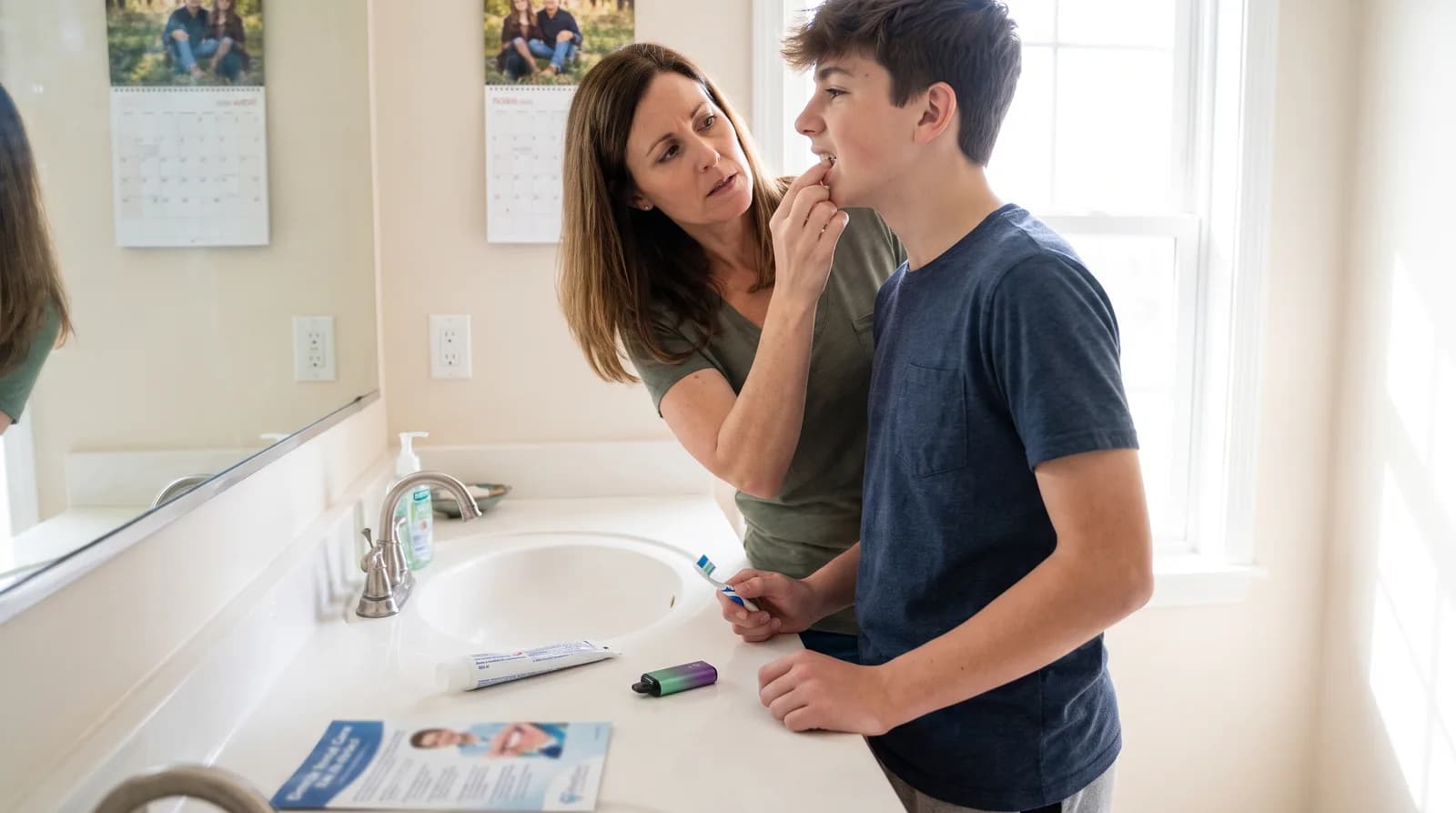
Most parents know to watch for the obvious signs of vaping, like a fruity smell or a device left in a backpack. Fewer know about the vaping effects on teeth and gums that show up in the mouth first, often visible during routine periodontal checkups before anything else gives it away.
These signs aren't about catching anyone doing something wrong. They're physical changes that a dentist can address regardless of the cause, and noticing them early tends to make a real difference in how manageable any underlying issue turns out to be.
This guide focuses on what a parent can actually notice at home, not the underlying chemistry. For a deeper look at the clinical mechanisms involved, see this practice's existing guide on vaping teeth damage and what dentists are seeing. For gum-specific care, see this practice's periodontal treatment and preventive dentistry services.
Vaping Effects on Teeth and Gums: What Should Parents Watch For?
Vaping's most noticeable oral health effects on a teenager are persistent dry mouth, gum changes like bleeding or recession, new cavities despite decent brushing habits, and a lingering bad breath that mouthwash doesn't fully resolve.
None of these signs are exclusive to vaping. Each one has other possible causes too. Together, though, a cluster of these changes showing up around the same time is worth a closer look, framed as a health conversation rather than an accusation.
This isn't about catching a teenager doing something wrong. It's about noticing physical changes early enough that a dentist can help, regardless of what's actually causing them.
According to the American Dental Association, dentists are increasingly screening patients for nicotine use, including vaping, precisely because these oral changes can show up well before other health effects become apparent.
A parent doesn't need to become an expert in vaping's chemistry to notice these signs. The physical changes themselves are visible enough, and a dentist can take it from there once something looks worth investigating. Trusting that instinct, even without full certainty, is reason enough to schedule a visit.
Noticing Any of These Signs?
A checkup gives real answers in a calm, judgment-free setting.
What Are the Signs of Dry Mouth a Parent Can Notice?
A parent can watch for persistent dry mouth, complaints of a constant metallic or chemical taste, unusually frequent thirst, and lips or the inside of the mouth looking noticeably dry or chapped more often than seems normal.
Dry mouth from vaping isn't the same as normal thirst after exercise or a salty meal. It tends to be persistent, showing up regardless of activity level or time of day, and doesn't fully resolve with a normal amount of water.
- Frequent thirst: reaching for water far more often than usual, even at rest.
- Chapped lips: ongoing dryness that lip balm doesn't seem to fix.
- Complaints about taste: a lingering metallic or chemical taste mentioned more than once.
A teenager might not connect these symptoms to anything specific themselves. They may just describe feeling generally thirsty or having a weird taste in their mouth without knowing why.
Saliva does more than most people realize day to day. It rinses away food particles, helps neutralize acid, and keeps oral tissue comfortable. When something reduces that saliva flow, the effects show up in ways that aren't always obviously connected to the mouth at first glance.
What Gum Changes Are Worth Watching For?
Gum changes worth watching for include bleeding during normal brushing, gums that look paler or thinner than usual, and any visible recession, where the gum line appears to be receding from the base of a tooth.
Gum bleeding is usually the first sign most people associate with a gum problem, and normally it's a fairly reliable early warning sign. Nicotine complicates that signal specifically, since it can reduce blood flow to gum tissue and suppress the bleeding that would otherwise show up.
That means gums can look deceptively calm even while a problem is developing underneath. A dentist checking probing depths and looking directly at the tissue can catch this earlier than a visual check at home ever could.
Recession specifically, where more of the tooth's root becomes visible than before, tends to develop gradually enough that it's easy to miss day to day. Comparing a recent photo to one from a year or two earlier sometimes reveals a change that wasn't obvious in the moment.
Recession in a teenager specifically stands out more than it would in an older adult, since gum recession typically develops much later in life without a specific contributing factor involved. Catching it early, before it progresses further, generally allows for simpler treatment options.
Why Are New Cavities Showing Up Despite Good Brushing?
New cavities showing up despite reasonably good brushing and flossing habits are one of the more surprising signs, since parents often assume good hygiene alone should prevent this, but reduced saliva changes that equation.
Saliva plays a bigger protective role than most people realize, rinsing away food particles and helping neutralize acid throughout the day. When saliva production drops, that protection drops with it, regardless of how carefully someone brushes.
A teenager developing multiple new cavities in a single checkup, especially after a checkup history of few or none, is a pattern worth mentioning directly to the dentist rather than assuming it's simply bad luck.
Nearly 1 in 4 adults in the US has untreated tooth decay, according to CDC data, and a sudden shift toward more frequent cavities in someone who previously had few is exactly the kind of change worth investigating rather than dismissing.
Is Persistent Bad Breath a Sign Worth Noticing?
Persistent bad breath that doesn't respond to normal brushing, flossing, or mouthwash is worth noticing, especially if it's a new pattern rather than something that's always been present for that teen.
Bad breath has plenty of ordinary causes, from diet to a cold. What stands out here is persistence despite otherwise normal oral hygiene, which points toward an underlying cause rather than a temporary one.
Excessive use of gum, mints, or mouthwash specifically to mask breath, more than seems typical, is sometimes a secondary sign worth noticing alongside the breath itself.
According to Mayo Clinic's general guidance on dental care, persistent bad breath that doesn't respond to normal hygiene often points to an underlying oral health issue rather than something purely dietary.
A dry mouth and persistent bad breath often show up together, since reduced saliva flow affects both at the same time. Noticing one alongside the other strengthens the case for a checkup rather than assuming either is isolated. A parent doesn't need certainty before scheduling a visit, just a genuine reason for concern.
A Judgment-Free Approach for Teens
Dr. Jeong focuses on understanding what's happening, not assigning blame.
What Does a Dentist Notice First at a Checkup?
At a dental visit, a dentist typically notices gum tissue that looks different than expected for a patient's age, unexplained cavities, and gum measurements that don't match what the tissue's appearance would otherwise suggest.
A dentist has tools and training that go beyond what's visible at home, including measuring the depth of the space between gum and tooth, which can reveal a developing issue well before it's visible to the naked eye.
Practices that ask directly about vaping during intake, rather than waiting for a patient to volunteer it, tend to catch these patterns earlier. A judgment-free, direct conversation gives a dentist the context needed to look in the right places.
Regular dental visits can catch about 80% of oral health issues before they become serious, according to the ADA, which underscores why a routine checkup, rather than waiting for a bigger problem to surface, matters so much here.
How Do I Bring This Up With My Teenager?
Bringing this up with a teenager works best as a calm, fact-based health conversation rather than a confrontation, focused on what's actually showing up physically rather than assumptions about behavior.
Teenagers tend to respond better to information framed around their own health and comfort than to accusations, even when a parent is fairly confident about what's going on. Leading with observed symptoms tends to open the conversation more effectively than leading with suspicion.
A scheduled dental visit gives a neutral, judgment-free setting for this conversation to continue with a professional, rather than staying solely between parent and teen at home.
Framing the conversation around care rather than punishment tends to keep a teenager more willing to actually engage with a dentist honestly, which matters more for getting an accurate picture of what's going on than any single conversation at home.
How Do I Schedule a Checkup to Look Into This?
Scheduling a dental visit to look into any of these signs is straightforward, and mentioning the specific symptoms noticed at home, like dry mouth or new cavities, helps the dentist know exactly where to focus the exam.
There's no need to mention vaping specifically if a parent isn't certain about it. Describing the physical symptoms noticed is enough for a dentist to investigate thoroughly and ask the right follow-up questions during the visit itself.
- Schedule a checkup and mention any specific symptoms noticed at home.
- Let the dentist ask directly about habits during a private conversation with the teen.
- Follow up on any recommended treatment for gum health or cavities found.
- Keep regular checkups on schedule going forward, regardless of what's found.
The goal of the visit is understanding what's actually happening and addressing it, not confirming a suspicion for its own sake.
Patients who keep up with routine dental care are roughly 60% less likely to lose teeth over time, according to the Journal of Dental Research, a pattern that matters just as much for a teenager building lifelong habits as it does for anyone else.
The short version: persistent dry mouth, gum changes, new cavities, and lingering bad breath are the signs most worth noticing at home. None of them confirm vaping on their own, but together they're worth a dental visit either way.
Results may vary. Please consult with Dr. Jeong for personalized treatment recommendations.
If something feels off with a teenager's mouth lately, a checkup is a low-pressure way to get real answers rather than guessing at home. Most concerns turn out to be manageable once a dentist actually takes a look.
Have a question about your teen's oral health?
Common questions
What are the first signs of vaping's effects on teeth and gums?
Persistent dry mouth, frequent thirst, and chapped lips tend to show up early. Gum bleeding or recession, new cavities despite decent brushing, and lingering bad breath are also common signs worth watching for.
Can nicotine hide gum disease symptoms?
Yes. Nicotine can reduce blood flow to gum tissue, which suppresses the bleeding that normally signals a developing problem. This means gums can look calm even while an issue develops underneath, undetectable without a dental exam.
Why would a teenager get cavities if they brush and floss regularly?
Reduced saliva flow lowers the mouth's natural protection against cavities, regardless of brushing habits. Multiple new cavities appearing in a single checkup, especially after a history of few, is worth mentioning to the dentist.
How should I talk to my teenager if I suspect vaping is affecting their teeth?
Lead with a calm, fact-based conversation about the physical symptoms noticed rather than an accusation. Teenagers tend to respond better to health-focused framing, and a dental visit offers a neutral setting to continue the conversation.
Do I need to tell the dentist my teen vapes?
Not necessarily. Describing the specific symptoms noticed at home, like dry mouth or new cavities, gives the dentist enough information to investigate thoroughly and ask appropriate follow-up questions during the visit.
What does a dentist check for that a parent might miss?
A dentist measures the depth of the space between gum and tooth, which can reveal a developing issue before it's visible to the naked eye, and can spot patterns that aren't obvious from a home inspection alone.
Did this answer your question?
Written for general reading, not as advice about your own teeth. Nothing here replaces an examination: if something hurts, or has changed, book a visit and let a dentist look at it.
Your first visit
One ticket covers it.
360 Dental · Admit one