
Periodontal Care
What Is Periodontal Disease? Stages and What to Expect
Published 7 min read

Periodontal disease is an infection of the gums and bone that support your teeth, and it is one of the most common conditions dentists see. According to the CDC, 42% of adults over 30 have some form of it. Many people do not notice symptoms until the condition has already progressed, since the early stages rarely hurt.
At 360 Dental, our general dentistry team in Van Nuys checks for early signs of gum disease at every routine exam. Catching it early makes a real difference in how it is treated.
This guide walks through what the condition actually is, its stages, how quickly it develops, and whether it can be reversed once it starts.
What Is Periodontal Disease?
Periodontal disease is a bacterial infection that damages the gums and, if untreated, the bone holding your teeth in place. It starts as gingivitis, a mild and reversible inflammation of the gums, and can progress to periodontitis, a more serious stage that damages the tissue and bone around your teeth.
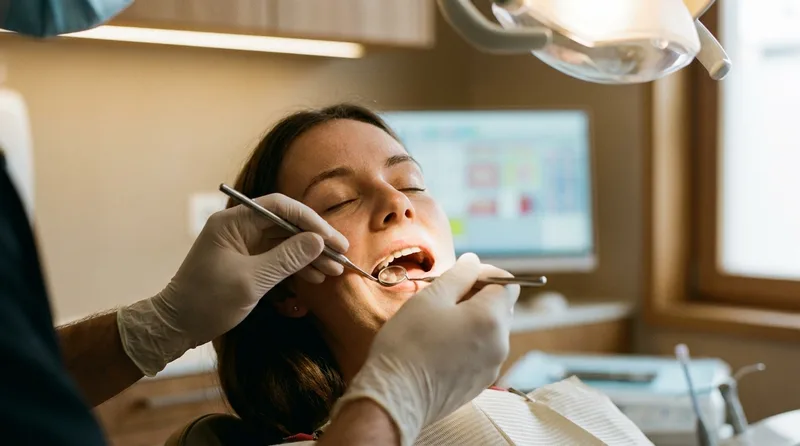
Plaque, a sticky film of bacteria, builds up along the gumline every day. Left alone, it hardens into tartar, which only a professional cleaning can remove. Your immune system reacts to that bacteria with inflammation, and that reaction is what causes red, swollen, or bleeding gums in the first place. It sounds minor at first. It rarely stays that way without some intervention.
Bleeding when you brush is not normal, even if it happens often. It is usually the first sign worth mentioning at your next visit, well before anything feels painful. Left unaddressed long enough, that same bleeding can eventually turn into loose teeth.
What Are the Stages of Periodontal Disease?
The condition progresses through several stages, starting with gingivitis and advancing toward more serious periodontitis if it goes untreated. Gingivitis affects only the gums and is fully reversible, while periodontitis involves bone loss that becomes harder to reverse the longer it continues.
- Gingivitis: red, swollen, or bleeding gums, with no bone loss yet
- Early periodontitis: gums start pulling away from teeth, forming small pockets
- Moderate periodontitis: deeper pockets, some bone loss, teeth may loosen slightly
- Advanced periodontitis: significant bone loss, teeth become loose or shift
Most people move through these stages slowly, over years rather than months. That slow pace is exactly why regular checkups matter, since a dentist can catch stage changes long before you would notice them yourself. According to the ADA, routine visits catch roughly 80% of oral health issues while they are still minor and easier to treat.
Do I Have Gingivitis or Periodontitis?
Gingivitis causes red, puffy, or bleeding gums without any bone loss, while periodontitis means the infection has spread below the gumline and started damaging bone. The distinction matters because gingivitis is reversible with a good cleaning, but periodontitis requires ongoing management instead.
| Feature | Gingivitis | Periodontitis |
|---|---|---|
| Gum appearance | Red, swollen, may bleed | Receded, pulling away from teeth |
| Bone involvement | None | Some to significant bone loss |
| Outlook | Fully reversible | Managed, not reversed |
According to MouthHealthy, the American Dental Association's patient site, gingivitis alone rarely causes pain, which is part of why it goes unnoticed for so long.
How Long Does It Take for Gum Disease to Develop?
Gum disease can begin within weeks of skipping regular brushing and flossing, though it usually takes months to years to progress toward periodontitis. How quickly it advances depends on several factors working together, not just one habit.

- Genetics and family history
- Daily brushing and flossing consistency
- Smoking or tobacco use
- Health conditions like diabetes
Someone with excellent home care and regular cleanings might stay at the gingivitis stage indefinitely. Someone who smokes, skips checkups, or manages uncontrolled diabetes can progress much faster, sometimes within a year or two of the first symptoms appearing.
Can Periodontal Disease Be Reversed, or Only Managed?
Yes, gingivitis can typically be reversed with a professional cleaning and better home care, since no bone loss has occurred yet. Periodontitis, however, can only be managed and stabilized once bone loss has happened, because that lost bone does not grow back on its own.
According to the National Institute of Dental and Craniofacial Research, treatment for periodontitis aims to stop further bone loss and keep it from progressing, not to reverse damage that has already occurred. That is a realistic goal, and one that is often very achievable with consistent care.
Regular maintenance cleanings, often every three to four months instead of twice a year, are usually what keeps periodontitis stable for the long run. Left untreated, advanced cases are a leading cause of adult tooth loss. According to the American College of Prosthodontists, 120 million Americans are missing at least one tooth, and gum disease is a major contributor to that number. For patients who do lose teeth this way, according to the Journal of Oral and Maxillofacial Surgery, 95% of dental implants still succeed over ten years.
Noticing Bleeding or Loose Teeth?
The earlier it's caught, the more of it can actually be reversed.
Can Gum Disease Be Hereditary?
Yes, genetics can influence how susceptible your gums are to infection, independent of how well you brush and floss. A family history does not guarantee you will develop it, but it is worth mentioning at your dental visits regardless.
If a parent or sibling has struggled with gum disease, closer monitoring and more frequent cleanings can help offset that added risk. Genetics load the gun, in a sense, but daily habits and professional care still decide most of the outcome. Patients who visit the dentist regularly are about 60% less likely to lose teeth overall, according to the Journal of Dental Research, family history included.
What Is Periodontics, and When Do You Need a Specialist?
Periodontics is the dental specialty focused on preventing, diagnosing, and treating gum disease and the structures that support your teeth. Most gingivitis and early periodontitis cases are treated by a general dentist, and a specialist typically gets involved once a case grows more advanced.

A periodontics referral usually happens for moderate to advanced bone loss, gum recession needing grafting, or cases that have not responded to standard deep cleaning. It is a step up in care, not a sign that something has gone especially wrong.
How Is Gum Disease Treated at 360 Dental?
Treatment usually starts with scaling and root planing, a deep cleaning that removes plaque and tartar from below the gumline. For patients who need more, laser gum therapy offers a gentler alternative to traditional gum surgery with a noticeably shorter recovery time.
Our gum disease treatment options are matched to your specific stage, not applied as a one-size-fits-all protocol. Mild gingivitis might just need a cleaning and better technique at home. Moderate to advanced cases usually call for a maintenance schedule every three to four months going forward.
Bring up any bleeding, sensitivity, or looseness as soon as you notice it. Waiting rarely makes things easier to manage. According to JADA, untreated dental infections can spread within 48 hours in severe cases, which is one more reason not to put off a visit.
Periodontal disease is common, but it is not something to simply live with. Catching it at the gingivitis stage means it is fully reversible, and catching it later still means it can be stabilized and managed effectively.
If your gums bleed regularly, feel tender, or you have noticed any looseness, that is worth a conversation at your next visit rather than something to wait out.
Results may vary. Please consult with your dentist at 360 Dental for personalized treatment recommendations.
Concerned About Your Gum Health?
Our Van Nuys team can evaluate your gums and build a treatment plan matched to your stage.
Prefer to talk it through first?
Common questions
What is periodontal disease?
Periodontal disease is a bacterial infection that damages the gums and, if untreated, the bone that holds your teeth in place. It starts as gingivitis and can progress to periodontitis, a more serious stage involving bone loss.
What are the stages of periodontal disease?
The main stages are gingivitis, early periodontitis, moderate periodontitis, and advanced periodontitis. Gingivitis affects only the gums, while later stages involve progressively more bone loss and looser teeth.
Can periodontal disease be cured?
Gingivitis can be fully reversed with a professional cleaning and better home care. Periodontitis cannot be reversed once bone loss occurs, but it can be effectively managed and stabilized with ongoing maintenance care.
How long does it take for gum disease to develop?
Gum disease can begin within weeks of skipping oral hygiene, though it usually takes months to years to progress to periodontitis. Smoking, genetics, and conditions like diabetes can speed up that progression.
Is gum disease hereditary?
Yes, genetics can influence how susceptible your gums are to infection, separate from your hygiene habits. A family history does not guarantee gum disease, but it is worth mentioning to your dentist.
What is periodontics?
Periodontics is the dental specialty focused on preventing, diagnosing, and treating gum disease and the tissues that support your teeth. Specialists typically handle moderate to advanced cases beyond routine gingivitis.
Did this answer your question?
Written for general reading, not as advice about your own teeth. Nothing here replaces an examination: if something hurts, or has changed, book a visit and let a dentist look at it.
Read next
 13 min readLaser Gum Treatment in Van Nuys: A Gentler AlternativeHow laser gum treatment compares with traditional deep cleaning: the appointment, recovery, candidacy, and when conventional care is the better choice.Read the article
 13 min readEarly Signs of Gum Disease Most People Miss in Van NuysThe early signs of gum disease are easy to miss: bleeding when you floss, receding gums, lasting bad breath. What to check and when to book in Van Nuys.Read the article
Your first visit
One ticket covers it.
360 Dental · Admit one