
Emergency Dental Care
What to Do in a Dental Emergency: First Steps to Take
Published 13 min read
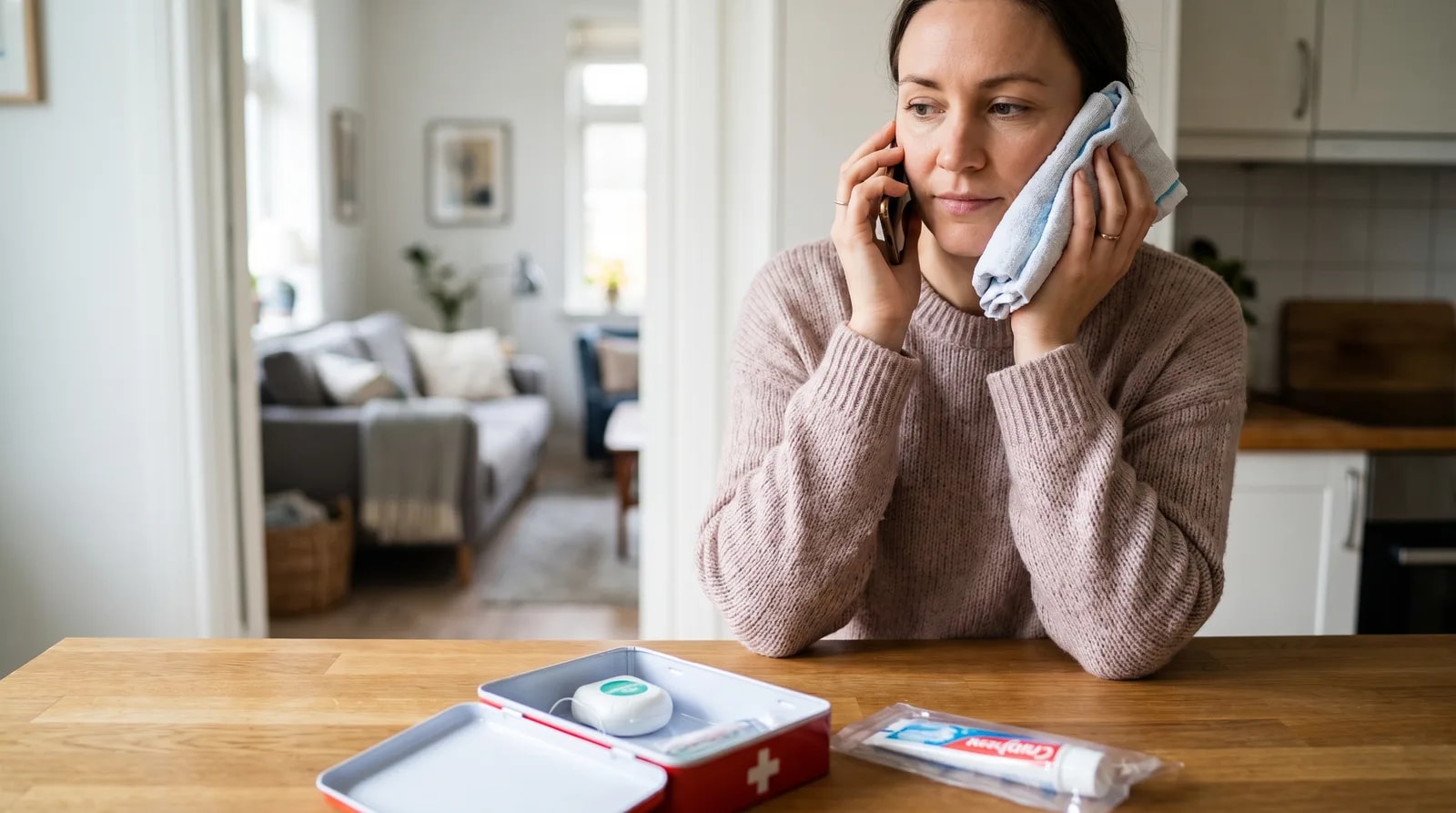
A dental emergency almost never picks a convenient moment. It's Saturday morning, a kid lands badly at soccer practice in Van Nuys, and a front tooth is sitting in the grass. Or you wake at 2 a.m. with a throbbing molar and one cheek swollen. What you do in the next few minutes often decides whether that tooth gets saved or lost.
Most people freeze, then wait until morning. That's understandable. It's also the expensive part. The ADA Health Policy Institute reports about 2 million emergency room visits a year in the US are for dental issues, and most hospital ERs can't actually treat the tooth. They stabilize you and send you to a dentist anyway.
This guide covers what genuinely helps: how to separate a real emergency from a problem that can wait, the first steps for a knocked-out tooth, a cracked tooth, and swelling, what to keep at home, and when to call emergency dentistry in Van Nuys instead of driving to a hospital. Everything here reflects how a general dentistry team actually triages these calls.
What counts as a dental emergency?
A dental emergency is any mouth problem that threatens to cost you a tooth, involves bleeding you can't control, or brings facial swelling and fever. Those need same-day care. A small chip, a lost filling, or mild sensitivity is annoying, but it can usually wait until the next open appointment.
The distinction matters because urgency drives the outcome. A hairline crack seen within a day often needs a crown. The same tooth left three weeks may need a root canal, or extraction. Time changes the treatment plan more than anything else you control.
| What happened | How fast you need care | Why |
|---|---|---|
| Permanent tooth knocked out | Within 30 minutes | The root cells that let a tooth reattach start dying quickly |
| Facial swelling with fever | Same day | Infection has moved past the tooth into surrounding tissue |
| Bleeding you can't stop | Same day, or the ER | Blood loss and airway risk outrank the tooth itself |
| Tooth cracked below the enamel | Within 24 hours | An exposed nerve invites bacteria and worsens fast |
| Crown or filling fell out | Within a few days | The tooth is vulnerable but usually stable short term |
| Small chip, no discomfort | Next available visit | Cosmetic repair with no urgency attached |
That table describes typical patterns, not your specific tooth. If you're unsure which row you're in, call and describe what you see. 360 Dental keeps same-day slots open for exactly this.
What should you do in the first 10 minutes?
Start by staying calm and getting a clear look at what happened. Control any bleeding with steady pressure from clean gauze, apply a cold compress to swelling, save every tooth fragment in milk, then call your dentist and describe exactly what you see.
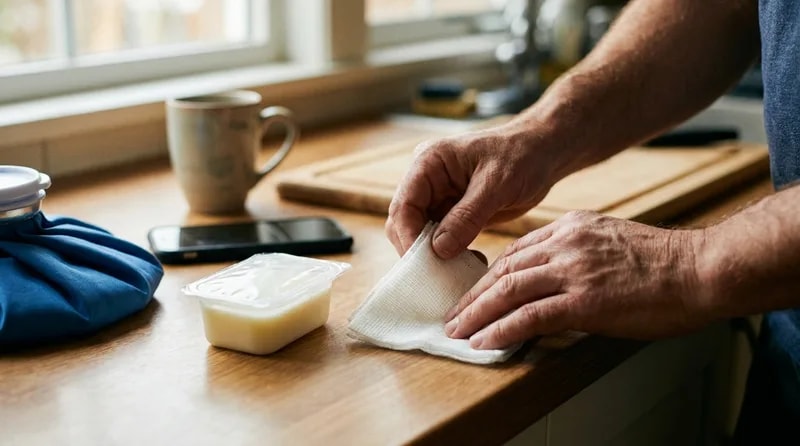
Those first minutes are about preservation. You're not fixing anything at the kitchen sink. You're keeping tissue alive and stopping things from getting worse before a professional looks at it.
- Look before you act. Rinse with warm water and identify what you're dealing with: a missing tooth, a fragment, a cut, or swelling with nothing visible. What you report determines how fast they get you in.
- Stop the bleeding. Fold clean gauze over the site and hold firm pressure for a full 10 minutes without peeking. Lifting it early restarts the clock.
- Cool the swelling. A cold pack against the outside of the cheek, 20 minutes on and 20 off, slows inflammation and eases the discomfort.
- Save the pieces. Any tooth or fragment goes into a sealed container with milk. Not tap water. Milk's composition keeps root cells viable far longer.
- Call, don't text. Describe the injury, the swelling, and when it started. Ask directly whether you should be seen today.
There's a reason people hesitate instead of calling. A 2024 study in BMC Oral Health found 36% of Americans have dental anxiety, and 12% have extreme dental fear. An emergency is the worst possible time for that hesitation to win.
Skip the folk remedies. No aspirin pressed against the gum, no heat on a swollen face, and no attempts to reseat a fragment with household adhesive. Each of those makes the professional repair harder.
What do you do if a tooth gets knocked out?
Handle it by the crown, never the root, and try to place it back in the socket within 30 minutes. The ADA notes that a knocked-out tooth can be saved if reimplanted within 30 minutes. If reseating isn't possible, store the tooth in milk and get to a dentist immediately.
The reason for the tight window sits on the root surface. A thin layer of living cells there is what allows a tooth to reattach to bone. Dry them out or scrub them off and reattachment stops being an option, no matter how skilled the dentist is.
So the handling rules are simple, and they matter more than speed alone:
- Crown only. Pick the tooth up by the chewing surface. Fingers off the pointed root end.
- Rinse, don't clean. A few seconds under cool water or milk removes debris. No soap, no scrubbing, no cloth.
- Reseat if you can. Slide it back into the socket in its original orientation and bite gently on gauze to hold it.
- Milk if you can't. A sealed container of milk beats water every time. Saline works too. Dry tissue paper is the worst option.
- Baby teeth are different. A knocked-out primary tooth generally is not reimplanted, since that can damage the developing permanent tooth underneath. Still worth a same-day call.
MouthHealthy, the ADA's patient education site, keeps a plain-language walkthrough of these steps that's worth reading before you need it. See the ADA's guidance on dental emergencies for the full version.
A knocked-out tooth is a same-day priority
360 Dental is an all-digital practice with 3D CT scanning and iTero scanning on site, so diagnosis and treatment planning happen in the same visit rather than across three.
How should you handle a cracked or broken tooth?
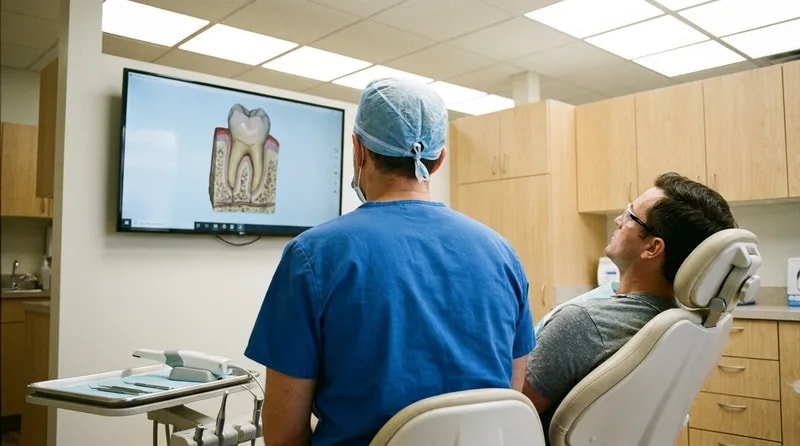
It depends on how deep the crack goes. A shallow chip in the enamel is a cosmetic repair you can schedule normally. A crack that reaches the inner tooth, or a tooth broken at the gumline, is a same-day dental emergency because the nerve is exposed to bacteria.
A chip limited to the enamel
Rough edges can be smoothed and rebuilt with bonding, often in one visit. There's no urgency beyond your own comfort, though sharp edges can cut the tongue, so cover them with dental wax.
A crack that reaches the inner tooth
Sensitivity to cold, discomfort when you bite down, then relief when you let go: that pattern suggests the crack has passed through the enamel into dentin or pulp. This needs imaging within a day. A crown often saves the tooth at this stage.
A tooth broken at the gumline
The most serious of the three. The nerve is usually exposed, discomfort is significant, and the tooth may still be salvageable with root canal therapy and a crown. Whether it can be saved depends on how much healthy structure sits above the bone, which is a question only imaging can answer.
Save every fragment you find, even small ones. They tell the dentist how the tooth failed, and occasionally a larger piece can be bonded back into place.
Is swelling with tooth discomfort an emergency?
Yes. Swelling paired with tooth discomfort usually means infection has moved beyond the tooth into surrounding tissue, and that spreads fast. Research published in JADA found dental abscesses can spread to other parts of the body within 48 hours if untreated. Don't wait it out at home.
An abscess is a pocket of infection at the root tip or in the gum. It may throb, make the tooth feel taller than its neighbors, or leave a bad taste when it drains. Sometimes the discomfort stops suddenly, which patients read as improvement. It usually means the nerve has died while the infection continues.
Antibiotics alone rarely settle it. They reduce swelling enough to make treatment comfortable, but the source has to be addressed directly, most often with root canal therapy or extraction. At 360 Dental, that work is handled in house by endodontist Dr. Parham Mansouri, DDS, MS, who has been the practice's root canal specialist for over 15 years. No referral out, no second waiting room, no extra week with an active infection.
Gum tissue is often part of the picture too. CDC data from 2024 shows 42% of adults aged 30 and older have some form of periodontal disease, which makes the surrounding tissue less able to contain an infection once it starts.
Watch for these signs that an abscess is escalating: swelling that closes one eye, difficulty opening your jaw, a fever above 101 F, or swelling that starts tracking down the neck. Any of those means immediate care.
What should you keep in a home dental emergency kit?
Keep a small kit with sterile gauze, a sealed container, dental wax, a cold pack, and your dentist's number saved in your phone. Add temporary filling material from any pharmacy. The goal isn't treating yourself at home. It's buying time and protecting the tooth until you're seen.
Families with kids in contact sports get the most value out of this. The ADA notes tooth decay is the most common chronic disease in children, 5 times more common than asthma, so many pediatric cases begin with an already weakened tooth. Most dental emergency calls involving children follow a fall or collision during play, and the difference between a saved tooth and a lost one is often whether someone had a clean container within reach.
- Sterile gauze pads. For pressure on bleeding sockets and to bite on when holding a reseated tooth in place.
- A small sealed container. Anything watertight works, as long as you can add milk to it.
- Dental wax. Covers sharp edges from a fracture or a broken bracket so it stops cutting your tongue.
- Temporary filling material. Available over the counter, useful when a filling drops out on a weekend.
- A cold pack. Reusable gel packs beat improvising with frozen vegetables.
- Your dentist's number and after-hours instructions. Saved in your contacts, not somewhere in your email.
- A custom night guard or sports guard. Prevention rather than response, and the most effective item here.
Check it twice a year. Temporary filling material dries out, and gel packs leak.
When should you go to the ER instead of a dentist?
Go to the ER when the problem stops being about a tooth and starts affecting your airway or spreading through your face and neck. Difficulty breathing or swallowing, swelling near the eye, and a high fever all belong in a hospital. Everything else belongs in a dental chair.

This is where time and money get wasted. Hospital emergency departments are built for trauma and systemic infection, not teeth. They rarely staff a dentist, and can't perform a root canal, place a crown, or reimplant a tooth. Most dental emergency ER visits end with an antibiotic prescription and a referral, which is why that 2 million figure from the ADA Health Policy Institute represents so much duplicated effort.
Head to the emergency room or call 911 for any of these:
- Difficulty breathing or swallowing, or a feeling that your throat is closing
- Swelling spreading toward the eye, under the jaw, or down the neck
- A fever above 101 F alongside rapidly worsening facial swelling
- Facial trauma with a suspected broken jaw, or loss of consciousness
- Bleeding that hasn't slowed after 20 minutes of firm, continuous pressure
Everything else, including most knocked-out teeth, fractures, and abscesses without those warning signs, is faster and better handled at a dental office. Untreated decay is a large part of why these situations arise at all: the National Institute of Dental and Craniofacial Research documents how tooth decay progresses silently long before it becomes urgent, and CDC data shows nearly 1 in 4 US adults has untreated tooth decay right now.
How do you afford emergency dental care without insurance?
You have options beyond paying full price out of pocket. 360 Dental accepts all PPO dental plans, offers financing through CareCredit, Sunbit, and Cherry, and runs the 360-VIP membership club for patients without insurance, which includes two emergency exams a year.
Cost is the reason most people delay, and delay is what turns a filling into a root canal. Being clear about the money up front removes the excuse to wait. The adult 360-VIP plan runs $35 a month plus a $99 lifetime activation fee, and covers two cleanings a year, exams, needed x-rays, two emergency exams, and 20% off other treatment. A periodontal version is $49 a month.
Financing through Cherry, Sunbit, or CareCredit spreads larger treatment across monthly payments, and applications are usually answered within minutes at the front desk. Ask before treatment starts, not after.
Full details of what the membership covers are on the 360-VIP membership club page. If you do carry a PPO plan, call ahead so the office can verify your specific benefits before your visit.
Why does the delay matter more than the injury?
Nearly every dental emergency comes down to a single variable you actually control, and it isn't skill or budget. It's the delay between the injury and the phone call. Thirty minutes decides a knocked-out tooth. Twenty-four hours decides a cracked one. Two days decides whether an abscess stays local.
The prevention math is hard to argue with. The ADA reports regular visits catch 80% of oral health issues before they turn serious, and the Journal of Dental Research found regular patients are 60% less likely to lose teeth.
So do the small thing now, while nothing's wrong: put 360 Dental's number in your phone at (818) 787-6400 and put a sealed container and gauze in a drawer you'll remember. The office sits at 6301 Van Nuys Blvd, at Van Nuys and Victory Boulevards, minutes off the 405 and 101, serving Van Nuys, Sherman Oaks, North Hollywood, Encino, and Valley Glen.
Results may vary. Please consult with your dentist at 360 Dental for personalized treatment recommendations.
Facing a dental emergency in Van Nuys?
Same-day appointments, an all-digital practice, and an in-house endodontist mean your tooth gets diagnosed and treated under one roof rather than across three offices.
Prefer to speak to someone right now? The team answers during office hours, Monday through Thursday 8:30 AM to 5:30 PM and Friday until 4:00 PM.
Call (818) 787-6400 →
Common questions
How do I know if my toothache is a dental emergency?
Treat it as a dental emergency if the discomfort keeps you awake, comes with facial swelling or fever, or gets worse over hours rather than days. Those signs point to infection reaching tissue beyond the tooth, which needs same-day evaluation rather than watchful waiting.
Can a knocked-out adult tooth be put back in?
Often yes, if you act fast. The ADA reports a knocked-out tooth can be saved when reimplanted within 30 minutes. Handle it by the crown only, rinse gently without scrubbing, and keep it moist in milk on the way to the office.
Should I go to the emergency room for a dental emergency?
Go to the ER for difficulty breathing or swallowing, swelling spreading toward your eye or neck, a suspected jaw fracture, or bleeding that won't stop. For the tooth itself, a dental office has the imaging and instruments a hospital usually lacks.
What can I take for severe tooth discomfort at night?
Over-the-counter options taken as directed on the label can take the edge off, and a cold compress against the cheek helps with swelling. Avoid placing aspirin directly on the gum tissue, which can burn it. Call the office as soon as it opens.
Is a lost filling or crown an emergency?
Usually not a same-day emergency, though it shouldn't wait long. The exposed tooth is vulnerable to fracture and decay, so most offices aim to see you within a few days. Temporary filling material from a pharmacy protects the area meanwhile.
How much does emergency dental care cost without insurance?
Cost depends entirely on what the tooth needs, from a limited exam and x-ray to a root canal or extraction. 360 Dental offers CareCredit, Sunbit, and Cherry financing, plus a 360-VIP membership that includes two emergency exams a year.
Can I wait until Monday to see a dentist?
A small chip or mild sensitivity can usually wait. Swelling, a knocked-out tooth, uncontrolled bleeding, or discomfort that's escalating cannot. Waiting through a weekend with an active infection is how a treatable tooth becomes an extraction.
Did this answer your question?
Written for general reading, not as advice about your own teeth. Nothing here replaces an examination: if something hurts, or has changed, book a visit and let a dentist look at it.

Your first visit
One ticket covers it.
360 Dental · Admit one