
Pediatric Dentistry
Cavities in Baby Teeth: Why They Matter More Than You Think
Published 9 min read
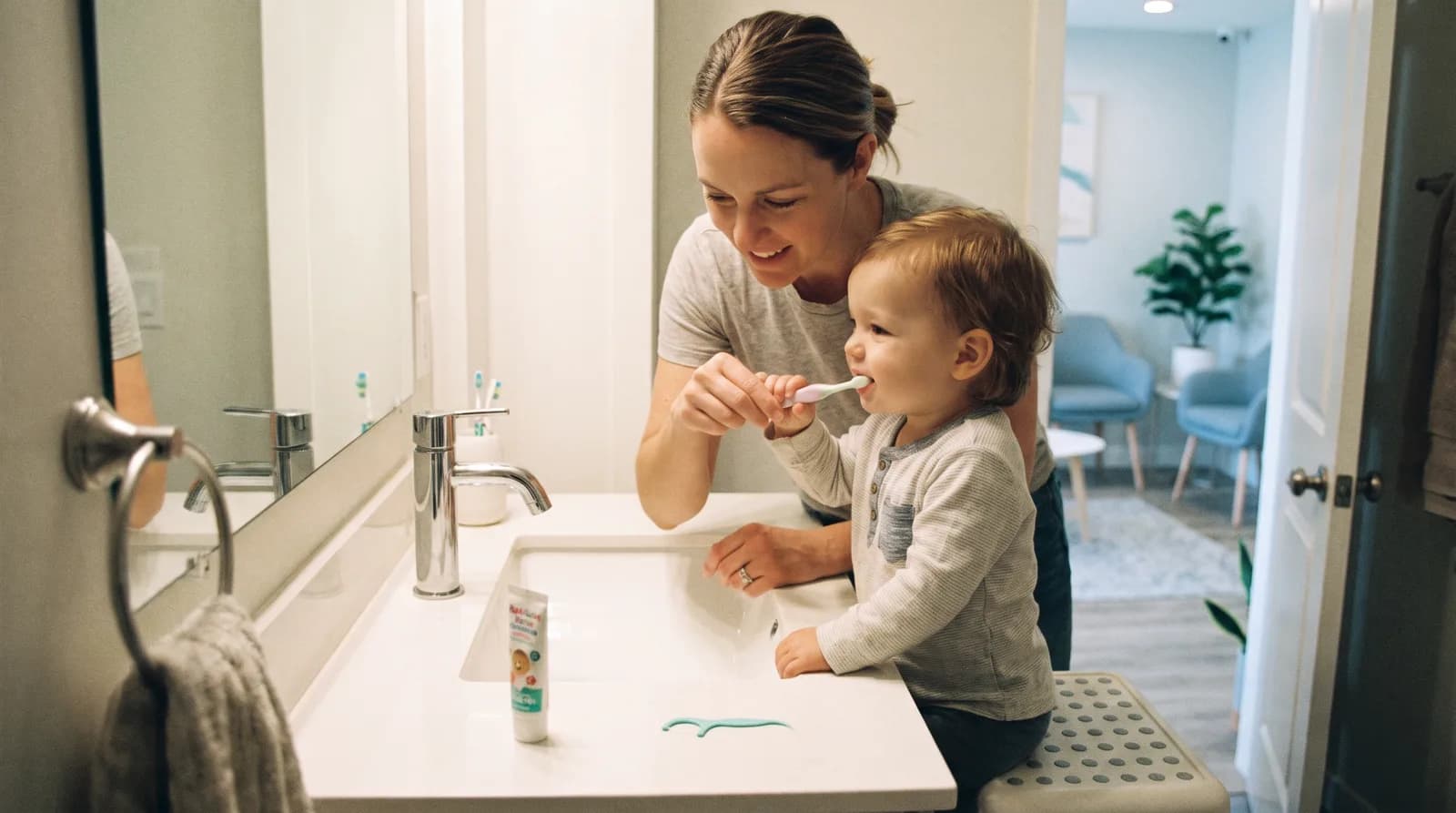
It is a common assumption among parents: baby teeth fall out anyway, so does a cavity really matter? The honest answer is yes, and the reasons go well beyond what most parents expect. Cavities in baby teeth affect a child's health, comfort, and even the development of their permanent teeth, which is why pediatric dentists treat primary tooth decay with the same seriousness as decay in adult teeth. This guide explains why these cavities matter, what causes them, and how to prevent them.
At Willow Family Dentistry in Wylie, TX, helping families understand the "why" behind treating baby teeth is part of every pediatric visit, because parents who understand the stakes tend to stay more consistent with prevention.
Why Do Cavities in Baby Teeth Matter If the Tooth Will Fall Out Anyway?
These cavities matter because primary teeth hold space for permanent teeth, support proper chewing and speech development, and can cause real pain and infection if left untreated. A baby tooth lost too early because of decay does not simply create an empty space; it can allow neighboring teeth to drift into that space, crowding out the permanent tooth that is supposed to erupt there later.
This kind of decay is also far more common than many parents realize. According to the Centers for Disease Control and Prevention, about half of children have had at least one cavity in a primary or permanent tooth by age nine, and roughly 11% of children aged 2 to 5 already have untreated decay in their baby teeth. This is not a rare problem affecting only a few children; it is one of the most common chronic conditions of early childhood.
Beyond the immediate tooth, untreated decay can lead to infection that spreads to the surrounding gum and bone, and in more severe cases can affect a child's eating, sleeping, and overall growth. A child in pain from a cavity often eats less, sleeps poorly, and may have difficulty concentrating in school, effects that extend well beyond the mouth.
What Causes Cavities in Baby Teeth?
This decay is caused by the same basic process as cavities in adult teeth: bacteria feed on sugars left on the teeth, producing acid that erodes the enamel over time. Baby teeth have thinner enamel than permanent teeth, which means decay can progress more quickly once it starts, sometimes catching parents off guard with how fast a small spot becomes a larger problem.
The most common contributing factors in young children include:
Understanding these factors helps explain why two children with similar diets can have very different cavity experiences, since brushing consistency, fluoride exposure, and even genetics around enamel strength all play a role alongside diet.
- Frequent exposure to sugar: Juice, sweetened drinks, and snacking throughout the day all increase the amount of time teeth are exposed to acid-producing bacteria.
- Bottle or sippy cup use at bedtime: Falling asleep with a bottle of milk, formula, or juice allows liquid to pool around the teeth for hours, a pattern strongly associated with what is sometimes called baby bottle tooth decay.
- Inconsistent brushing: Young children need help brushing effectively until they have the dexterity to do it well themselves, often well into elementary school.
- Delayed first dental visit: Early decay is easiest to catch and address when checkups start early, ideally around the first birthday.
- Transmission of bacteria: The bacteria that cause cavities can be passed from caregivers to children through shared utensils or cups, which is why family oral health habits matter for the whole household.
What Is Baby Bottle Tooth Decay?
Baby bottle tooth decay is a specific, fast-moving pattern of decay caused by sugary liquid pooling around a child's teeth during sleep, most often from a bedtime bottle of milk, formula, or juice. It typically strikes the upper front teeth first because they have the most contact with the pooling liquid. Recognizing the pattern early helps parents understand exactly what to change. Baby bottle tooth decay is a pattern of rapid, severe cavities that develops when a baby or toddler regularly falls asleep with a bottle containing anything other than water, allowing sugary liquid to coat the teeth for extended periods overnight. It typically affects the upper front teeth first and most severely, since they have the most contact with the pooling liquid, though other teeth can be affected as well.
This pattern is particularly concerning because it can progress quickly and affect multiple teeth at once in a very young child. Because the upper front teeth are involved, baby bottle decay is also one of the more visible forms of early childhood cavities, often prompting parents to seek care once they notice brown or black spots.
Preventing baby bottle tooth decay is straightforward once parents know the mechanism: avoid putting a baby to sleep with anything other than water in a bottle, and begin transitioning away from bottle feeding around the first birthday as recommended by pediatric guidelines. If naptime or bedtime bottles are already part of an established routine, a gradual transition works better than an abrupt change for most families.
How Are Cavities in Baby Teeth Treated?
Treatment for primary tooth decay ranges from fluoride varnish for very early softening to fillings, crowns, pulp treatment, or extraction depending on severity. The earlier decay is caught, the more conservative and comfortable the treatment tends to be for a young patient. Treatment is based on how advanced the decay is, ranging from fluoride treatment for very early decay to fillings, crowns, or in severe cases, extraction. The earlier a cavity is caught, the more conservative the treatment tends to be, which is one of the strongest arguments for regular checkups starting at a young age.
Treatment options by stage typically include:
- Early demineralization: Sometimes addressed with fluoride varnish alone, which can help remineralize very early softened enamel before a true cavity forms.
- Small to moderate cavities: Treated with a filling, similar to how an adult cavity would be addressed, removing the decayed material and restoring the tooth.
- Larger cavities: May require a crown to restore the tooth's shape and protect it from further breakdown, particularly on back teeth that bear heavy chewing forces.
- Severe decay reaching the nerve: May require a pulp treatment similar to a root canal, sometimes called a pulpotomy, to save the tooth.
- Extensive decay or infection: In some cases, extraction is necessary, sometimes paired with a space maintainer to hold room for the permanent tooth that will eventually erupt.
According to the American Dental Association's MouthHealthy resource, treating cavities promptly prevents the kind of progression that leads to more involved procedures later. This holds especially true for children, where small interventions early on can prevent pain, infection, and disruption to permanent tooth development.
How Can You Prevent Cavities in Baby Teeth?
Prevention comes down to consistent brushing, limiting frequent sugar exposure, using fluoride appropriately, and keeping up with regular dental checkups starting around the first birthday. None of these steps are complicated individually, but consistency over months and years is what actually moves the needle.
The most effective prevention habits include:
- Brush twice daily with an age-appropriate amount of fluoride toothpaste, supervising young children until they can brush effectively on their own.
- Limit sugary drinks and frequent snacking, since the frequency of sugar exposure matters as much as the total amount.
- Avoid bedtime bottles with anything other than water once teeth have erupted.
- Ask about dental sealants for back teeth once they come in, since sealants prevent a large share of cavities on chewing surfaces.
- Keep up with regular checkups, which allow your dentist to apply fluoride varnish and catch early decay before it progresses.
According to the CDC, fluoride varnish reduces cavities in baby teeth by about one-third, and dental sealants prevent roughly 80% of cavities on the chewing surfaces where they are placed. Together, these two simple, low-effort preventive measures account for a significant share of the cavity protection available to young children. Our guide on fluoride for kids and safe amounts by age goes deeper on how fluoride is used at different stages of childhood.
It is worth pointing out that prevention does not require perfection. No family brushes flawlessly every single day or avoids every sugary treat at every birthday party, and that is not the standard to aim for. What matters most is the overall pattern over months and years: consistent daily brushing, reasonable limits on frequent sugar exposure, and showing up for regular checkups. Those habits, sustained imperfectly but consistently, do far more for a child's teeth than any single perfect day ever could.
When Should Your Child's First Dental Visit Happen?
The first dental visit should happen by age one, or within six months of the first tooth erupting, well earlier than most parents expect. Early visits build comfort and let a dentist catch developing issues before they progress into something more involved. A child's first dental visit should happen around their first birthday, or within six months of the first tooth erupting, whichever comes first. This early timeline surprises many parents, who often assume dental visits should wait until a child has most or all of their baby teeth. Starting early allows a dentist to catch developing problems before they progress and to guide parents on prevention from the very beginning.
Early visits are typically brief and focused on building comfort with the dental environment as much as on clinical examination. They give parents a chance to ask questions about feeding habits, teething, and brushing technique while a dentist evaluates how the teeth are coming in. A child's first dental visit should happen around their first birthday. Our article on when a child should first see the dentist covers this timeline in more detail.
Willow Family Dentistry welcomes families starting with a child's very first visit. Building comfort early, alongside consistent prevention habits at home, gives children the best foundation for a lifetime of healthy teeth.
Ready to schedule your child's dental visit?
Book an appointment at Willow Family Dentistry in Wylie, TX. Our team makes early visits comfortable for kids and helps parents build strong prevention habits from the start.
Further Reading
Preventing and treating cavities in baby teeth connects to several other parts of pediatric dental care. The articles below go deeper on related topics for parents.
- 5 Tips to Help Your Child Overcome Fear of the Dentist
- How to Get Kids to Brush Their Teeth
- Dental Sealants for Kids: Cost, Safety, and Benefits
Results may vary. Please consult with Dr. Jeong for personalized treatment recommendations.
Common questions
Do cavities in baby teeth need to be treated if the tooth will fall out anyway?
Yes. Baby teeth hold space for permanent teeth, support chewing and speech development, and untreated decay can cause pain, infection, and early tooth loss that leads to crowding. Treating baby tooth cavities protects both the current tooth and the permanent tooth developing beneath it.
What is baby bottle tooth decay?
Baby bottle tooth decay is rapid, often severe decay that develops when a baby or toddler regularly falls asleep with a bottle containing milk, formula, or juice, allowing sugary liquid to coat the teeth for hours. It typically affects the upper front teeth first and most severely.
How common are cavities in young children?
Very common. About half of children have had at least one cavity in a primary or permanent tooth by age nine, and roughly 11% of children aged 2 to 5 already have untreated decay in their baby teeth, according to CDC data.
How are cavities in baby teeth treated?
Treatment depends on severity, ranging from fluoride varnish for very early decay to fillings for moderate cavities, crowns for larger cavities, pulp treatment for decay reaching the nerve, and extraction with a space maintainer for severe cases.
How can I prevent cavities in my child's baby teeth?
Brush twice daily with fluoride toothpaste, limit frequent sugary snacks and drinks, avoid bedtime bottles with anything other than water, ask about dental sealants, and keep up with regular checkups starting around the first birthday.
When should my child have their first dental visit?
Around the first birthday, or within six months of the first tooth erupting, whichever comes first. Early visits help catch developing problems and build comfort with the dental environment from the start.
Did this answer your question?
Written for general reading, not as advice about your own teeth. Nothing here replaces an examination: if something hurts, or has changed, book a visit and let a dentist look at it.
Read next
 12 min readChoosing a Pediatric Dentist in Wylie, TX: Parent GuideChoosing a pediatric dentist in Wylie?Read the article
 10 min readChild First Dental Visit What to Expect at KindergartenChild first dental visit what to expect: what happens, the language to use at home, the tell-show-do method, and when nitrous oxide helps a nervous child.Read the article
 10 min readKids Brushing Routine Morning: What Works on School DaysA kids brushing routine morning plan that survives the 7am rush: age-by-age supervision, the two-minute problem, and three routines that actually work.Read the article
Your first visit
One ticket covers it.
360 Dental · Admit one