
Patient Resources
Why a Dental Office With In House Specialists Matters
Published 13 min read

Choosing a dental office with in house specialists is not something most people think about until the moment it matters. You go in for a toothache, you get told you need a root canal, and then you find out the treatment happens somewhere else, in two weeks, with a different front desk.
360 Dental was built the other way around. The endodontist works in the same building as the general and cosmetic team, which means a diagnosis and its treatment do not have to be separated by a referral, a phone call, and a new set of forms. You can read about the team at 360 Dental to see who that includes.
Here is what a specialist actually is, what changes when one works down the hall, and how to find out what a practice can really handle before you need it.
What Is an Endodontist, and How Is That Different From a General Dentist?
An endodontist is a dentist who completed two to three additional years of residency training focused on the inside of the tooth: the pulp, the nerve, and the root canal system. Same dental degree as a general dentist, then a specialty on top of it.
General dentists perform root canals routinely and many do them very well. The difference is concentration. A specialist spends most of a working week on this one area, which builds a particular familiarity with unusual root anatomy, retreatments, and cases that turned out to be more complicated than they first looked.
How a specialist's training stacks up.
Everything a general dentist completes, plus a residency on top.
- Undergraduate.
A bachelor's degree before dental school even begins.
- Dental school.
Four years leading to a DDS or DMD. The two degrees are equivalent.
- Residency.
Two to three further years focused on one area. This is what makes a specialist.
- Then the caseload.
Years of doing mainly that one thing, which is its own kind of training.
Both degrees you will see, DDS and DMD, are equivalent. What varies is what a dentist did after graduating.
Who does what, in plain terms.
The specialties patients most often get referred to.
- Endodontist.
The inside of the tooth. Root canals, retreatments, and diagnosing which tooth is actually the problem.
- Periodontist.
Gums and the bone around teeth. Deep cleanings, gum surgery, and periodontal maintenance.
- Oral surgeon.
Surgical extractions, wisdom teeth, bone grafting, and implant placement.
- Orthodontist.
Tooth position and bite. Braces and clear aligner treatment for complex movement cases.
A general dentist can treat in all of these areas. A specialist has trained in one of them specifically.
Why Does a Dental Office With In House Specialists Change Your Care?
It removes the handoffs. A referral adds a phone call you make yourself, a wait for an opening, a new intake process, and a gap during which your problem does not pause. Keeping treatment in one building compresses all of that.
The clearest benefit is time, and time matters more in dentistry than people expect. An inflamed nerve does not stabilize while you wait, and neither does an infection.
The same toothache, two different weeks.
Both paths can end well. They differ in how many handoffs sit in the middle.
- Referred elsewhere.
Exam and diagnosis at your dentist. A referral letter and a phone number. You call, you wait for an opening. New address, new intake forms. Treatment, then back to your dentist for the crown.
- Handled on site.
Exam and diagnosis at your dentist. The specialist is down the hall. Same records, same scan, no new forms. Treatment scheduled inside one practice. The crown happens where the root canal did.
The second benefit is quieter but just as real: one set of records. Your 3D scan, your x-rays, your treatment history, and the notes from your last cleaning all sit in the same file that the specialist opens.
- 48 hrs
Dental abscesses can spread to other parts of the body within 48 hours if untreated (JADA).
- 2M
emergency room visits per year in the US are for dental issues (ADA Health Policy Institute).
- 80%
of oral health issues can be caught early at regular visits (ADA).
What Actually Happens When You Get Referred Out?
Usually something reasonable and slightly slow. Your dentist diagnoses the problem, writes a referral, and hands you a name. You call, you take the first available slot, you fill in new forms, and sometimes you have imaging repeated because the file did not travel cleanly.

None of that is anyone's fault, and referrals exist for good reasons. A genuinely complex case belongs with whoever is best equipped for it, wherever that person practices.
- Common assumption.
"A referral means my dentist is not good enough." Being sent elsewhere gets read as a lack of skill.
- What is actually true.
A referral is usually good judgement. Recognizing that a case suits a specialist is a clinical skill, and plenty of excellent practices refer out by design.
The sequence usually runs like this:
- Diagnosis at your dentist. The problem is identified and explained, often with an x-ray on screen.
- A referral is issued. You leave with a name, a number, and sometimes a printed letter.
- You make the call. This step is on you, and it is where the most time gets lost.
- A new patient process. Forms, history, insurance verification, and occasionally repeat imaging.
- Treatment, then back again. The specialist finishes, and your own dentist restores the tooth.
Where a split treatment plan actually loses time.
- Gap one.
Between the referral and your phone call. Entirely on you, and easy to postpone.
- Gap two.
Between your call and the next opening at a practice that has never seen you.
- Gap three.
Between the specialist finishing and your own dentist restoring the tooth.
- The point.
None of the three gaps is clinical. All three are where treatment quietly stalls.
The friction is administrative rather than clinical. It shows up as days on a calendar, forms in a folder, and the small chance that someone postpones treatment altogether because the second appointment felt like starting over.
Which Treatments Benefit Most From an On-Site Specialist?
The ones that are urgent, sequenced, or both. Root canal treatment tops the list because it is often time-sensitive and needs a crown afterwards. Implants, gum disease treatment, extractions, and full mouth reconstruction all involve steps that have to happen in order.
Urgency is the clearest case. A knocked-out tooth can be saved if reimplanted within 30 minutes according to the ADA, and while that is an extreme example, it shows how narrow some dental windows are.
Sequenced treatment is where split practices lose the most. Every handoff is a point where a plan can drift, a date can slip, or a detail can get re-explained slightly differently.
| Treatment | Often referred out elsewhere | At 360 Dental |
|---|---|---|
| Root canal treatment. | Referred to an endodontist at another address. | Performed on site by the practice's endodontist. |
| Gum disease and laser therapy. | Sometimes referred to a periodontist. | Treated in house, including deep cleanings and laser therapy. |
| Extractions and bone grafting. | Often referred for oral surgery. | Handled on site, including socket preservation. |
| Implants and the crown on top. | Frequently split between two practices. | Planned and restored in the same building. |
| Full mouth reconstruction. | Coordinated across several offices. | Sequenced by one team with one set of records. |
| Invisalign and cosmetic work. | Varies by practice. | In house, from a certified provider. |
Notice that the left column is not a criticism. Referring out is a normal and often correct way to run a practice. The column simply shows where the coordination work lands.
Who Is the Endodontist at 360 Dental?
Dr. Parham Mansouri, DDS, MS, is the practice's endodontist. He earned his DDS at UCLA and completed his endodontic residency at Saint Louis University, and he has spent nearly 20 years in private practice, more than 15 of them as the endodontist at 360 Dental.
That continuity is worth noting on its own. A specialist who has worked alongside the same general team for over fifteen years knows how they plan, what they document, and how a case will be restored after he finishes with it.
- Endodontics, root canal specialist.Dr. Parham Mansouri, DDS, MS.
DDS from UCLA. Endodontic residency at Saint Louis University. Nearly 20 years in private practice. The endodontist at 360 Dental for over 15 of them.
- General and cosmetic dentistry.Dr. Vachik Danoukh, DMD.
Founder of 360 Dental. DMD from Tufts University School of Dental Medicine. Recognized by the American Academy of Esthetic Dentistry. Certified in Invisalign, Lumineers, and Progressive Orthodontics.
If you want the detail before your visit, the practice's About Us pages carry full profiles for both dentists, including training and professional memberships.
Have a tooth that needs attention now?
Root canal treatment at 360 Dental happens in the same building as your exam, with the same records and the same team handling the crown afterwards.
Does Having a Specialist On Site Mean Better Outcomes?
Not automatically, and it would be misleading to claim otherwise. Outcomes depend on the individual case, the clinician, and the follow-up care. What an on-site specialist reliably improves is access and continuity, which is a different thing from a clinical guarantee.
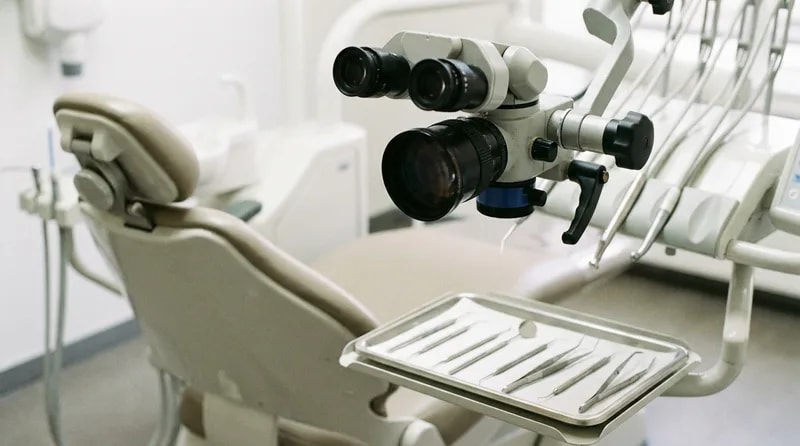
Sedation is another example of access shaping outcomes. Sedation dentistry has helped 75% of fearful patients maintain regular dental visits according to the Journal of Dental Anesthesia, and staying with one familiar practice works the same way.
Access matters, though, and it is not a small factor. Treatment that happens promptly, with complete records, restored by a team that planned it together, removes several of the ways a good plan goes sideways in practice.
What genuinely changes with a specialist down the hall:
- Less delay between diagnosis and treatment, which matters most when a nerve is inflamed or an infection is active.
- No repeat imaging, because the 3D CT scan and x-rays are already in the file the specialist opens.
- One conversation about the whole plan. The person doing the root canal and the person placing the crown can talk without an email chain.
- Fewer chances to drop out. Patients who have to rebook somewhere else sometimes simply do not.
Anxiety plays into that last point. Research published in BMC Oral Health in 2024 found 36% of Americans have dental anxiety and 12% have extreme dental fear, and for those patients a second unfamiliar office is a genuine obstacle rather than an inconvenience.
What Else Does 360 Dental Handle Under One Roof?
More or less everything a household needs, from cleanings and fillings through to implants, dentures, and full mouth reconstruction. The practice is all-digital, using 3D CT scanning and an iTero scanner, so diagnosis and treatment planning often happen in the same visit.
Gum health is a good example of why the record matters. CDC data from 2024 shows 42% of adults aged 30 and older have some form of periodontal disease, and monitoring that over years only works if the same file keeps getting updated.
Breadth on its own is not the argument. Plenty of practices offer long service lists. What matters is whether the record follows you across that list instead of restarting at each step.
One address, one set of records.
What is handled at 6301 Van Nuys Blvd.
- Cleanings and exams
- Composite fillings
- Root canal therapy
- Gum disease treatment
- Laser gum therapy
- Extractions
- Bone grafting
- Dental implants
- Crowns and bridges
- Dentures
- Full mouth reconstruction
- Porcelain veneers
- Lumineers
- Teeth whitening
- Invisalign
- Night guards
- Dental sealants
- TMJ and TMD treatment
- Emergency care
The point is not the length of the list. It is that your records do not get split across it.
Preventive care sits underneath all of it. Regular visits catch 80% of oral health issues before they become serious according to the ADA, and people who see a dentist regularly are 60% less likely to lose teeth, per the Journal of Dental Research. The National Institute of Dental and Craniofacial Research describes decay as a process that builds over time, which is exactly why catching it early keeps a specialist appointment off your calendar. The specialist matters most on the day you need one, and prevention is what keeps that day rare. General information on root canal treatment from the ADA's patient site is a useful primer if you have one scheduled.
Related: If you are dealing with a tooth problem right now rather than planning ahead, start here. What to do in a dental emergency →
How Should You Ask About Specialist Access Before Choosing a Practice?
Call and ask where specialist treatment physically happens. That single question tells you more than any website, because the answer is either a room in the building or an address across town. Then ask who places the crown afterwards.

You are testing scope and coordination at the same time. A front desk that answers both without checking is describing a practice that does this regularly.
Four questions that reveal a practice's real scope.
- "If I need a root canal, who does it and where?"
The most useful question of the four. A name and a room is a different answer from a referral list.
- "How long between diagnosis and treatment, typically?"
This is where a handoff shows up as days on a calendar.
- "Who places the crown afterwards?"
A root canal is not finished until the tooth is properly restored. Ask who closes that loop.
- "Do my scans and x-rays travel with me?"
Repeat imaging is the quiet cost of a split treatment plan.
Ask about payment in the same call. 360 Dental accepts all PPO dental plans, offers CareCredit, Sunbit, and Cherry financing, and runs the 360-VIP membership club for patients without insurance, with details on the 360-VIP membership page.
What Should You Do Next?
The value of a dental office with in house specialists is not that it makes any single procedure better. It is that fewer things fall between the steps, which is where most dental plans actually break down. Ask the question before you need the answer.
Everything at one address.
- Where.
6301 Van Nuys Blvd. Van Nuys, CA 91401. At Van Nuys Blvd and Victory Blvd, minutes off the 405 and 101.
- Who is in the building.
Dr. Vachik Danoukh, DMD, general and cosmetic. Dr. Parham Mansouri, DDS, MS, endodontist. 4.9 stars on Google, 460+ reviews on Yelp.
- Good to know.
Phone: (818) 787-6400. 3D CT and iTero digital scanning on site. English, Spanish, and Armenian spoken.
Book an exam and ask where root canal treatment happens. If the answer is a room rather than a referral, you have learned something useful. Call (818) 787-6400 or request an appointment online.
Results may vary. Please consult with your dentist at 360 Dental for personalized treatment recommendations.
One building, one record, one team
Book an exam at 360 Dental in Van Nuys. General, cosmetic, restorative, and specialist endodontic care at the same address, with all PPO plans accepted.
Questions about who treats what, how soon you can be seen, or the 360-VIP membership club? The front desk can answer all three in one call.
Common questions
What is an endodontist?
A dentist who completed two to three additional years of residency focused on the inside of the tooth, including the pulp, nerve, and root canal system. Same dental degree as a general dentist, with a specialty added on top of it.
Can a general dentist do a root canal?
Yes, and many do them routinely and well. A specialist spends most of a working week on this one area, which builds particular familiarity with unusual root anatomy, retreatments, and cases more complex than they first appeared.
Why does a dental office with in house specialists matter?
It removes the handoffs. There is no referral call to make, no wait for an opening at a second practice, and no new intake process. Your 3D scan and treatment history stay in the same file the specialist opens.
Does an on-site specialist mean a better outcome?
Not automatically. Outcomes depend on the individual case, the clinician, and the follow-up care. What an on-site specialist reliably improves is access and continuity, which reduces the ways a good treatment plan drifts in practice.
Is being referred to a specialist a bad sign?
No. Recognizing that a case suits a specialist is itself a clinical skill, and many excellent practices refer out by design. The trade-off is coordination work, which then falls to you rather than to one team.
Who is the endodontist at 360 Dental in Van Nuys?
Dr. Parham Mansouri, DDS, MS. He earned his DDS at UCLA, completed his endodontic residency at Saint Louis University, and has spent nearly 20 years in private practice, more than 15 of them at 360 Dental.
What treatments does 360 Dental handle on site?
Cleanings, fillings, root canal therapy, gum disease and laser therapy, extractions, bone grafting, implants, crowns, dentures, full mouth reconstruction, veneers, whitening, Invisalign, night guards, sealants, TMJ treatment, and emergency care.
Should a root canal always be followed by a crown?
A root canal is generally not complete until the tooth is properly restored, most often with a crown. If those steps happen at two different practices, ask both who is tracking the timeline between them.
Did this answer your question?
Written for general reading, not as advice about your own teeth. Nothing here replaces an examination: if something hurts, or has changed, book a visit and let a dentist look at it.
Read next
 13 min readWhat to Expect at a New Dentist Appointment in Van NuysWhat to expect at a new dentist appointment in Van Nuys: what gets recorded, what to bring, and the questions worth asking before you leave.Read the article
 13 min readDental Financing Options in Van Nuys: How to CompareCompare dental financing options in Van Nuys: how CareCredit, Sunbit, and Cherry differ, what to check before you sign, and when to skip financing.Read the article
 12 min readFamily Dentist Van Nuys: What to Look For Before You BookFamily dentist Van Nuys guide: how to compare credentials, specialist access, hours, technology, and payment options before booking your first visit.Read the article
Your first visit
One ticket covers it.
360 Dental · Admit one