
Patient Resources
What to Expect at a New Dentist Appointment in Van Nuys
Published 13 min read
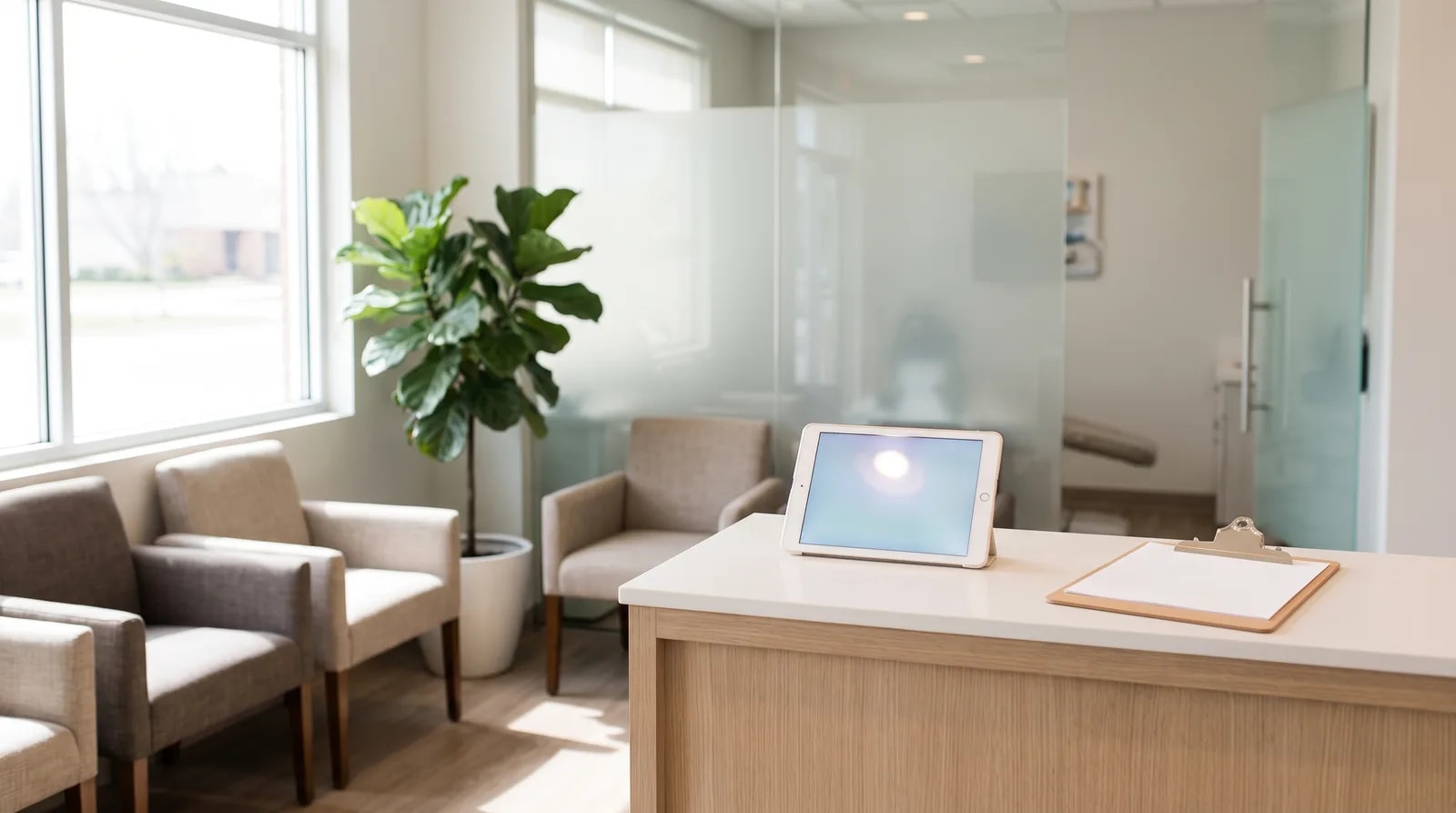
If you are wondering what to expect at a new dentist appointment, the honest answer is: more admin than dentistry, at least at the start. A first visit is mostly about building a record that does not exist yet. Preventive care at 360 Dental in Van Nuys starts from that baseline.
That is also why it runs longer than a routine checkup. Nothing about your mouth is on file, so history, imaging, measurements, and examination all happen in one sitting. It feels slow. It is the visit that makes every later one fast.
Here is the sequence, what to bring, what usually surprises people, and the questions worth asking before you leave the chair.
Wondering what to expect at a new dentist appointment?
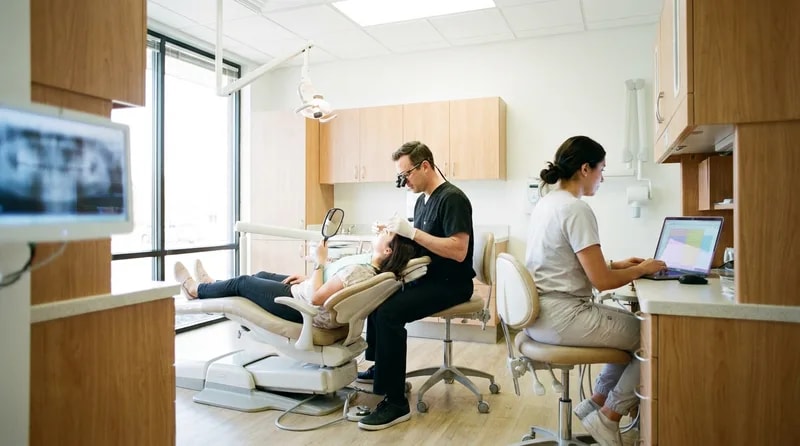
Paperwork and medical history come first, then imaging if needed, then a full examination of teeth, gums, bite, and soft tissues. The visit ends with findings explained and a written treatment plan. A cleaning may or may not be included on the same day.
- FirstPaperwork and history
Forms, insurance details, and a full medical history including medications and conditions. This is not filler; several medications directly affect gums and healing.
- If neededImaging
X-rays show what an examination cannot: bone levels, decay between teeth, and roots. If you can supply recent images from a previous dentist, new ones are often unnecessary.
- The core of the visitThe examination
Teeth checked surface by surface, gum measurements recorded, bite assessed, and a soft tissue screening performed. Findings get charted rather than remembered.
- Before you leaveDiscussion and plan
Your dentist explains what was found and gives you a written plan. This is the part to slow down for, and the part patients most often rush.
One part of that examination deserves naming, because patients rarely realize it happened. A soft tissue screening checks the tongue, cheeks, palate, and throat, not the teeth. NIH information on oral cancer explains why early detection matters so much for outcomes, and this screening is where it happens. It takes about a minute and is easy to miss unless you know to look for it.
Notice how little of that is treatment. First visits are diagnostic by design, and a practice that starts treatment before it has a record is doing it in the wrong order.
Why does a first appointment take longer than a checkup?
Because a routine checkup compares today against a record that already exists, while a first visit creates that record from nothing. History, imaging, charting every tooth, and measuring gums at multiple points around each one all take time that later visits simply skip.
| What happens | First visit | Routine checkup |
|---|---|---|
| Medical history | Taken in full | Reviewed for changes |
| Imaging | Often needed for a baseline | Only at set intervals |
| Tooth charting | Every surface recorded | Compared against the chart |
| Gum measurements | Full set recorded | Spot-checked or repeated as needed |
| Soft tissue screening | Performed and documented | Repeated at each visit |
| Treatment planning | Built from scratch | Updated if anything changed |
Look at the middle column and the time makes sense. It is one appointment doing the work that later visits inherit for free.
You can shorten it, though, and hardly anyone does. Requesting your records from a previous practice before the visit removes the imaging step and often the history-gathering too. Practices are obliged to release your records on request, it usually takes one phone call, and it can cut a meaningful chunk off the appointment. Make that call a week ahead rather than the day before.
What should you bring to your appointment?
Bring photo ID, your insurance card, and a written list of every medication and supplement you take. Also bring, or arrange to transfer, recent x-rays and any treatment estimate from a previous dentist. That last item saves the most time.
Before you leave the house
Check each item you have sorted out in advance.
Photo ID and insurance card.
A written list of medications, supplements, and doses.
Any medical conditions and your physician's contact details.
Recent x-rays, or a request already sent to your old practice.
Any treatment estimate or plan you were given elsewhere.
A written list of your own questions and concerns.
Arrival time confirmed, with paperwork done in advance if offered.
Your score: count your checks out of 7.
Write your own questions down too, and bring the list. Whatever was bothering you enough to book tends to evaporate the moment someone asks what brought you in. A sensitive tooth, a spot that bleeds, a clicking jaw, something that looks different in photos: none of these are trivial, and all of them are easier to raise from a note than from memory.
The medication list matters more than most patients expect. Blood thinners, bone medications, immune treatments, and even common blood pressure drugs change how treatment is planned and how gums respond. Write it down instead of trying to recall it in the chair.
| Bring this | Why it matters |
|---|---|
| Medication and supplement list | Several common drugs change how gums bleed and how sites heal. |
| Recent x-rays from a previous dentist | Avoids repeat imaging and gives an immediate comparison point. |
| Any prior treatment plan or estimate | Lets your new dentist see what was already recommended, and why. |
| Your own written list of concerns | The thing that made you book is the thing you will forget to mention. |
Will you need x-rays at your first visit?
Often, but not always. If recent images from a previous dentist can be transferred, they are usually sufficient. New x-rays are taken when nothing recent exists, when images are too old to reflect current conditions, or when a specific area needs a closer look.
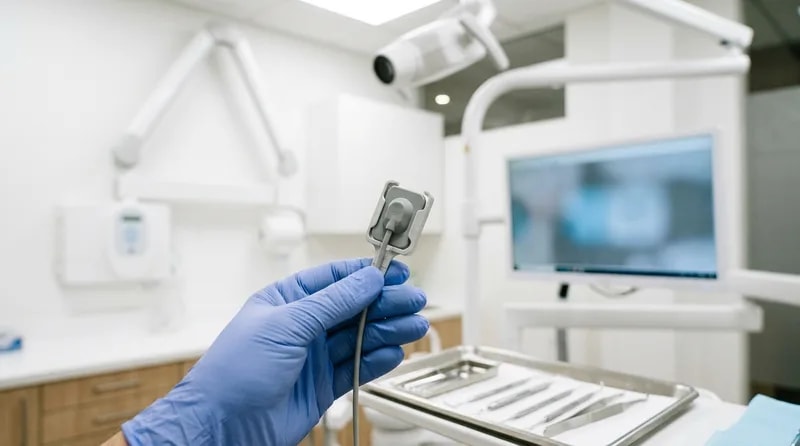
You can ask why. The ADA patient guidance on dental x-rays frames imaging as a clinical decision based on need and history rather than a routine add-on, so a dentist should be able to explain what a particular image is for. Ask, and ask what it would change.
- Bone levels around teeth cannot be assessed by looking, and this is central to gum diagnosis.
- Decay between teeth hides where surfaces touch and is often invisible on examination.
- Roots and unerupted teeth including wisdom teeth positions only show on imaging.
- Comparison over time is the real long-term value, which is why a baseline matters.
This is also where a first exam most often finds something unexpected. Nearly 1 in 4 adults in the US has untreated tooth decay, according to CDC NCHS, and a good share of that sits between teeth where no one can see it. Finding it early is the difference between a filling and something larger.
360 Dental is an all-digital practice using 3D CT and iTero scanning, so imaging and planning happen in the same appointment rather than across two.
Why might you not get a cleaning on the first day?
Because the type of cleaning you need is a diagnosis, not a default. Gum measurements taken during the exam determine whether a routine cleaning is appropriate or whether inflammation needs a different approach. Scheduling it before measuring would be guessing.
This one causes more frustration than anything else about first visits, usually because nobody explains it. A patient books expecting clean teeth and leaves with a plan instead. It feels like a delay tactic.
What "a different approach" means in practice is simply more thorough cleaning below the gum line, usually split across more than one appointment and sometimes with the area numbed. It is not a punishment for neglect and it is not an upsell. It is what the measurements indicate. Ask to see the numbers that led to the recommendation and it stops feeling arbitrary.
If a same-day cleaning is important to you, say so when you book. Many practices can allow time for both, but only if they know in advance.
What questions should you ask before you leave?
Ask what was found, what is urgent versus optional, what each recommendation costs, and what happens if you wait. Then ask for it in writing. A plan you can read at home is worth more than one explained to you once in the chair.
- Which items are urgent, and which are optional? Every plan should separate the two rather than presenting one list.
- What happens if I wait six months on this? The answer tells you how urgent it genuinely is.
- What are my gum measurements? Numbers you can track beat a general reassurance.
- What will my portion be after insurance? Ask for the estimate in writing before treatment is scheduled.
- Who would handle it if I need a specialist? Worth knowing whether work is done on site or referred out.
And if a plan proposes something substantial, a second opinion is normal rather than an insult. Take your written plan and your x-rays to another practice and ask what they would do. Any dentist confident in their reasoning will expect this occasionally. The exception is genuine urgency, where delay carries its own cost, so ask specifically which items can safely wait for a second look.
That last question is worth more than it sounds. 360 Dental keeps general, cosmetic, restorative, and specialist endodontic care under one roof, which you can read about on the about the practice page. Fewer referrals means fewer separate intakes and fewer duplicate records.
What if you are nervous or have not been in years?
Say so when you book, not when you arrive. Advance notice lets the team allow more time, explain each step before it happens, and agree a signal to pause. Requesting an exam-only first visit with no treatment is completely reasonable.
You are also in far more company than you think. 36% of Americans have dental anxiety and 12% have extreme dental fear, according to BMC Oral Health, 2024. Front desk teams hear this every week, and a long gap in care is a scheduling fact rather than a character assessment.
Practical accommodations are worth asking for by name, because most patients assume they have to endure the default. A morning slot when the office is quieter. An agreed hand signal to pause. A walkthrough of each step before it happens rather than during. Headphones. None of these require special equipment, and all of them are easier to arrange at booking than at the chair.
- Myth
They will lecture me about how long it has been.
- Reality
A long gap changes how much needs recording, not how you get treated. Most teams are simply glad you came in.
- Myth
If I go in, I will be pushed into expensive treatment.
- Reality
A plan is a recommendation. You can take it home, ask what is urgent, and decline or defer anything else.
A first visit can be an exam and nothing more
If you would rather start with information than treatment, say that when you book. 360 Dental in Van Nuys can plan the visit that way.
How do insurance and payment work at a first visit?
Benefits are verified before or at the appointment, then your estimated portion is calculated after coverage applies. 360 Dental accepts all PPO dental plans, and options exist for patients without insurance. Ask for the estimate in writing before anything is scheduled.

The sequence is what protects you. Get the exam, get the plan, get the written estimate, then decide. Patients who agree to treatment before seeing the numbers are the ones who feel surprised later. Current new patient options are listed on the patient specials page, and the 360-VIP membership club exists for uninsured patients.
Timing is worth one thought as well. Most dental plans run on a benefit year with an annual maximum that does not carry over, so a first visit late in the year can mean starting treatment in one benefit period and finishing in the next. That is occasionally useful and occasionally awkward. Ask the front desk how your plan year falls before scheduling anything beyond the exam.
Ways patients pay at 360 Dental
- All PPO dental plans
- 360-VIP membership club
- CareCredit
- Sunbit
- Cherry
- Cash or check
- Major credit cards
Related: Payment plans are the last layer of the decision rather than the first one. Patient specials and the 360-VIP club →
Say these three things when you book
- How long since your last visit
- Any anxiety about treatment
- Whether records should be transferred
How do you book a first appointment in Van Nuys?
Call (818) 787-6400 or request an appointment online, then mention three things: any anxiety, how long since your last visit, and whether you want records transferred. Those three sentences shape the appointment more than anything else you can do.
Planning your visit at 360 Dental in Van Nuys
- Where
6301 Van Nuys Blvd, Van Nuys, CA 91401, at the corner of Van Nuys Blvd and Victory Blvd, minutes off the 405 and 101.
- Hours
Monday to Thursday, 8:30 AM to 5:30 PM. Friday, 8:30 AM to 4:00 PM. Closed Saturday and Sunday.
- Languages
English, Spanish, and Armenian spoken at the front desk.
- On site
General, cosmetic, and restorative care, an in-house endodontist, plus 3D CT and iTero digital scanning.
- Serving
Van Nuys, Sherman Oaks, North Hollywood, Encino, Panorama City, Valley Glen, Studio City, and Reseda.
- Phone
(818) 787-6400. Rated 4.9 stars on Google with more than 460 Yelp reviews.
If you are booking for the family at the same time, mention ages. The ADA recommends a child's first dental visit by age 1 or when the first tooth appears, which surprises most parents. And the payoff for keeping everyone on schedule is measurable: Americans who visit a dentist regularly are 60% less likely to lose teeth, according to the Journal of Dental Research.
One scheduling tip. Book earlier in the week if you can, since Friday closes at 4:00 PM and the office is shut at weekends. If anything needs following up, a Monday or Tuesday appointment keeps that window inside office hours.
The thing worth carrying into a first dental appointment is that its job is information, not treatment. Regular dental visits can catch 80% of oral health issues before they become serious, according to the ADA, and none of that works without a baseline to compare against.
Bring your medication list, ask for the plan in writing, and ask which items are genuinely urgent. That is the whole preparation.
Results may vary. Please consult with your dentist at 360 Dental for personalized treatment recommendations.
Start with a baseline, not a treatment plan
A first visit at 360 Dental in Van Nuys records your history, imaging, and gum measurements, then explains what the findings actually mean.
New to the area, or returning after a long gap? Call (818) 787-6400 and mention it when you book.
Common questions
How long does a first dental appointment take?
Longer than a routine checkup, because records, imaging, and a full examination all happen at once. The exact length depends on whether a cleaning is included. Ask when you book so you can plan your day around it.
Will I get a cleaning at my first visit?
Sometimes, but not always. Your gum measurements determine whether a routine cleaning is appropriate or whether a different approach is needed first. If a cleaning is important to you on day one, say so when scheduling.
What to expect at a new dentist appointment, and what should you bring?
Your ID and insurance card, a complete list of medications and supplements, and any recent x-rays or treatment estimates from a previous dentist. Records transfer on request and save you both time and duplicate imaging.
Why does a new dentist need x-rays if I just had them?
They often do not, if you can supply the recent ones. Ask your previous practice to send them over before your visit. If images are unavailable or outdated, new ones give the dentist something to compare against later.
What to expect at a new dentist appointment if you are anxious?
Tell the front desk when you book rather than on arrival. Knowing in advance lets the team pace the visit, explain each step first, and agree a signal to pause. An exam-only first visit is a reasonable request.
Do I have to accept the treatment plan on the day?
No. A treatment plan is a recommendation, not a commitment. Take the written version home, ask which items are urgent versus optional, and get a second opinion if anything substantial is proposed.
What if it has been years since my last dental visit?
Say so plainly when you book. It is far more common than people assume, and it changes how the appointment is planned rather than how you are treated. Long gaps mean more to record, not more judgment.
Does 360 Dental in Van Nuys see new patients?
Yes. 360 Dental at 6301 Van Nuys Blvd accepts all PPO dental plans and sees new patients across the San Fernando Valley. Call (818) 787-6400 to book. English, Spanish, and Armenian are spoken at the front desk.
Did this answer your question?
Written for general reading, not as advice about your own teeth. Nothing here replaces an examination: if something hurts, or has changed, book a visit and let a dentist look at it.
Read next
 13 min readDental Financing Options in Van Nuys: How to CompareCompare dental financing options in Van Nuys: how CareCredit, Sunbit, and Cherry differ, what to check before you sign, and when to skip financing.Read the article
 13 min readWhy a Dental Office With In House Specialists MattersA dental office with in house specialists removes the referral gap. How an on-site endodontist changes root canal timing at 360 Dental in Van Nuys.Read the article
 12 min readFamily Dentist Van Nuys: What to Look For Before You BookFamily dentist Van Nuys guide: how to compare credentials, specialist access, hours, technology, and payment options before booking your first visit.Read the article
Your first visit
One ticket covers it.
360 Dental · Admit one