
Preventive Dentistry
How Often Should You Get a Dental Cleaning, Really?
Published 11 min read

How often should you get a dental cleaning is one of those questions with a confident-sounding answer that is only half right. Twice a year, everyone says. For plenty of people that is correct. For a fair number of others, it is either more than they need or nowhere near enough, and our preventive care team in Van Nuys sets the interval case by case.
The six-month rule was never based on a study. It stuck because it is easy to remember and fits neatly into insurance benefit years.
What follows is how the interval is actually decided, what happens during a cleaning, when three or four visits a year become the recommendation, and how to keep the schedule affordable if you are paying out of pocket.
At a glance
42%
of adults 30 and older have some form of periodontal disease (CDC, 2024)
~90
days is how fast bacteria repopulate deep gum pockets
80%
of oral health issues are caught early at regular visits (ADA)
How Often Should You Get a Dental Cleaning?
Most healthy adults do well with two cleanings a year, spaced roughly six months apart. Patients with gum disease, a smoking history, diabetes, or heavy tartar buildup usually need three or four. Your dentist sets the interval based on measurements taken at your exam.
Those measurements are specific. A hygienist charts pocket depths around each tooth, notes where the gums bleed on probing, and compares the readings to your last visit. Pockets of 1 to 3 millimeters with no bleeding point to a healthy six-month interval. Anything deeper, or bleeding in multiple areas, moves you into a shorter cycle.
| Your Situation | Typical Interval | Why |
|---|---|---|
| Healthy gums, low tartar, good home care | Every 6 months | Buildup stays manageable between visits |
| Gingivitis or bleeding gums | Every 3-4 months | Inflammation needs to be interrupted before it deepens |
| Treated periodontal disease | Every 3 months | Bacteria repopulate deep pockets on roughly a 90-day cycle |
| Diabetes, smoking, or pregnancy | Every 3-4 months | Gum tissue responds differently and heals more slowly |
| Braces or clear aligners | Every 3-4 months | Appliances trap plaque in places a toothbrush misses |
Notice what is missing from that table: your age, your insurance benefit year, and how long it has been since your last visit. None of those set the interval. Only what the exam finds does.
If nobody has explained why your interval is what it is, that is a fair question to ask at your next visit. A good answer sounds like a set of numbers, not a shrug.
Why Do Some Patients Need Cleanings Every Three Months?
Because bacteria in deep gum pockets rebuild to harmful levels in about 90 days. Once periodontal pockets form, home brushing cannot reach the bottom of them. A three-month cycle interrupts that regrowth before it damages more of the bone holding your teeth.
This is not a small group. The CDC reported in 2024 that 42% of adults aged 30 and older have some form of periodontal disease, and prevalence climbs sharply with age. Most of those people feel nothing unusual, which is precisely the problem.
Risk factors that commonly shorten the interval:
The NIH describes gum disease as progressing through stages, and the earlier stage is reversible while the later one is not. That single distinction is the strongest argument for a shorter interval. You can read the full staging in the NIH overview of gum disease.
What Actually Happens During a Professional Cleaning?
A cleaning is four distinct steps, not one. The hygienist assesses your gums, removes hardened tartar with hand and ultrasonic instruments, polishes the tooth surfaces, then flosses and applies fluoride. The dentist reviews everything afterward, along with any x-rays taken.
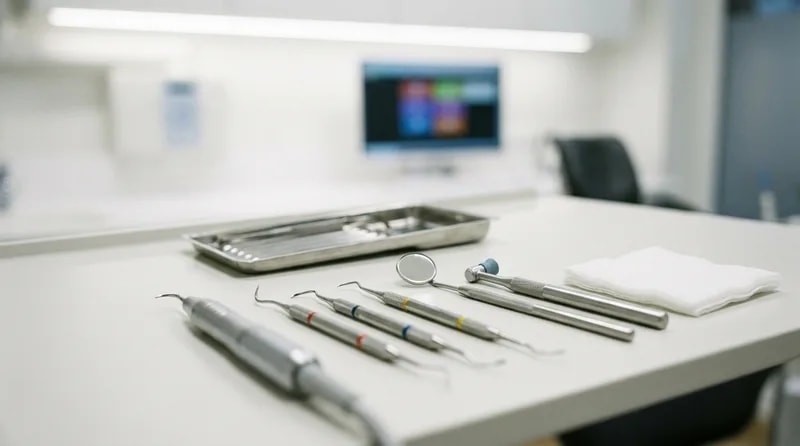
Here is the usual sequence:
1
Assessment and charting
Pocket depths, bleeding points, and existing restorations are recorded and compared against your previous visit.
2
X-rays as needed
Not every visit. Frequency depends on your decay history and what the exam shows.
3
Scaling
Tartar is removed from above and just below the gumline. Ultrasonic instruments break up heavy deposits with vibration and water rather than force.
4
Polishing
A rotating cup and mildly abrasive paste lift surface stain from coffee, tea, and red wine.
5
Flossing and fluoride
Contact points are cleared, and a fluoride varnish is applied to strengthen enamel.
Tartar is the reason the appointment exists at all. Plaque hardens into calculus within about 24 to 72 hours, and once it does, no toothbrush will shift it. The ADA explains the plaque-to-tartar timeline clearly in its patient guidance on plaque and how it builds up.
Most healthy-gum appointments run 45 to 60 minutes. If it has been years since your last visit, expect longer, and possibly two appointments.
One part of the visit gets overlooked in the description above. While the hygienist works, the dentist reviews x-rays, checks existing restorations, screens soft tissue, and evaluates your bite. The cleaning is the visible half of an appointment that is really an inspection.
What Is the Difference Between a Routine Cleaning and a Deep Cleaning?
A routine cleaning works above and slightly below the gumline on healthy tissue. A deep cleaning, known as scaling and root planing, treats infected pockets below the gumline and smooths the root surface so the gum can reattach. They are different procedures with different goals.
Patients sometimes hear "you need a deep cleaning" as an upsell. It is worth understanding the actual trigger: a deep cleaning is indicated when pocket depths exceed roughly 4 millimeters with bleeding and bone loss visible on x-rays. Those are measurable findings you can ask to see.
Myth
A deep cleaning is just an upsell dressed up in clinical language.
Fact
It is triggered by measurable findings: pocket depths past roughly 4 millimeters, bleeding on probing, and bone loss visible on x-rays. Ask to see all three on your chart.
The follow-up schedule is the part patients underestimate. After scaling and root planing, you move onto periodontal maintenance rather than back to standard six-month cleanings. That is not a billing preference. It reflects how quickly bacteria recolonize a pocket that has already lost bone support around it.
| Routine Cleaning | Deep Cleaning | |
|---|---|---|
| Treats | Healthy gums, mild gingivitis | Periodontal pockets with bone loss |
| Reaches | Crown surfaces and just under the gum edge | Root surfaces deep inside the pocket |
| Anesthetic | Rarely needed | Local anesthetic is standard for comfort |
| Visits | One | Often split by half of the mouth across two visits |
| Follow-up | Next routine visit | Periodontal maintenance every 3 months |
360 Dental also offers laser therapy alongside traditional scaling for some periodontal cases, which many patients find more comfortable. Details are on the gum disease treatment page.
What Happens If You Skip Cleanings for a Year or Longer?
Tartar accumulates, gums inflame, and small problems get expensive. A cavity caught early may need a simple filling. The same tooth eighteen months later can need root canal therapy and a crown, which is a far larger commitment of time and money.
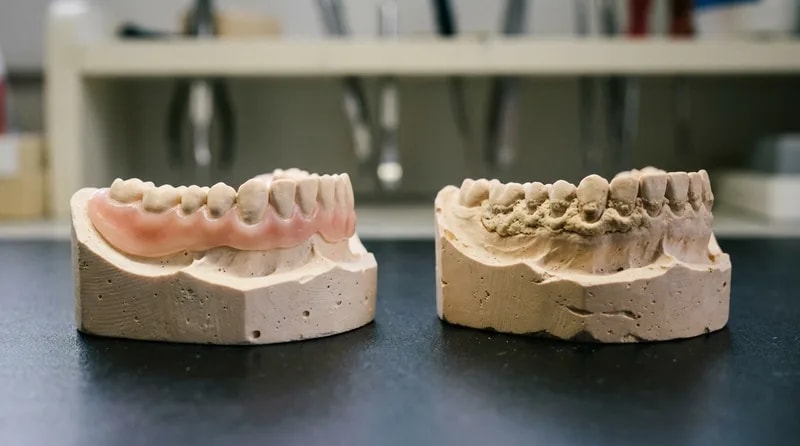
The pattern shows up in population data. Nearly one in four US adults has untreated tooth decay according to CDC figures, and the Journal of Dental Research found that people who see a dentist regularly are 60% less likely to lose teeth. The ADA estimates regular visits catch about 80% of oral health issues before they become serious.
1 in 4
US adults already has untreated tooth decay (CDC)
60%
less likely to lose teeth if you visit regularly (Journal of Dental Research)
24-72h
is all it takes for soft plaque to harden into tartar
What tends to happen during a long gap:
How Can You Afford Regular Cleanings Without Insurance?
Two routes work well. Most PPO plans cover two preventive visits a year, and 360 Dental accepts all PPO plans. If you have no coverage, the in-house 360-VIP membership club bundles preventive care into a flat monthly fee instead of per-visit billing.
The membership exists because preventive care is the easiest thing to postpone when every visit is an out-of-pocket decision. Removing that decision tends to keep people on schedule.
| Plan | Monthly | Included |
|---|---|---|
| 360-VIP Adult | $35 plus $99 lifetime activation | 2 cleanings a year, exams, needed x-rays, 2 emergency exams, 20% off other treatment |
| 360-VIP Perio | $49 | Built for patients on a periodontal maintenance schedule |
| Financing | Varies by approval | CareCredit, Sunbit, and Cherry for larger treatment plans |
Full terms are listed on the 360-VIP membership page. Worth comparing against what two cleanings and two exams would cost you individually.
Overdue for a cleaning? Start where you are.
No lectures about the gap. 360 Dental sits at Van Nuys Boulevard and Victory Boulevard, and the team speaks English, Spanish, and Armenian.
What Should You Do Between Visits to Protect the Results?
Home care decides how much your hygienist finds next time. Brushing twice daily with fluoride toothpaste and cleaning between teeth once a day handles most of it. The interdental step is the one people skip, and it covers the surfaces where gum disease typically starts.
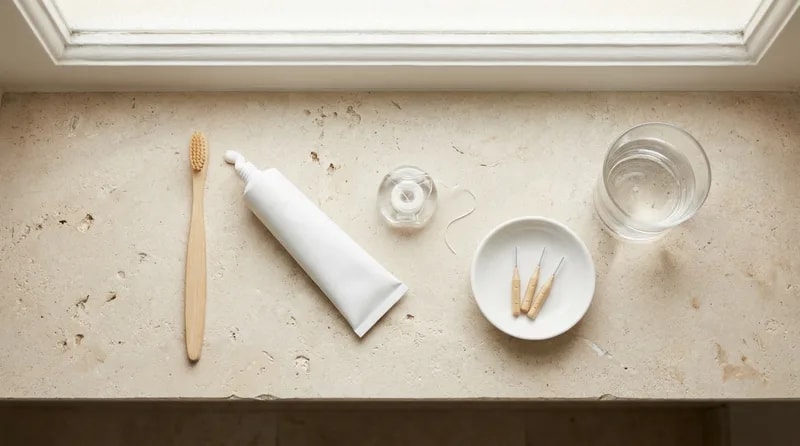
A few adjustments that make a measurable difference:
Your home care decides how much your hygienist finds next time.
Timing helps too. Booking your next visit before you leave the office is a small habit with a real effect, because a schedule that lives in your calendar survives a busy quarter better than one that lives in your intentions.
Between-visit care also protects the tooth structure you already have. Straighter teeth are easier to clean, which the ADA links to up to 30% lower cavity and gum disease risk, and the same logic applies to any surface you can actually reach with a brush.
Finding the Interval That Fits Your Mouth
The real answer is that your gums decide the schedule, and the measurements taken at your exam tell you what they have decided. Six months is a reasonable default for healthy tissue. It is not a diagnosis, and it is not a rule.
Ask for your pocket depth readings at your next visit, and ask what changed since last time. That one habit turns a routine appointment into something you can actually track.
Results may vary. Please consult with your dentist at 360 Dental for personalized treatment recommendations.
Get an interval based on your measurements, not a rule of thumb
Book a cleaning and exam at 360 Dental in Van Nuys. Full charting, digital x-rays where needed, and a schedule that reflects what your gums actually show.
Questions about coverage or the membership club? Call (818) 787-6400.
Common questions
How often should you get a dental cleaning if your teeth feel fine?
Still every six months for most adults. Gum disease and early decay are typically silent, and the CDC reports nearly one in four US adults already has untreated decay they have not noticed yet.
Is every three months excessive for cleanings?
Not for patients with treated gum disease. Periodontal maintenance every three to four months matches the roughly 90-day cycle in which harmful bacteria repopulate deep pockets after a thorough cleaning.
Can I stretch it to once a year to save money?
It usually costs more over time. Problems caught at a cleaning are smaller and simpler to treat than the same problems found a year later, and membership plans make the twice-yearly interval more affordable.
Does a professional cleaning damage tooth enamel?
No. Hygienists remove hardened tartar and surface stain rather than enamel. Any sensitivity afterward is usually short-lived, and it comes from newly exposed root surfaces that had been covered by deposits until that visit.
What if it has been several years since my last visit?
Book anyway. Long gaps are common and the team has seen them before. Your first appointment focuses on assessment and getting you comfortable, and treatment can be staged over several visits if needed.
Do children need cleanings as often as adults?
Generally yes, every six months from around age one. The ADA lists tooth decay as the most common chronic disease in children, roughly five times more common than asthma, so early monitoring matters.
Will my dental insurance cover two cleanings a year?
Most PPO plans cover two preventive visits annually, and some cover more for documented periodontal cases. 360 Dental accepts all PPO plans, though coverage details vary, so call to confirm yours.
Did this answer your question?
Written for general reading, not as advice about your own teeth. Nothing here replaces an examination: if something hurts, or has changed, book a visit and let a dentist look at it.
Your first visit
One ticket covers it.
360 Dental · Admit one