
Cosmetic Dentistry
In Office Teeth Whitening vs at Home: Which Lasts?
Published 9 min read
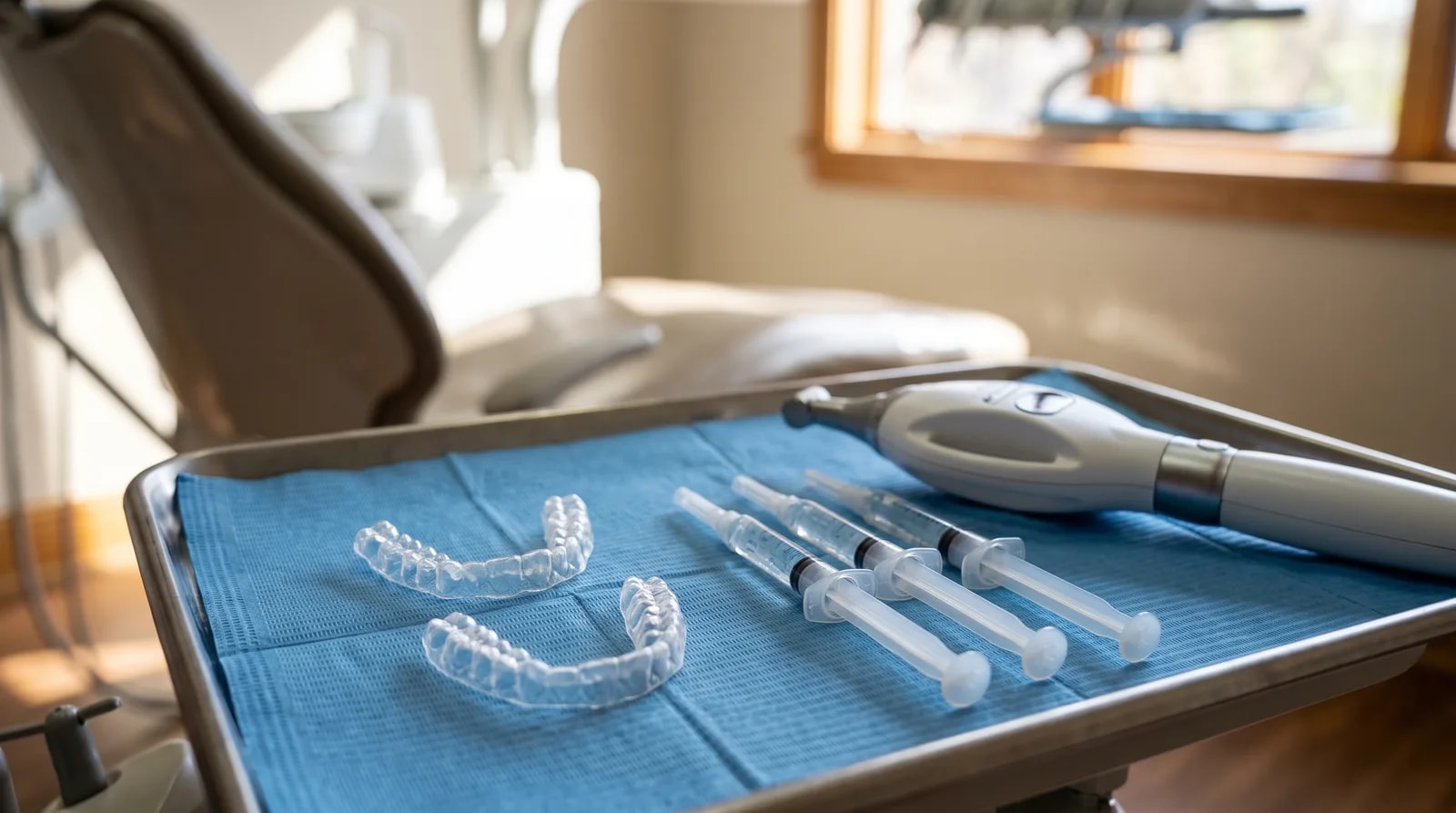
In office teeth whitening vs at home is a comparison most people run into the moment they search for a brighter smile. Both promise the same result at very different price points. The honest answer is that they work differently enough that "worth it" depends on what you actually want out of the result. That question carries real weight: 99.7% of Americans say a smile is an important social asset, according to the American Academy of Cosmetic Dentistry.
At 360 Dental's cosmetic dentistry practice in Van Nuys, this is one of the most common pre-treatment questions we get. It's usually right after "how long will it actually last." This guide compares longevity and cost for both routes. You can decide with real numbers instead of marketing claims.
In Office Teeth Whitening vs at Home: What's the Real Difference?
In office whitening uses a stronger, dentist applied bleaching gel activated under controlled conditions in a single visit. At home kits use lower concentration gel in trays or strips, applied over 1-4 weeks instead. Strength and speed are the core trade-off between the two.
Because the in-office gel is more concentrated, a dentist can safely apply and monitor it directly against your gums. That protects soft tissue in a way an unsupervised at-home kit can't replicate. At-home kits compensate for lower strength with repeated, gradual application over days or weeks. Both use variations of hydrogen peroxide or carbamide peroxide, just at very different concentrations and exposure times. It's a distinction covered by the American Dental Association's MouthHealthy resource as well.
Neither approach whitens crowns, veneers, or fillings, since bleach only works on natural enamel. That's worth knowing upfront if your front teeth include any restorations, because shade matching afterward becomes its own conversation. If a front tooth has a crown and the teeth around it whiten several shades, the mismatch can actually become more noticeable than before treatment.
How Long Do the Results Actually Last for Each Option?
In-office whitening results typically last 1-3 years with normal habits. At-home kit results usually fade in 4-12 months, depending on the product and how consistently you use it. The gap comes down to how deep the bleaching agent penetrates enamel during treatment.
Professional treatments use higher concentrations under controlled conditions, which lightens enamel more thoroughly at the outset. That deeper initial result simply has more room to fade before it becomes noticeable again. At-home kits start from a lighter shade change, so any staining habits show up sooner. Coffee, tea, red wine, and tobacco all speed up the fade regardless of which method you start with.
| Factor | In-Office | At-Home Kits |
|---|---|---|
| Typical results last | 1-3 years | 4-12 months |
| Time to see results | One visit, about 60-90 minutes | 1-3 weeks of daily use |
| Gel strength | High, professionally applied | Lower, self-applied |
| Gum protection | Dentist monitored barrier | Depends on tray fit |
Is Professional Teeth Whitening Worth the Extra Cost?
Professional whitening costs more per session than an at-home kit. But it also lasts roughly 2-3 times longer, which narrows the cost-per-year gap once you account for how often at-home users tend to repurchase kits. Whether it's "worth it" depends on your timeline more than the sticker price.
Someone whitening before a wedding or big event in the next few weeks gets more predictable, faster results in office. A dentist manages sensitivity and gum exposure in real time throughout. Someone maintaining a shade over years, without a deadline, might reasonably start with an at-home kit. They can upgrade later if results fade faster than they'd like. Both are legitimate starting points depending on what you're solving for. Patients who've tried at-home strips for months without the shade change they wanted are often better served jumping straight to in-office treatment rather than switching brands again.
How Much Whiter Do Your Teeth Get With Each Method?
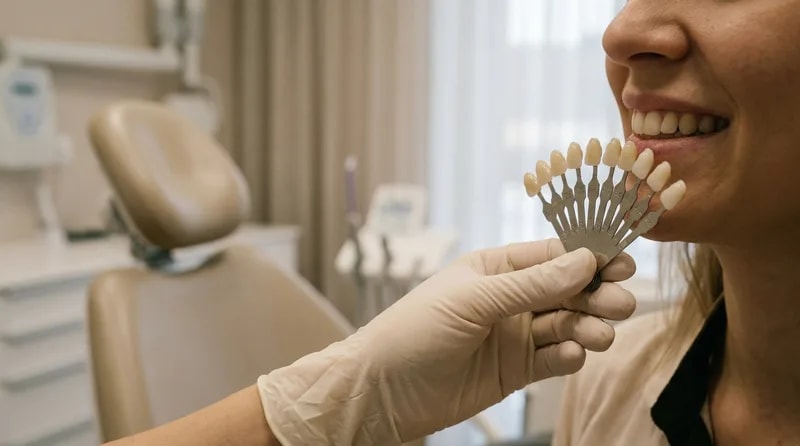
Professional whitening can improve shade by 4-8 levels in about 2 weeks, including the follow-up phase, according to the ADA. At-home kits typically produce a more modest 2-4 level change over several weeks of consistent use. Both numbers vary by starting shade and staining type.
Deep, intrinsic staining from certain medications or fluorosis responds less predictably to either method. Bleach primarily lifts surface and light subsurface staining, not every layer of discoloration. If whitening alone doesn't reach the shade you want, that's a signal. A more significant cosmetic option like veneers or bonding is usually worth discussing instead of repeating whitening treatments indefinitely.
Which Option Fits Your Timeline and Budget?
In-office whitening fits a tight timeline and a bigger one-time budget, while at-home kits fit a flexible timeline and a smaller, recurring budget spread over months. Matching the method to your actual constraint matters more than picking whichever sounds more effective on paper.
In-office whitening tends to fit patients who:
- Have an event or deadline within the next month.
- Want the most dramatic single-visit change.
- Have sensitive teeth and want a dentist managing the process.
- Prefer one upfront cost over repeated purchases.
At-home kits tend to fit patients who:
- Have no fixed deadline for results.
- Want to maintain a shade gradually over time.
- Have mild staining rather than deep discoloration.
- Prefer a lower cost per attempt, even with more frequent use.
What Does the In-Office Whitening Process Involve?
In-office whitening involves a short exam and a protective barrier applied to your gums. The bleaching gel goes on next, typically activated with a specialized light in 15-20 minute cycles over about an hour. Most patients see results immediately after the appointment.
Your dentist checks shade progress between cycles and can add or shorten sessions based on how your teeth respond. No at-home kit can adjust that way in real time. Mild sensitivity during or shortly after treatment is common and usually fades within a day or two. At 360 Dental, we walk through your expected shade change and sensitivity risk before starting, so there's no surprise mid-appointment.
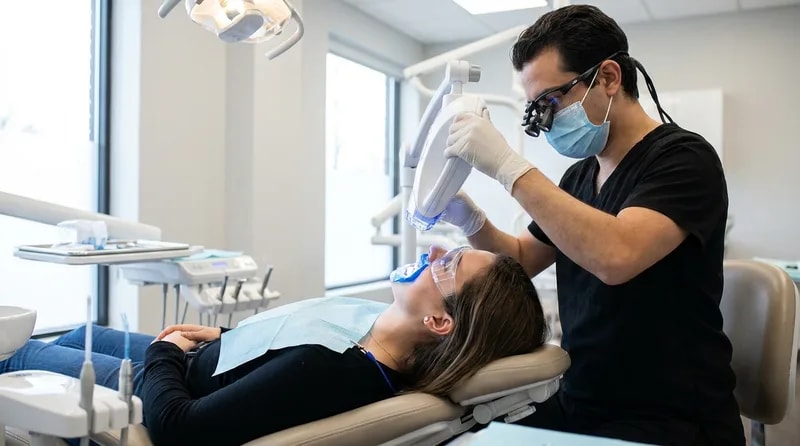
- Shade assessment and exam.
- Gum protection barrier applied.
- Bleaching gel applied in timed cycles.
- Final shade check and aftercare guidance.
How Do You Make Whitening Results Last Longer?
Results from either method last longer with one straightforward habit change. Rinse with water after coffee, tea, or red wine, and avoid tobacco, since these are the fastest ways to re-stain freshly whitened enamel. Small daily choices matter more than the whitening method itself over the long run.
A touch-up kit at home can extend an in-office result well past its typical fade point. Many patients use exactly that combination: a professional treatment for the initial jump, then occasional at-home maintenance to hold the shade between visits. Regular cleanings also remove surface buildup before it has a chance to dull your results. Plaque and light tartar buildup can make a bright shade look duller within months, more than people expect. It's a maintenance habit the CDC also recommends as part of routine oral hygiene.
- Rinse with water after dark beverages.
- Use a whitening toothpaste for gentle daily maintenance.
- Avoid tobacco products, which stain quickly regardless of shade.
- Keep every 6-month cleaning to remove surface buildup early.
See your projected shade change first
A quick shade assessment shows what's realistic for your teeth before you commit to either option.
Can You Combine In-Office and At-Home Whitening?
Yes, combining both is common, and it often gives the best long-term value. Start with an in-office treatment for the initial dramatic shade change. Then use periodic at-home touch-ups to maintain it, without repeating the full professional session every time. Many dentists build this into the treatment plan by default.
The math works out reasonably well for most patients. A single in-office visit gets you most of the way to your target shade quickly. A take-home touch-up kit, often provided at a lower cost than an over-the-counter version, extends that result for months at a time. This approach also means you're not paying full price for a professional session every single time your shade starts to fade.
Ask about this option directly during your consultation. Not every office offers a bundled touch-up kit, but at practices that do, it's usually the most cost-effective way to keep results looking fresh year over year.
Is Teeth Whitening Safe for Sensitive Teeth?
Yes, both methods are generally safe for sensitive teeth when used correctly. In-office treatment has an edge here, since a dentist can adjust concentration and timing in real time if sensitivity spikes. At-home kits rely on you following instructions without that live feedback.
Sensitivity happens because bleaching gel temporarily opens microscopic channels in enamel, letting hot, cold, or sweet triggers reach the nerve more easily for a day or two. Desensitizing toothpaste in the days before and after treatment reduces this for most patients. If you already deal with sensitive teeth from thin enamel or exposed roots, mention it before choosing a method. Your dentist may recommend a lower concentration or a shorter in-office cycle rather than skipping whitening altogether. Patients with a history of sensitive teeth sometimes assume whitening is off the table entirely. In most cases it just means a more conservative approach, not no approach at all.
- Use desensitizing toothpaste starting a few days before treatment.
- Avoid extremely hot or cold foods for 24-48 hours after whitening.
- Mention existing sensitivity before choosing a concentration or method.
- Stop and consult your dentist if sensitivity feels sharp rather than mild.
How Do You Know Which Whitening Option Is Right for You?
The clearest way to decide is a quick shade assessment. It tells you how much realistic change is possible for your specific teeth before you spend money on either option. Staining type matters more than personal preference alone.
If you've tried an at-home kit before and were disappointed with how fast it faded, that's a reasonable signal to try the in-office route next. The reverse is also true. If professional treatment felt like more than you needed for a mild shade goal, an at-home kit might be all the maintenance you actually require. There's no wrong starting point, only a mismatched one.
Whitening in the dental chair versus whitening at your bathroom sink isn't really about which one is better in the abstract. It's about matching the strength and cost of the method to how long you actually want the result to hold and how soon you need it.
Results may vary. Please consult with your dentist at 360 Dental for personalized treatment recommendations.
A short shade assessment settles the question faster than any amount of research, since it's based on your teeth rather than an average case. It takes a few minutes, and you'll walk away knowing exactly which option makes sense before spending a dollar on either one.
Ready for a Shade Assessment?
Book a whitening consultation at 360 Dental in Van Nuys and see your realistic shade change before you decide.
New to 360 Dental?
Common questions
Does in office teeth whitening hurt more than at-home kits?
Neither typically causes pain, though mild sensitivity is common with both, especially right after in-office treatment when the gel is strongest. A dentist can adjust concentration or timing in real time if sensitivity spikes during your visit.
How many shades whiter can you get in one visit?
Most patients see a 4-8 shade improvement in a single in-office visit, according to the ADA, though results vary by starting shade and staining type. At-home kits typically produce a more gradual 2-4 shade change over several weeks.
Can you whiten teeth with veneers or crowns?
No, bleaching gel only works on natural enamel, so veneers, crowns, and fillings won't change shade during whitening. This can create a visible mismatch if surrounding natural teeth whiten and the restoration doesn't.
How soon can you eat or drink after whitening?
Most dentists recommend avoiding dark foods, coffee, tea, and red wine for 24-48 hours after in-office whitening while enamel is more porous. Sticking to light-colored foods during that window helps the result last longer.
Is at-home teeth whitening as effective as in-office?
At-home kits can lighten teeth, but typically produce a smaller shade change than in-office treatment and fade faster, usually within 4-12 months. They work best for mild staining or maintaining a shade after a professional treatment.
How often can you safely whiten your teeth?
Most dentists recommend spacing full whitening treatments at least 6 months apart to avoid enamel sensitivity, though light touch-up kits can be used more frequently. Your dentist can set a safe schedule based on your enamel and sensitivity history.
Did this answer your question?
Written for general reading, not as advice about your own teeth. Nothing here replaces an examination: if something hurts, or has changed, book a visit and let a dentist look at it.
Read next
 12 min readDental Contouring in Van Nuys: The Smallest Smile ChangeDental contouring reshapes enamel to even out edges and small chips. What it fixes, what it cannot, and why it is the least invasive cosmetic option.Read the article
 13 min readVeneers vs Bonding in Van Nuys: Which Fits Your Goal?Veneers vs bonding: a goal-based guide to porcelain veneers and composite bonding, how much enamel each changes, and what to ask in Van Nuys.Read the article
 9 min readSmile Makeover Process: How Dr. Danoukh Plans a CaseSee how Dr. Danoukh maps out the smile makeover process before any work starts, from digital previews to a written treatment plan.Read the article
Your first visit
One ticket covers it.
360 Dental · Admit one