
Emergency Dentistry
Knocked-Out Tooth in Wylie TX: The 30-Minute Window
Published 9 min read
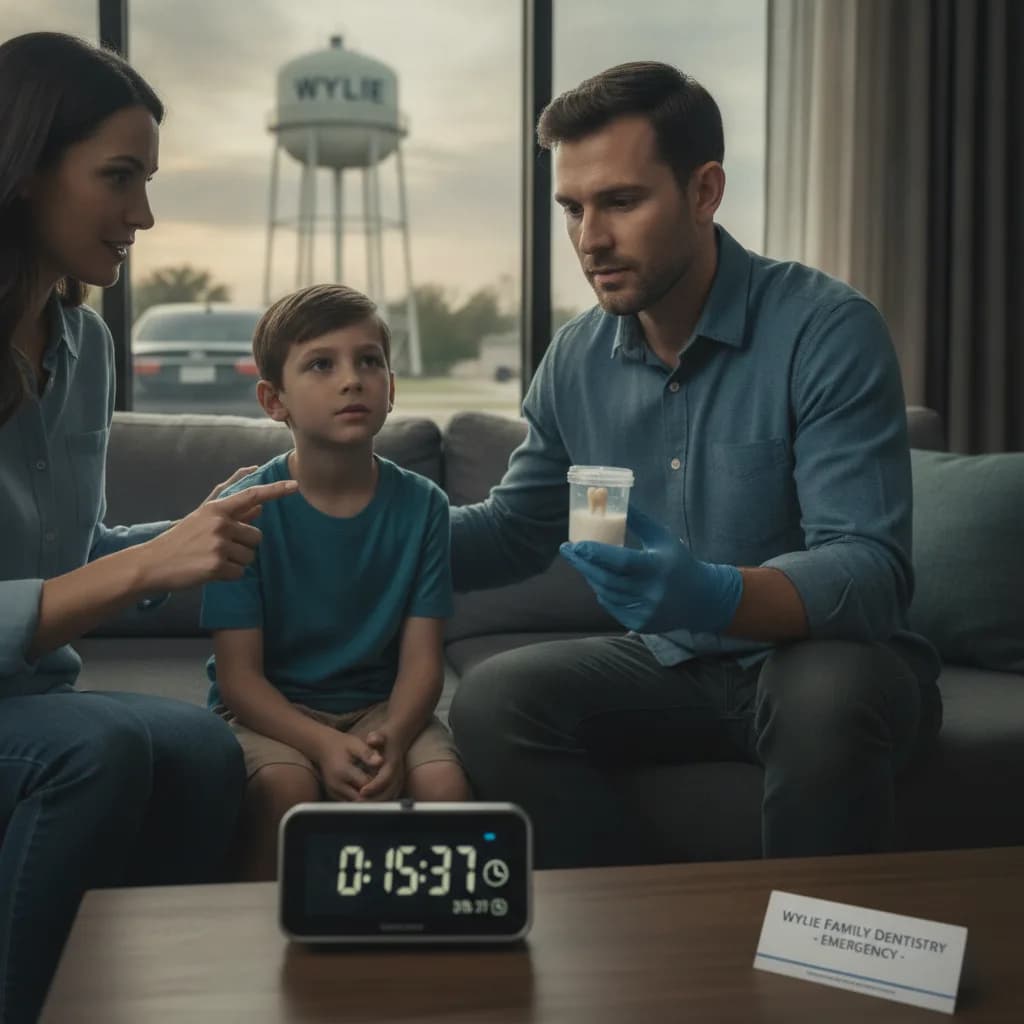
A knocked-out tooth is one of the few true dental emergencies where minutes genuinely decide the outcome. Knowing exactly what to do in the first half hour can be the difference between saving your natural tooth and losing it for good. This guide walks through the critical steps for a knocked-out tooth in Wylie TX, what to avoid, and why speed matters so much.
What Should You Do First If a Tooth Is Knocked Out?
Act immediately: find the tooth, pick it up by the crown (never the root), and avoid touching the root surface. If it is dirty, rinse it gently for a few seconds, then try to reinsert it into the socket or store it in milk. Get to a dentist within 30 minutes.
The single most important rule is to handle the tooth only by the crown, the smooth white part you normally see and chew with. The root surface is covered in delicate cells that are essential for the tooth to reattach, and touching, wiping, or scrubbing them destroys their ability to heal back into place. Stay calm, locate the tooth quickly, and resist the urge to clean it thoroughly. A brief, gentle rinse to remove visible dirt is all it should get, ideally with milk or saline rather than tap water.
The American Dental Association stresses that a knocked-out permanent tooth has the best chance of survival when it is reimplanted within 30 minutes, which is why this is treated as a drop-everything emergency.
Why Does the 30-Minute Window Matter So Much?
The cells on the tooth root begin to die within minutes of being out of the socket, and once they are gone, the tooth cannot reattach. Reimplantation within 30 minutes gives the highest success rate, and the odds drop sharply with every passing 15 minutes.
Think of those root surface cells as living tissue on a countdown. While the tooth is in its socket, they are nourished and healthy; the moment it is knocked out, they begin to dry out and die. Research shows that teeth reimplanted within 30 minutes have a survival rate above 90%, the figure falls to roughly 50% after an hour, and teeth left dry beyond two hours rarely survive at all. This is why the storage method matters so much, keeping the tooth moist in the right medium keeps those cells alive longer and buys you time. It is also why calling ahead is so valuable: a dentist who knows you are on the way can be ready the instant you arrive.
How Should You Store a Knocked-Out Tooth?
The best place is back in its socket. If that is not possible, store the tooth in cold milk, which preserves the root cells far better than water. Saliva or a saline solution also works. Never store it in plain water, which damages the cells.
If you can place the tooth back in its socket, that is ideal, hold it gently in place by biting on a clean cloth. Many people understandably cannot bring themselves to do this, which is where milk becomes the hero. Its balanced chemistry and proteins keep the root cells viable far longer than water, which actually ruptures them. Keep the tooth submerged and head straight to the dentist.
What Should You Never Do With a Knocked-Out Tooth?
Never touch or scrub the root, never store the tooth in plain water, and never let it dry out. Avoid wrapping it in a tissue or cloth, which dries and damages the root cells. Do not delay the trip to deal with these things.
These mistakes are common because they feel intuitive, you want to clean the tooth thoroughly and protect it by wrapping it. But scrubbing strips away the very cells needed for reattachment, and a dry tissue accelerates their death. The instinct to disinfect works against you here. The right mindset is gentle and fast: minimal handling, keep it moist, and move quickly. Even if you do everything perfectly, the dentist makes the final call on whether the tooth can be saved, so your job is simply to give it the best possible chance during transport.
What Happens When You Get to the Dentist?
The dentist will reposition and stabilize the tooth, usually splinting it to the neighboring teeth so it can reattach. A follow-up often includes a root canal once the tooth has stabilized, since the inner pulp rarely survives the trauma.
Once you arrive, the dentist gently reinserts the tooth if it is not already in place, confirms its position with an x-ray, and bonds a small flexible splint to the adjacent teeth to hold it steady while the ligament heals, typically over one to two weeks. Because the blood supply to the pulp is usually severed by the trauma, most reimplanted teeth eventually need a root canal to remove the non-vital tissue and prevent infection. This is normal and expected, not a sign of failure, it is part of saving the tooth long term. The dentist will schedule follow-ups to monitor healing.
What If the Tooth Cannot Be Saved?
If too much time has passed or the tooth is too damaged, replacement options preserve your smile and bite. A dental implant is the gold standard, since it replaces the tooth from root to crown and prevents the bone loss that follows tooth loss.
Not every knocked-out tooth can be saved, and that is not a failure on anyone's part, sometimes the window simply closed or the damage was too severe. The good news is that modern replacement is excellent. An implant is generally the preferred long-term solution because it preserves the jawbone and functions like a natural tooth; you can read about what goes into it in our implant cost breakdown. If the bone has already begun to shrink, a bone graft may be needed first to rebuild the site. Acting promptly even after tooth loss helps preserve the bone and keeps replacement options simpler.
Is a Knocked-Out Baby Tooth Treated the Same Way?
No. A knocked-out baby tooth should not be reimplanted, because doing so can damage the developing permanent tooth beneath it. Instead, control any bleeding, keep the child calm, and call the dentist for guidance.
This is a crucial distinction for parents. With permanent teeth, speed and reimplantation are everything; with baby teeth, reinserting the tooth can harm the permanent tooth forming underneath, so dentists deliberately leave the space alone. Focus instead on comforting your child, controlling bleeding with gentle pressure from clean gauze, and calling the office to confirm next steps. The dentist will check that no fragments remain and that the permanent tooth is unharmed. Because children are so prone to dental trauma, a relationship with a family dental practice before an emergency happens means you already know exactly who to call.
How Can You Prevent a Knocked-Out Tooth?
The best prevention is a properly fitted mouthguard during sports and activities with fall or collision risk. Custom mouthguards offer far better protection than boil-and-bite versions and are a small investment against a dental emergency.
Roughly 80% of knocked-out teeth involve the upper front teeth, and most occur during sports and accidental falls, and most of the sports cases are preventable. A custom-fitted mouthguard absorbs and distributes impact far better than a generic drugstore version, and because it fits precisely, people are more likely to actually wear it. For kids and adults who play contact or even non-contact sports like basketball and cycling, it is one of the highest-value preventive steps in dentistry. According to public health data, dental injuries are common and largely preventable, and protecting teeth during activity is far easier than treating an avulsion after the fact.
What Are the First 60 Seconds Supposed to Look Like?
In the first minute, your goal is simple: locate the tooth, pick it up by the crown, and get it into a safe storage medium. A calm, practiced response in that first minute does more for the tooth than anything that happens later.
It helps to rehearse the sequence mentally before you ever need it, because panic is the enemy of a good outcome. Find the tooth and grasp it by the crown. If it fell on the ground and is visibly dirty, give it a brief rinse, no scrubbing. Then make the key decision: if you can, slip it back into the socket and bite gently on a clean cloth to hold it; if you cannot, drop it into a small container of cold milk. Only after the tooth is safely stored do you grab your keys and phone the dentist on the way. Every action in that first minute should serve one of two goals, keeping the root cells alive and getting to care fast. Anything that does not serve those goals, including thorough cleaning or hunting for the perfect container, is wasted time.
If a {link("emergency-dentist-wylie-tx-same-day-care-guide","dental emergency")} like this happens after hours, call the practice number anyway, many offices have an emergency line precisely for situations where minutes count.
What Does Recovery Look Like After Reimplantation?
After the tooth is splinted, healing takes one to two weeks for the splint and several weeks to months for the ligament and bone to fully stabilize. You will eat softly, keep the area meticulously clean, and attend follow-ups so the dentist can monitor reattachment.
The splint holds the tooth steady while the periodontal ligament, the tissue that anchors a tooth to the bone, knits back together. During this period you stick to soft foods, avoid biting directly on the tooth, and keep the whole area very clean to prevent infection, gently brushing and using any rinse the dentist recommends. Follow-up visits are essential: the dentist checks that the tooth is reattaching, removes the splint at the right time, and performs the {link("root-canal-procedure-step-by-step-what-to-expect-wylie-tx","root canal")} that most reimplanted teeth need once they have stabilized. With diligent aftercare, a successfully reimplanted tooth can last for many years, sometimes a lifetime, which makes the effort of those first 30 minutes and the weeks of careful healing well worth it.
Throughout recovery, watch for warning signs like increasing pain, swelling, or the tooth feeling loose after the splint comes off, and report them promptly. Most reimplantations heal uneventfully, but catching a problem early gives the tooth its best long-term odds.
Results may vary. Please consult with Dr. Jeong for personalized treatment recommendations.
Dealing with a knocked-out tooth right now? Call (972) 881-0715 immediately or contact our team.
Common questions
How long do I have to save a knocked-out tooth?
The best window is within 30 minutes, when a permanent tooth has a survival rate above 90 percent if properly stored and reimplanted. The chances drop sharply after that, and a tooth left dry for more than an hour rarely survives. Speed and correct storage are everything.
Can I store a knocked-out tooth in water?
No. Plain water damages the delicate cells on the tooth root that are needed for it to reattach. Store the tooth in its socket if possible, or in cold milk, which preserves the root cells far better. Saliva or a tooth preservation kit also work; water is the one thing to avoid.
Will a reimplanted tooth need a root canal?
Usually yes. The trauma that knocks a tooth out typically severs the blood supply to the inner pulp, so a root canal is performed after the tooth stabilizes to remove the non-vital tissue and prevent infection. This is a normal, expected part of saving the tooth, not a sign that treatment failed.
Should I put my child's knocked-out baby tooth back in?
No. A knocked-out baby tooth should never be reimplanted, because doing so can damage the permanent tooth developing underneath. Control any bleeding with gentle pressure, keep your child calm, and call the dentist for guidance and a check that the permanent tooth is unharmed.
Did this answer your question?
Written for general reading, not as advice about your own teeth. Nothing here replaces an examination: if something hurts, or has changed, book a visit and let a dentist look at it.
The treatment itselfEmergency Dentistry at 360 DentalRead next
 11 min readNew Patient Emergency Dentist Wylie TX: How It WorksNew patient emergency dentist Wylie TX: what to bring, how insurance gets verified, what happens to your records, and why paperwork comes after care.Read the article
 12 min readEmergency Dentist Near Me: When to Call vs When to WaitSearching emergency dentist near me?Read the article
 9 min readSinus Tooth Pain vs Toothache: How to Tell the DifferenceSinus tooth pain vs dental toothache: key differences, why upper molars hurt with sinus infections, and when to see a dentist.Read the article
Your first visit
One ticket covers it.
360 Dental · Admit one