
Pediatric Dentistry
School Lunch Ideas for Healthy Teeth: A Parent Guide
Published 10 min read
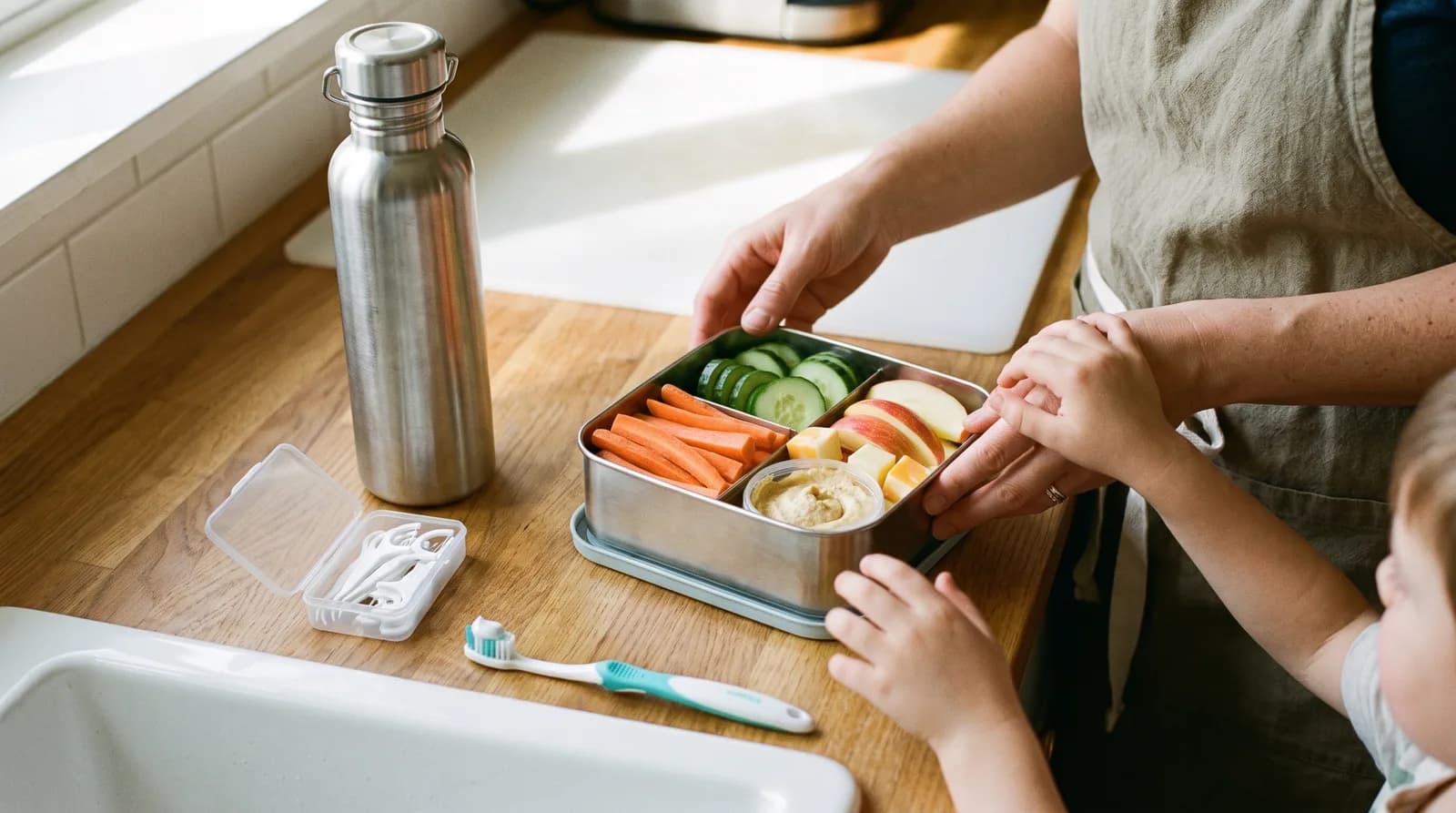
Packing lunch every school morning is enough of a project without also overhauling it for preventive dental health. The good news about school lunch ideas for healthy teeth is that small swaps matter more than a complete redo, and there's no need to feel guilty about juice boxes or the occasional treat.
Most of what gets marketed as a "healthy" lunch item, like fruit snacks or granola bars, isn't actually worse for teeth because of the sugar content. It's worse because of how long it sticks around in a child's mouth after lunch is technically over.
None of this is about judging what's already in a lunchbox today. It's simply useful to know which small changes matter, so any adjustments feel manageable rather than like an entirely new set of rules to follow.
This guide focuses on one idea that changes everything: how often teeth get exposed to sugar matters more than how much sugar shows up in a lunchbox. For more on preventive care generally, see this practice's preventive dentistry services.
School Lunch Ideas for Healthy Teeth: What Actually Matters?
School lunch ideas for healthy teeth come down to reducing how often teeth get exposed to sugar and acid throughout the day, not eliminating treats entirely or aiming for a perfect, sugar-free lunchbox.
A lunchbox with one dessert and a normal meal is genuinely fine for teeth. A lunchbox with gummy snacks nibbled slowly over 25 minutes, or a juice box sipped the entire lunch period, exposes teeth to acid far more often, even with less total sugar.
That distinction matters because it changes what's actually worth adjusting. Swapping out dessert entirely isn't necessary. Paying attention to how long sugar lingers in a child's mouth is where the real difference shows up.
This isn't about being strict or perfect. It's about recognizing which small habits actually matter, so the effort goes toward the changes that make a real difference rather than a blanket overhaul that's hard to sustain on a busy weekday morning.
Most parents already have decent instincts about lunch. This just gives those instincts a clearer reason, so a small swap feels like an informed choice rather than an arbitrary rule to follow.
Why Frequency Matters More Than Sugar Quantity
Frequency matters more than sugar quantity because every time teeth are exposed to sugar, bacteria in the mouth produce acid that attacks enamel for about 20 minutes, regardless of how much sugar triggered it.
A candy bar eaten in two minutes triggers one 20-minute acid attack. A juice box sipped slowly over 25 minutes essentially extends that same acid attack the entire time, since new sugar keeps arriving before the last wave has fully cleared.
Tooth decay remains the most common chronic disease in children, roughly five times more common than asthma, according to the ADA. Frequent acid exposure throughout the school day is a meaningful part of why that number stays so high.
This is also why timing matters more than people assume. A treat eaten quickly right after lunch, followed by nothing else until the next meal, gives teeth a real recovery window that grazing throughout the afternoon doesn't allow.
Saliva plays a big role in that recovery window too. It naturally neutralizes acid and helps redeposit minerals into enamel, but it needs time between exposures to actually do that job effectively.
A school day with a snack break, lunch, and maybe an afternoon treat already involves several separate exposures. Extending any one of those with slow sipping or sticky snacking simply adds more acid attacks on top of what's already happening.
Due for a Checkup?
Regular cleanings matter more than any single lunchbox decision. Let's get one on the calendar.
What About Gummy Fruit Snacks and Juice Boxes?
Gummy fruit snacks and sipped juice boxes are worse for teeth than a single dessert because they combine sugar with a sticky texture or long sipping time, both of which extend how long teeth stay exposed to acid.
Gummy snacks cling to the grooves and surfaces of back teeth long after they're swallowed, which means the sugar keeps feeding bacteria well past the two minutes it took to eat them. A cookie, eaten and swallowed quickly, clears the mouth much faster by comparison.
A juice box sipped slowly over an entire lunch period works the same way. Water sipped throughout lunch doesn't cause this problem, since there's no sugar involved to feed the acid cycle in the first place.
Fruit snacks marketed as containing real fruit juice are still functionally the same as candy once they're in a child's mouth. The sticky texture matters more than the source of the sugar itself.
According to Mayo Clinic's general guidance on dental care, sticky and slow-dissolving foods generally pose more cavity risk than foods that clear the mouth quickly, regardless of overall sugar content.
Easy Swaps: This Instead of That
Easy swaps focus on texture and timing rather than eliminating sugar entirely: choosing fresh fruit over sticky dried fruit, and pairing crackers with protein, both reduce how long sugar lingers on teeth.
None of these swaps require giving anything up. A cookie or a small treat eaten with the rest of lunch and finished quickly is genuinely fine. The goal is reducing the sticky, slow-lingering options, not removing every source of sugar from a lunchbox entirely.
Cheese specifically helps balance a lunch beyond just being a swap option. It can help neutralize acid in the mouth and supports saliva production, both of which work in a tooth's favor after a meal.
Water deserves a specific mention too. Sending water alongside any drink with sugar, even if it doesn't replace it, gives a child an easy way to rinse some of that sugar away before it lingers as long.
Portion size matters less here than most parents assume. A smaller gummy snack pack still clings the same way a larger one does. The texture and timing are what actually change the outcome, not the amount.
A Judgment-Free Team for Every Family
Dr. Jeong focuses on what actually helps, not on perfect habits that don't exist.
Cafeteria Lunch vs a Packed Lunch: Does It Matter?
Cafeteria lunches and packed lunches both work fine for dental health as long as the same general pattern applies, meaning a real meal followed by a quick treat rather than sugar nibbled or sipped throughout the period.
Cafeteria lunches sometimes come with more choices than a packed lunch, which can go either way. A tray with a real entree and a piece of fruit follows the same helpful pattern as a well-packed lunchbox.
Packed lunches offer more control over specific items like gummy snacks or juice boxes, but they aren't automatically better just because a parent packed them. The same frequency principle applies regardless of which option a family relies on that day.
Kids who buy lunch some days and bring one on others don't need a completely different approach for each. The same basic pattern, a real meal plus a treat eaten quickly, works whether the food came from home or the cafeteria line.
A la carte cafeteria items, like a second dessert or a separate sugary drink bought alongside a regular tray, are the spots most worth a quick conversation with a child about choosing just one over both.
None of this requires policing every choice a child makes at lunch. A brief, friendly conversation about picking one treat instead of two tends to stick better than a strict rule enforced from home that a child can't actually follow once at school.
What If Lunch Isn't Perfect? Does It Really Matter?
An occasional imperfect lunch, a cafeteria dessert, or a juice box on a busy day doesn't undo good dental habits, and regular checkups matter far more to long-term tooth health than any single day's lunch choices.
Nearly 1 in 4 adults in the US has untreated tooth decay, according to CDC data, and that pattern generally traces back to years of habits, not any single meal or snack. One less-than-ideal lunch isn't something worth feeling guilty about.
Regular dental visits can catch about 80% of oral health issues before they become serious, according to the ADA, which is a strong argument for consistent checkups mattering more than obsessing over every lunchbox decision.
Brushing at the end of the school day, even without flossing every single time, helps clear away whatever sugar built up during lunch and snacks. That single habit does more heavy lifting than most parents realize.
20% of children ages 5 to 11 have at least one untreated decayed tooth, according to the CDC, which is a reminder that this is a common, shared challenge rather than a sign of doing something uniquely wrong as a parent.
A single rough week of lunches, birthday parties, or school treats doesn't undo months of otherwise reasonable habits. The overall pattern over time matters far more than any individual day.
What Are Some Tooth-Friendly Lunch Combos?
A few genuinely easy tooth-friendly lunch combos include turkey and cheese with fresh fruit, veggies and hummus with crackers, or a sandwich with a small treat eaten quickly rather than snacked on slowly.
None of these require special ingredients or extra prep time compared to a typical lunchbox. The idea is simply pairing a real meal with a treat that gets finished quickly, rather than a snack that lingers in a child's mouth for half the lunch period.
- Turkey and cheese roll-ups with fresh fruit: protein and calcium alongside a naturally sweet, quick-clearing option.
- Veggies and hummus with whole grain crackers: crunchy, filling, and low in the kind of sticky sugar that lingers.
- A sandwich with a small treat: the treat gets eaten with the meal and finished quickly, not grazed on throughout lunch.
These combos work for a packed lunch or as a mental checklist when helping a child choose from a cafeteria line. The pattern matters more than the specific menu.
Rotating a few of these combos through the week also helps avoid the boredom that sometimes leads a child to trade lunch items with a friend for something less ideal. Variety within a helpful pattern tends to hold up better over time than a single repeated meal.
The short version: how often teeth get exposed to sugar matters more than how much sugar shows up in a lunchbox. A few small swaps, like fresh fruit over gummy snacks, make a bigger difference than cutting out treats entirely.
Results may vary. Please consult with Dr. Jeong for personalized treatment recommendations.
If lunch has looked less than perfect lately, that's genuinely fine. Consistent brushing and regular checkups matter far more than any single day's choices, and there's no need to overhaul a lunchbox that's mostly working already.
Have a question about your child's teeth?
Common questions
What are good school lunch ideas for healthy teeth?
A real meal paired with a treat that's eaten quickly, rather than snacked on slowly, works best. Turkey and cheese with fresh fruit, or veggies and hummus with crackers, are both simple, tooth-friendly options.
Why does frequency of sugar exposure matter more than quantity?
Every sugar exposure triggers about 20 minutes of acid attack on enamel. A quick dessert causes one attack, while a slowly sipped juice box or nibbled gummy snack extends that same attack much longer, even with less total sugar.
Are gummy fruit snacks bad for kids' teeth?
Gummy snacks cling to the grooves of back teeth long after they're swallowed, feeding bacteria well past the time it took to eat them. Fresh fruit or cheese clears the mouth much faster and is a simple swap.
Is a cafeteria lunch worse for teeth than a packed lunch?
Not inherently. Both work fine as long as the same pattern applies: a real meal followed by a treat eaten quickly, rather than sugar nibbled or sipped throughout the entire lunch period.
What should I swap out of my kid's lunchbox first?
Start with sipped juice boxes and gummy fruit snacks, since both extend acid exposure the longest. Swapping juice for water and gummy snacks for fresh fruit or cheese makes the biggest difference with the least effort.
Does one bad lunch ruin my child's teeth?
No. Tooth decay patterns build up over months and years of habits, not a single meal. Consistent brushing and regular dental checkups matter far more than any individual day's lunch choices.
Did this answer your question?
Written for general reading, not as advice about your own teeth. Nothing here replaces an examination: if something hurts, or has changed, book a visit and let a dentist look at it.
Read next
 12 min readChoosing a Pediatric Dentist in Wylie, TX: Parent GuideChoosing a pediatric dentist in Wylie?Read the article
 10 min readChild First Dental Visit What to Expect at KindergartenChild first dental visit what to expect: what happens, the language to use at home, the tell-show-do method, and when nitrous oxide helps a nervous child.Read the article
 10 min readKids Brushing Routine Morning: What Works on School DaysA kids brushing routine morning plan that survives the 7am rush: age-by-age supervision, the two-minute problem, and three routines that actually work.Read the article
Your first visit
One ticket covers it.
360 Dental · Admit one