
Cosmetic Dentistry
What Is a Dental Veneer? Materials, Process & What to Expect
Published 8 min read

A dental veneer is a thin, custom-made shell that covers the front of a tooth to change its color, shape, or size. Maybe you're looking at a chipped front tooth, a stubborn stain, or a small gap that shows up in every photo. Veneers can fix all three without touching the rest of your bite.
At 360 Dental, our porcelain veneers service in Van Nuys is one of our most requested cosmetic treatments. Here's what a veneer is actually made of, how the process works from your first visit to the final fitting, and what to expect once it's on.
What Is a Dental Veneer?
A dental veneer is a thin, tooth-colored shell bonded to the front surface of a tooth to improve how it looks. Veneers cover chips, stains, gaps, and minor shape problems while leaving most of the natural tooth in place underneath.
Picture a veneer as a custom cover, similar to a press-on nail but made for a single tooth. Your dentist shapes and colors each one to match your smile, so it blends in rather than standing out. As the American Academy of Cosmetic Dentistry has found, 99.7% of Americans see a smile as an important social asset.
Most veneers last for years, not months. That makes them different from whitening, which fades over time, or a filling, which repairs damage rather than changing appearance. Veneers also work well when a tooth is oddly shaped, slightly crooked, or worn down at the edge, cases that whitening alone can't touch since it only changes color, not shape.
What Is a Veneer Made Of? Porcelain vs. Composite Compared
Veneers are made from either porcelain or composite resin. Porcelain is a hard, glass-like ceramic that mimics natural enamel, while composite is the same tooth-colored material dentists use for fillings, applied directly and shaped by hand.
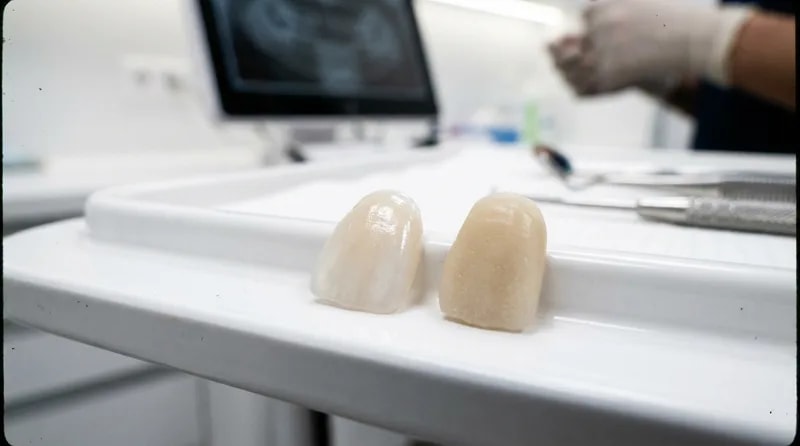
Both materials look natural, but they behave differently. According to the American Dental Association, porcelain resists stains well and holds its shine for years. Composite costs less and can often be finished in one visit, but it wears faster and may need touch-ups sooner. Neither option is automatically better. The right choice depends on your budget, timeline, and how many teeth you're treating. Someone fixing one chipped front tooth before an event might lean toward composite for speed, while a full smile makeover often favors porcelain for its longer-lasting shine.
| Feature | Porcelain Veneers | Composite Veneers |
|---|---|---|
| Material | Ceramic, lab-made | Tooth-colored resin, hand-shaped |
| Typical lifespan | 10 to 15 years | 5 to 7 years |
| Visits needed | Usually two | Often one |
| Stain resistance | High | Moderate |
What Is the Dental Veneer Process, Step by Step?
The dental veneer process usually takes two visits: one for consultation and preparation, and one to bond the finished veneer. A same-day option exists with composite veneers, which skip the lab step entirely.
At your first visit, your dentist examines your teeth, discusses your goals, and takes digital images or impressions. For porcelain veneers, a small amount of enamel is smoothed off the front of the tooth, usually less than a millimeter, so the veneer sits flush rather than bulky. A temporary veneer protects the tooth while a lab crafts the permanent one, typically over one to two weeks.
- Consultation: your dentist checks your teeth and gums and discusses your goals.
- Preparation: a thin layer of enamel is smoothed off to make room for the veneer.
- Temporary veneer: this protects the tooth while your permanent veneer is crafted.
- Bonding: your dentist checks the fit and color, then bonds the final veneer in place.
How Are Porcelain Veneers Attached to Teeth?
Porcelain veneers are attached using a strong dental adhesive called resin cement, combined with a bonding agent that links the veneer to the tooth surface. A curing light hardens the cement in seconds.

Before bonding, your dentist cleans and lightly etches the tooth so the cement grips securely. The veneer is set in place, excess cement is removed, and the curing light locks everything together. Local anesthetic keeps the area numb through this whole step, so bonding itself is a quiet, mostly mechanical part of the appointment.
Your dentist then checks your bite, making small adjustments so the veneer feels natural when you chew or speak. A veneer that sits even slightly too high can feel off for weeks, so most dentists build in a few extra minutes just for this fit check rather than rushing it. For patients comparing that permanence to a less invasive option, our guide on veneers versus bonding lays out the tradeoffs.
What Is a Composite Veneer, and How Is the Procedure Different?
A composite veneer is built up directly on the tooth from tooth-colored resin, layer by layer, and hardened with a curing light. Unlike porcelain, it skips the dental lab entirely.
Your dentist sculpts the resin by hand, matching the shade to your surrounding teeth, then polishes it to a natural shine. Because there's no lab wait, many patients leave with a finished smile in a single appointment. The tradeoff is durability. Composite typically lasts five to seven years with good care, compared to ten to fifteen for porcelain, and it can pick up stains from coffee or wine more easily over time, according to Healthline.
Composite is also easier to repair or adjust later, since your dentist can add or reshape the resin chairside instead of sending a new piece to a lab. That makes composite a practical starting point for patients who want to see the result before committing to a longer-lasting porcelain option.
Do Veneers Hurt, and What Does the Procedure Feel Like?
Most patients feel pressure or vibration during veneer preparation, not sharp discomfort, since local anesthetic numbs the area beforehand. Any soreness afterward is usually mild and fades within a day or two.
Composite veneers involve even less sensation, since little to no tooth reshaping is needed. Some patients notice their teeth feel sensitive to hot or cold for a few days after porcelain prep, which typically settles on its own. Over-the-counter pain relievers handle most of that discomfort.
Tell your dentist about any sensitivity that lingers past a week, since it's worth checking. Compared to a root canal or an extraction, veneer preparation is a much shorter, lighter appointment overall. Most patients describe the whole visit as routine, closer to getting a filling than anything more involved, and few report needing more than a day to feel completely back to normal.
How Long Do Veneers Last, and How Do You Care for Them?
Porcelain veneers can last 10 to 15 years with proper care, according to research published in the Journal of Prosthetic Dentistry. Composite veneers typically last 5 to 7 years before needing replacement or touch-ups.

Veneers aren't indestructible. Avoid biting fingernails, ice, or pen caps, since that stress can chip the edge. Regular brushing, flossing, and dental visits keep the gum line around each veneer healthy, which matters just as much as the veneer itself. A yearly checkup also lets your dentist catch a loosening edge or small chip before it turns into a bigger repair. Regular dental visits catch 80% of oral health issues before they become serious, according to the ADA, so those checkups protect the rest of your smile too, not just the veneer.
- Avoid biting fingernails, ice, or pen caps.
- Brush and floss daily around the veneer's edges.
- Keep up with regular dental checkups and cleanings.
- Wear a night guard if you grind your teeth.
Are Veneers Right for You? Candidates and Alternatives
Veneers work well for healthy teeth with cosmetic concerns like chips, stains, or minor gaps, but they aren't a fix for major bite problems or advanced decay. A consultation determines whether your teeth and gums qualify.
If you have active gum disease or a tooth that grinds heavily at night, your dentist may recommend treating that first or exploring an alternative, such as bonding or crowns. If color is your only concern, professional teeth whitening can improve shade by 4 to 8 levels in about two weeks, according to the ADA, which may be enough on its own. Our comparison of in-office teeth whitening versus at-home options can help you figure out where your case falls before committing to something more permanent.
A dental veneer is a simple concept with a lot of decisions packed inside it: porcelain or composite, one tooth or several, subtle or dramatic. The material matters less than getting an honest look at what your teeth actually need first.
Results may vary. Please consult with your dentist at 360 Dental for personalized treatment recommendations.
If you're ready to find out whether veneers fit your smile goals, a consultation is the next step toward a plan built around your teeth, not a generic template.
Ready to Talk Veneers?
Schedule a consultation with Dr. Vachik Danoukh at 360 Dental in Van Nuys and get a treatment plan built for your smile.
Prefer to talk it through first?
Call (818) 787-6400 →
Common questions
What is a veneer made of?
A veneer is made of either porcelain, a hard ceramic that mimics natural enamel, or composite resin, the same tooth-colored material used in fillings. Porcelain is lab-made and more stain resistant, while composite is shaped by hand chairside.
What is a composite veneer?
A composite veneer is built directly on the tooth from tooth-colored resin and hardened with a curing light, without a dental lab. It typically costs less than porcelain and can often be completed in one visit.
How are porcelain veneers attached to teeth?
Porcelain veneers are attached with resin cement and a bonding agent, then hardened in seconds with a curing light. The tooth is cleaned and lightly etched first so the cement holds securely.
How are veneers applied to teeth?
Veneers are applied after a thin layer of enamel is smoothed away to make room, then bonded to the tooth with dental cement. A curing light sets the bond, and the dentist checks your bite before you leave.
What are the different types of teeth veneers?
The two main types of teeth veneers are porcelain, which is lab-made and long-lasting, and composite, which is applied directly and finished sooner. Both are shaped and colored to match your natural teeth.
Does the dental veneer procedure hurt?
The dental veneer procedure involves local anesthetic, so most patients feel pressure rather than discomfort. Mild sensitivity to hot or cold can follow porcelain prep for a few days, but it typically settles on its own.
How long does a dental veneer last?
A porcelain veneer typically lasts 10 to 15 years with proper care, while a composite veneer lasts about 5 to 7 years. Avoiding habits like biting ice or fingernails helps veneers last longer.
Did this answer your question?
Written for general reading, not as advice about your own teeth. Nothing here replaces an examination: if something hurts, or has changed, book a visit and let a dentist look at it.
Read next
 7 min readProfessional Teeth Whitening in Van Nuys | 360 Dental Looking for professional teeth whitening in Van Nuys? See how in-office whitening works, what to expect, and how to book near you at 360 Dental.Read the article
 8 min read6 Cosmetic Dentistry Treatments in Van Nuys, Compared Comparing cosmetic dentistry treatments? See veneers, bonding, whitening, Invisalign, contouring, and smile makeovers side by side at 360 Dental.Read the article
 12 min readDental Contouring in Van Nuys: The Smallest Smile ChangeDental contouring reshapes enamel to even out edges and small chips. What it fixes, what it cannot, and why it is the least invasive cosmetic option.Read the article
Your first visit
One ticket covers it.
360 Dental · Admit one